Students’ protest in J’khand intensifies as 5 more join hunger strike
| Date :06-Aug-2026 |
RANCHI :
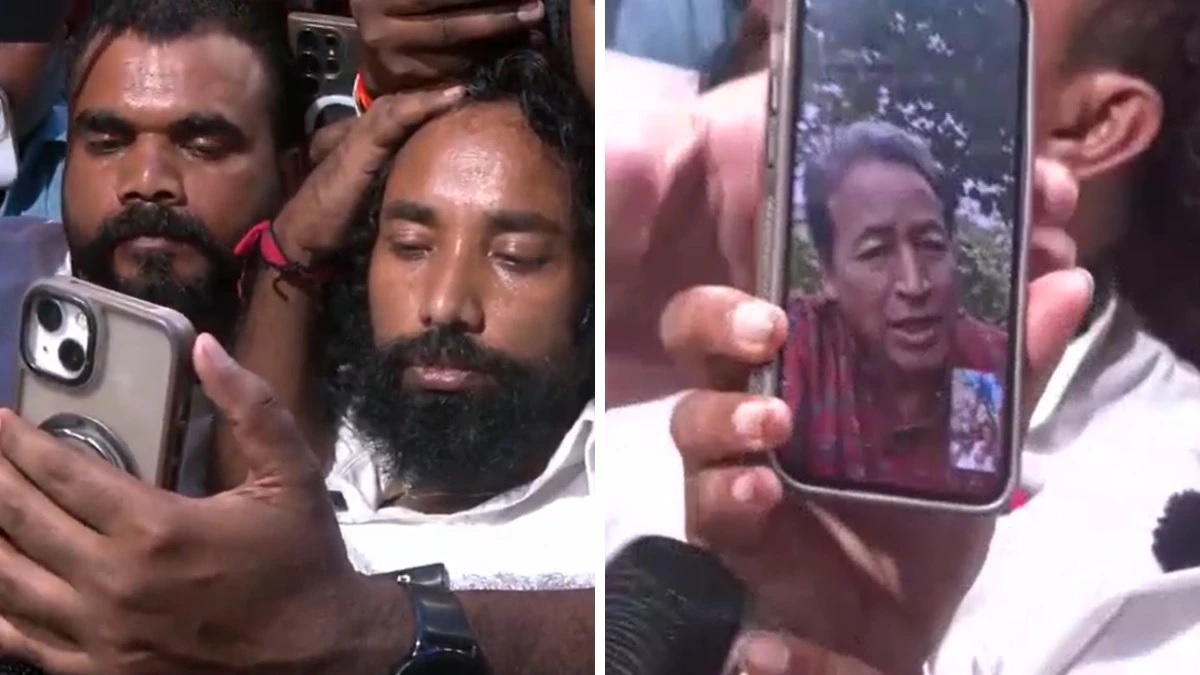
Mahto drinks water on fourth day of strike after Wangchuk urges him to drink water
ACTIVIST Sonam Wangchuk on Wednesday spoke to Devendra Nath Mahto, who is on a hunger strike against the alleged irregularities in recruitment examinations in Jharkhand, and urged him to at least drink water.
Heeding his request, Mahto had water on the fourth day of his fast, even as five people under the JPSC, JSSC Reforms Manch banner began an indefinite hunger strike on Tuesday night as the protest intensified ahead of the Monsoon Session of the Assembly.
With this, the number of people on hunger strike at the Jaipal Singh Munda Stadium has risen to six.
Jharkhand Loktantrik Krantikari Morcha member Devendra Nath Mahto has been fasting at the same venue for the past four days.
Wangchuk, who was on a 26-day fast in Delhi over the NEET paper leak issue recently, advised Mahto to at least drink water, as his blood sugar and blood pressure levels were dropping. On his advice, Mahto drank water.
Both factions of the protesters have been demanding since July 25 the cancellation of the 14th Jharkhand Public Service Commission examination, as well as reforms in the commission and the Jharkhand Staff Selection Commission.
They are also demanding an inquiry into exam irregularities by the CBI or an independent panel of retired high court judges from outside the state. The spokesperson of the JPSC, JSSC Reforms Manch, Jivan Kumar, said, “Our five friends, including two women, went on hunger strike from Tuesday night to press for our demands.”
A core committee meeting will be held shortly to decide on taking out a ‘Tiranga March’ in support of students’ demands, he said.
Sabita Kumari, who is on hunger strike, said they were “forced” to resort to this type of protest since the government was not fulfilling their demands.
Another protester, Habiba, said, “The CM is like our guardian. When children are hungry, a guardian also feels pain. So, we hope that he will listen to our grievances and demands.”
“The Chief Minister says the Government is sensitive. It may be, but we want action and justice, not assurance,” she said.