BRICS adopts New Delhi Declaration with consensus
| Date :13-Sep-2026 |
NEW DELHI :
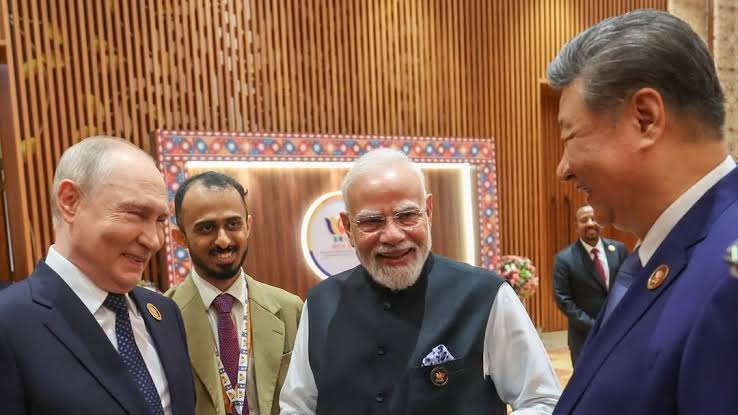
IN A significant diplomatic breakthrough for India, the BRICS grouping on Saturday adopted a joint declaration with consensus, overcoming sharp divisions between Iran and the UAE over the West Asia conflict following a series of back-channel negotiations.
Prime Minister Narendra Modi announced the adoption of the declaration at the end of the opening day’s deliberations at the two-day India-hosted summit. The negotiations on the text of the declaration went down to the wire as both Iran and the UAE had hardened their positions initially. BRICS is a consensus-based grouping, meaning any single member can block a final joint declaration. “Today’s discussion makes it evident that the changing world cannot be steered by outdated institutions; reforms are essential in representation, responsiveness and rule-making,” Modi said in his concluding remarks.
“We also emphasised that the Global South must have equal participation in the development of future technologies and the rules governing them.”
The Prime Minister said the gap between decisions and their outcomes must be bridged through partnership and collective action. “The New Delhi Declaration adopted today provides a clear direction for our shared resolve. It is now our responsibility to translate these resolutions into tangible results,” he said. In a major diplomatic outcome for India, BRICS condemned the April 2025 terror attack in Pahalgam in Jammu and Kashmir and called for zero tolerance towards state-sponsored cross-border terrorism.
The comprehensive declaration, titled
‘Building for Resilience, Innovation, Cooperation and Sustainability’, marked a unified stance by the bloc against global terror, illegal financial flows, cyber fraud, and emerging cross-border scam networks. Leading the security outcomes of the declaration, member nations condemned the April 22, 2025 terror attack in Pahalgam, which claimed 26 lives and left scores injured. The declaration explicitly noted that all acts of terrorism are criminal and unjustifiable, regardless of their motivation, whenever, wherever and by whomsoever committed.
Reaffirming their commitment to combating terrorism in all its forms and manifestations, the BRICS leaders emphasised the urgent need to stop the cross-border movement of terrorists, disrupt terror financing networks and dismantle safe havens. The member states reiterated that terrorism should not be associated with any religion, nationality, civilisation, or ethnic group, while asserting that all those involved in terror activities must be held accountable under national and international law. BRICS leaders also called for a sweeping reform of the global financial architecture to give emerging markets and developing economies a greater voice in the IMF and World Bank, while strongly criticising unilateral tariffs, trade restrictions and economic sanctions.