16.6 lakh bullocks, but a renewable farm resource at risk
| Date :15-Sep-2026 |
By Rohit Pawar :
Bail Pola celebrates the animal even as changing farm economics and breeding priorities threaten its wider role
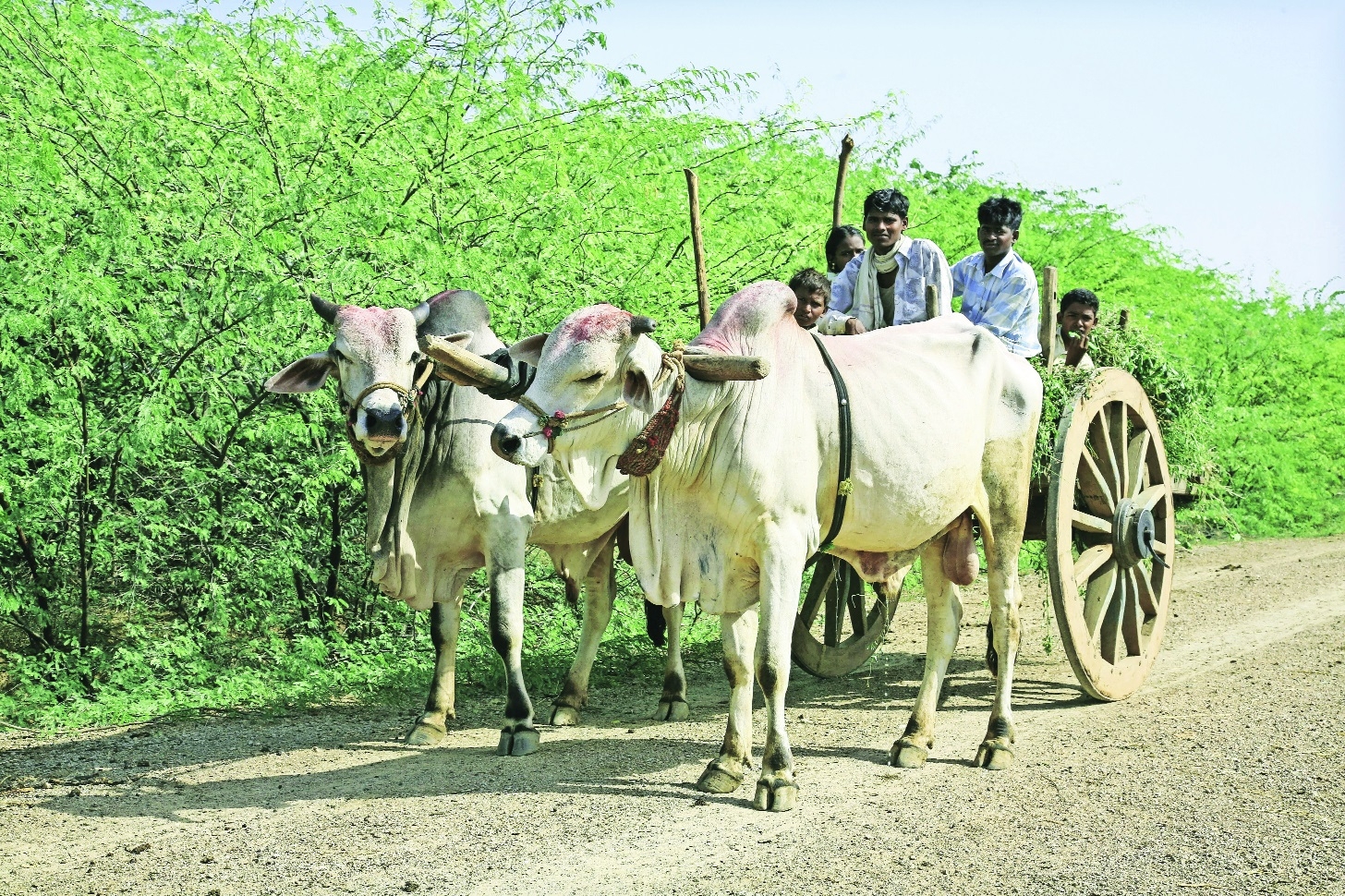
Five days after ‘Bail Pola’ celebrated the enduring bond between farmers and their bullocks, the animals are facing a quieter decline in their role on farms. Nagpur and Amravati regions together have 16.60 lakh bullocks, but mechanisation is steadily reducing their use as farmers seek faster operations and lower labour dependence.
“The cost of keeping bullocks has to be seen along with the labour involved. A tractor can finish the same work much faster, and we do not need to keep a person just to handle the animals,” said Rajendra Chavan, a farmer from Ramtek taluka.
The larger concern, however, extends beyond traditional farming practices. Maharashtra’s cattle population stood at 139.92 lakh in the 2019 Livestock Census, down 9.63 per cent from the previous census. Cattle provide three important farm resources -- milk, manure and draught power -- while bulls are also necessary to maintain a sustainable breedable population and indigenous genetic resources.
“Draught animals are an essential part of an integrated livestock-agriculture system, returning manure and other by-products to the farm while reducing dependence on non-renewable energy,” said Dr P S Bankar, Associate Professor, Department of Animal Genetics and Breeding, College of Veterinary and Animal Sciences, Akola.
“The renewable-energy value of draught animals is particularly significant. A major chunk of cultivators in India depend on bullock power for operations such as ploughing, weeding and seeding, while cattle meet more than 57 per cent of farm energy requirements through agricultural work, transport and water lifting. Animal power provides energy for about two-thirds of cultivable-area ploughing and two-thirds of rural transport,” Bankar added.
Draught Animal Power (DAP) was recognised as one of 14 renewable energy resources at the UN Conference on New and Renewable Sources of Energy in Nairobi in 1981. It is estimated to save 20 million tonnes of petroleum annually, with animal DAP contributing 5.1 crore horsepower, or 35.5 per cent of the energy used in India’s agriculture sector.
Vidarbha’s draught breeds: Gaolao, associated with Nagpur, Wardha and Amravati, is valued for agricultural and transport work, while Kathani and Umarda are traditional Vidarbha breeds. Other recognised cattle breeds in the State are--Dangi, Deoni, Khillar, Red Kandhari, Konkan Kapila.
Mechanisation may be an economic necessity, but the disappearance of draught animals would also mean losing a renewable source of farm energy. According to experts, the challenge is not to turn back the tractor, but to retain the animal within the farm cycle.