UK’s unity threatened by pact betweenWales, Scotland and Northern Ireland
| Date :15-Sep-2026 |
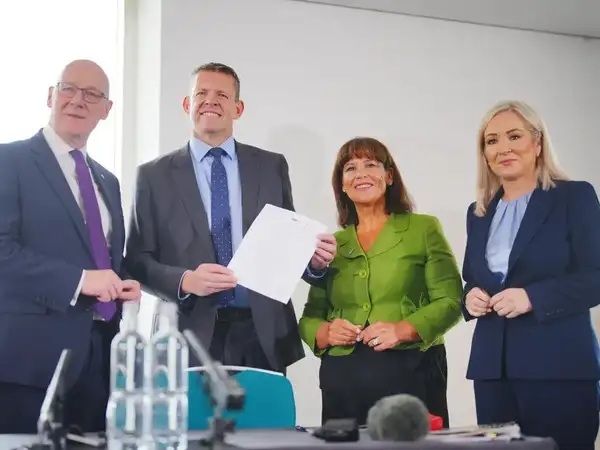
The announcement came
about 48 hours after US
President Donald Trump waded into the waters of the politically contentious issue when
he said he would “love to see”
a reunified Ireland during a trip
to visit his golf course hosting
the Irish Open.
It’s the first time the leaders
of all three countries are either
from pro-independence parties, or pro-unification in the
case of Northern Ireland, which
was partitioned and remained
part of the UK when Ireland
won independence from
Britain over a century ago.
Burnham’s spokesperson
brushed aside the threat and
said the Prime Minister strongly believes in the union and
was more focused on lowering
the cost of living than dealing
with constitutional debates.
“The United Kingdom is at
its best when people come
together around our shared values and problem-solving,
rather than division,” Tom
Wells said.
Beyond any threat of departing the union, McEwen said
the greatest impact of the three
joining forces could be that
they agreed to cooperate with
each other routinely and that
could help to exert more influence on the UK Government.
“It does keep on the agenda
that question about, well, if the
United Kingdom is a union
based on consent, what is the
pathway where it looks like that
consent may no longer be
there?” McEwen said.
Burnham told Parliament
last week he would allow such
a vote to be held if there was a
“clear consensus” in Scotland,
but later sent Swinney a letter
saying a vote was “off limits”.