NCLT bars Chandrafrom selling assets
| Date :02-Sep-2026 |
NEW DELHI :
A FIVE-MEMBER special bench of insolvency tribunal
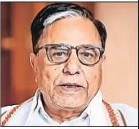
NCLT on Tuesday barred Essel Group chairman Subhash
Chandra from alienating his properties and issued
notices to all parties in a case over a proposed settlement
that would allow creditors to recover just about
Rs 6.5 crore from his personal estate against claims of roughly Rs 22,006 crore.
The special bench of the National Company Law Tribunal
(NCLT), headed by President Justice Anupinder Singh Grewal,
said there was no majority view among its members and therefore, no
final order could yet be
given effect to.
“Let notice be issued to
all the parties,” the bench
said, directing that the
guarantor“shall not alienate the properties, either
directly or indirectly”.
Justice Grewal said the
tribunal wanted to understand the scope of the matter and
would hear all parties, including creditors who have opposed
Chandra’s repayment plan.
The case is now also before the National Company LawAppellate Tribunal (NCLAT), after dissenting lenders challenged the repayment plan.
NCLAT took up the matter
on Tuesday and directed that
it be listed on Wednesday following a request by Solicitor
General Tushar Mehta, appearing for LIC Housing Finance,
Canara Bank and Union Bank,
among others.
Mehta requested the appellate tribunal to grant one day’s
time to decide whether they
want to proceed in this matter
or not.
He also apprised a threemember bench of the appellate tribunal comprising its
Officiating Chairperson Justice
Yogesh Khanna, and said he
will “examine the matter and
come back” on Wednesday.
The dispute centres around
a repayment plan under which
Chandra was allowed to settle
claims arising from personal
guarantees on his group’s borrowings for just Rs 6.5 crore -
a 99.9 per cent haircut on the
Rs 22,006 crore his companies
have defaulted on.
Ten banks and lenders had
supported the proposal, while
dissenting creditors including
HDFC Bank, LIC Housing
Finance and Canara Bank
opposed it on the grounds
that the recovery would be negligible.
The dissenting lenders
accounted for less than 20 pc
of the voting share. Chandra has
argued that the widely cited Rs
22,006-crore figure does not
represent the money he personally borrowed.
Instead, he says it comprises claims arising from guarantees he gave for loans raised by
Essel Group companies.