SC allows draft BhopalMaster Plan publication
Date :23-Sep-2026
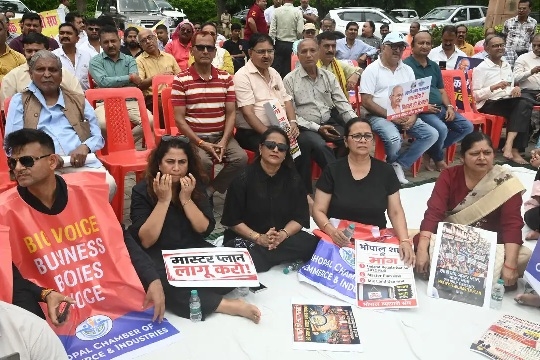
Staff Reporter :
THE Supreme Court (SC), on
Tuesday, allowed the Madhya
Pradesh Government to proceed
with publication of the draft
Bhopal Master Plan and invite
claims and objections.
The development came
during a hearing on commercial
activities in residential areas and
the sealing action undertaken by
the Bhopal Municipal
Corporation (BMC). The court
has been examining compliance
with its directions on unauthorised construction and change
of land use.
Final plan needs court
approval:The State Government,
however, will have to apprise the
Supreme Court of the details
before publishing the final
Master Plan.
The final plan can be notified
only after it is placed before the
court and approval is obtained,
according to the proceedings
described by the Government.
Government gives assurance:
Madhya Pradesh Government
Counsel K Natarajan informed
the court that discussions had
been held with the State
Government. The Government
assured the court that no further
committees would be constituted in connection with the matter and that the sealing process
would not be obstructed.
The
court accepted the assurance.
Sealing compliance comes
under focus:The Supreme Court
also expressed concern over
establishments in residential
areas allegedly being sealed in
the morning and reopening in
the evening. The court directed
the BMC to ensure strict compliance with its directions on
sealing action.
Residents raise ten complaints:Amicus Curiae A K Sinha
informed the court that around
10 complaints had been received
from Bhopal residents before
Tuesday’s hearing.
The complaints alleged that
several establishments sealed by
the BMC in August remained
closed during the morning but
reopened in the evening.
62,500 commercial units identified: The BMC had identified
around 62,500 commercial establishments operating in areas covered by the exercise. Notices were
issued to 8,084 establishments,
accounting for about 13% of the
total identified units.
According to the information
submitted in the matter, action
was recorded against around 190
establishments, while 10 premises were officially sealed.
The figures mean action was
recorded against around 2.3% of
establishments that received
notices, while official sealing
accounted for about 0.12% of the
notified units.