TATR’s ‘Taru Udyan’ to involve citizens in mitigating man-animal conflict
Date :24-Sep-2026
Staff Reporter :
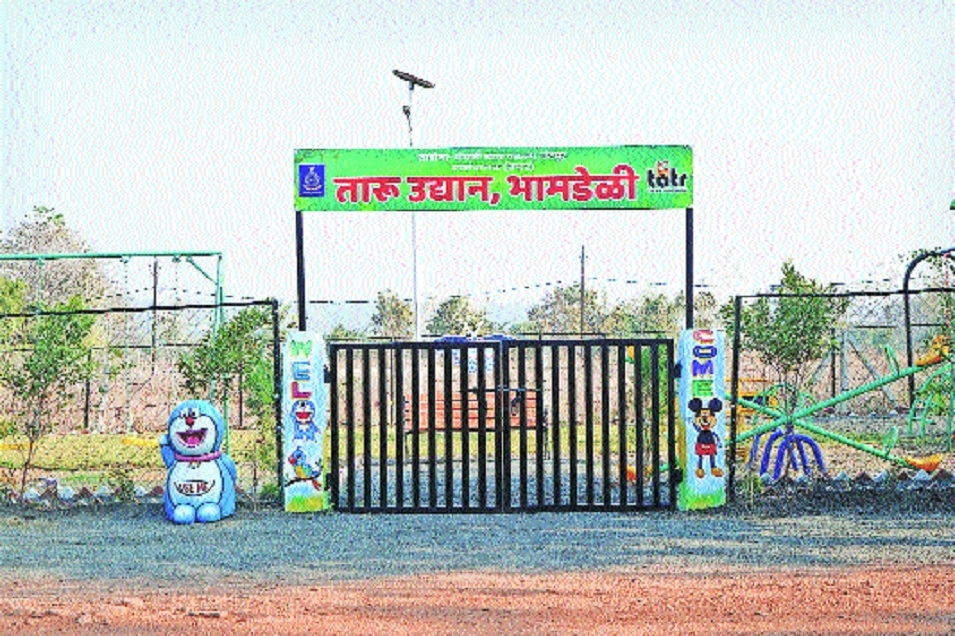
First two Taru Udyans have been established in Bhamdeli and Haldi villages
Tadoba-Andhari Tiger Reserve (TATR) is developing ‘Taru Udyan’ community-based programme in buffer villages of TATR, to bring together conservation, environmental education and community well-being in villages surrounding the tiger reserve. It is an innovative community-based programme which is a safe, fenced community space that combines recreation with nature education and conservation awareness.
Taru Udyans have already been established in buffer villages, including Bhamdeli, and Haldi, while several more are under development and are expected to be completed shortly. More than 100 villages are located in and around Tatr’s buffer area, where people and wildlife share the same landscape.
“As populations of tigers, leopards, sloth bears, gaurs, and other wild animals moved more into areas adjoining villages.
The villagers are reluctant to let their children play in open areas because of concerns about encounters with wild animals and attacks by stray dogs. As a result, opportunities for outdoor recreation, physical activity, social interaction and learning about nature have become increasingly limited.
“To provide a space for children, TATR introduced this programme in buffer villages,” said Dr Prabhunath Shukla, Field Director, TATR, told ‘The Hitavada’. “The elderly also face similar challenges because safe, comfortable public spaces for recreation and social interaction are limited. Recognising these emerging needs, TATR has conceptualised Taru Udyan as a safe, fenced community space that combines recreation with nature education and conservation awareness,” said Dr Shukla.
The initiative derives its name from Taru Dev, the legendary protector of forests after whom Tadoba is believed to have been named. Each Taru Udyan symbolises harmonious relationship between people and nature while also preserving the cultural identity and traditional heritage of the Tadoba landscape.
Each Taru Udyan is being developed on community land identified by the respective Gram Panchayat in consultation with the Village Eco-Development Committee (VEDC).
The parks are being equipped with facilities such as chain-link fencing for safety, entrance gates, children’s play equipment, walking pathways, sitting benches, solar lighting, landscaping with native tree and shrub species, waste bins and environmental information boards.
Members of the Friends of Taru Clubs will help maintain the parks and water, protect plants, participate in cleanliness drives, celebrate occasions such as World Environment Day, Wildlife Week, and Earth Day, take part in bird watching and nature walks, and serve as young ambassadors for conservation within their villages, said Dr Shukla.
The sustainability of Taru Udyans will be ensured through active involvement and ownership of Gram Panchayats, VEDC, Friends of Taru children’s groups and regular monitoring by TATR field staff. Community plantation drives and annual maintenance through village institutions and departmental convergence, wherever feasible, will further strengthen the initiative.