Ram temple made possible bystalwarts like Singhal: Modi
| Date :29-Sep-2026 |
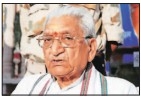
NEW DELHI :
PRIME Minister Narendra Modi
on Monday paid glowing tributes to VHP leader late Ashok
Singhal, marking his birth centenary, and said the grand
Ram temple in Ayodhya could be
constructed because of stalwarts
like him who selflessly immersed
themselves in the effort to
make it possible.
In a signed op-ed article published in major newspapers a day
after the Vishwa Hindu Parishad
(VHP) leader’s birth anniversary,
Modi said Singhal was blessed
with remarkable clarity of
thought, and one area where it
was clearly seen was his belief
that the “country’s society needs
to be harmonious” and that “the
message of brotherhood has to
be reaffirmed”.
The Prime Minister said no
mention of Singhal is complete
without recalling his pivotal role
in the Ram Janmabhoomi movement. “Who can forget his address
at the Boat Club Rally in 1991? Or
the defining image of an injured
and bleeding Ashok Ji at the peak
of the movement. Today, if there
is a grand Ram Mandir in
Ayodhya, it is because of stalwarts like him who selflessly
immersed themselves in the effort
to make it possible,” he said.
Modi said Singhal would have
been the happiest person on seeing the Ram temple take shape
in Ayodhya. The firebrand
Hindutva leader was born on
September 27, 1926 and died on
November 17, 2015.
The Prime Minister said
Singhal worked towards
strengthening social unity and
equality, and he firmly believed
that there could be no distinction of any kind in society and
that every individual deserved
equal dignity and respect.
He said it was the late leader’s
thought that the first brick of the
Ram temple in Ayodhya would
be laid by Kameshwar Choupal,
a grassroots VHP worker from
Bihar who hailed from the marginalised section of society. “At a
Dharm Sansad in Kashi
(Varanasi), he decided that the
Dom Raja would be honoured
and went on to work with him as
part of various community
efforts,” Modi said. Singhal’s mind
was constantly running, thinking
about what more one can do for
those on the margins of society,
according to the Prime Minister.