EAM flags US lack of understanding on cross-border terror concerns
Date :30-Sep-2026
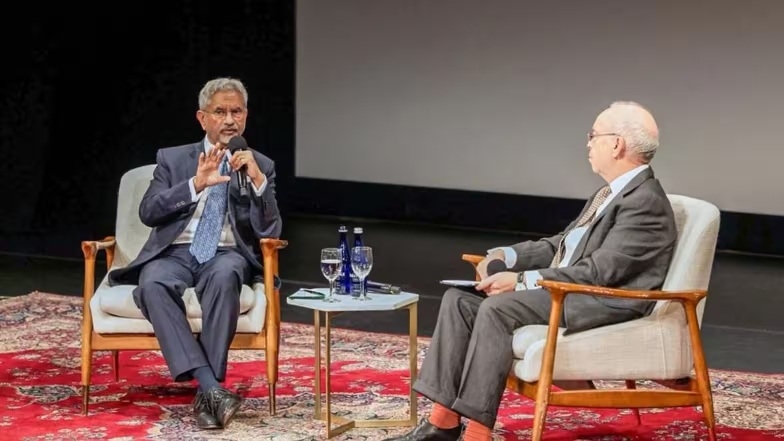
NEW YORK :
TERRORISM emanating from its
neighbour is one of India’s primary concerns, and if this is not
fully appreciated by New Delhi’s
partners, it impacts bilateral ties,
External Affairs Minister S
Jaishankar has said, alluding to
India-US relations amid upswing
in Washington-Islamabad ties.
The External Affairs Minister
has addressed prominent
members of the IndianAmerican and diaspora community as well as policy experts
at a special conversation hosted
at Asia Society, as the high-level
week of the 81st session of the
UN General Assembly wrapped
up on Monday.
During a conversation moderated by former American diplomat and distinguished fellow at
the Asia Society Policy Institute
Daniel Russel, Jaishankar was
asked about US-India relations,
particularly amid developments related to trade and tariffs over the past year, and what
would have to happen to put
the bilateral relationship on a
“better track”.
“Well, I think if I stand back
and look at the relationship,...
I note that much of the world
has had a more difficult relationship with the US. I mean
that may not be a consolation,
but that’s a reality,” Jaishankar
said.
He then alluded to ties
between the US and Pakistan,
which have seen an upswing
over the past year, especially
just months after the second
term of the Donald Trump
administration commenced in
January 2025. One of the issues
“pertains to the sensitivities of
each country,” Jaishankar said.
“What for us in India is particularly important is the issue
of terrorism.
“That we feel that...As a country perhaps there are very few
countries which have been subjected to the kind of terrorism
that we have from a neighbour
as part of a deliberate, conscious policy over many,
many decades,” Jaishankar
said, making a reference to
Pakistan.
TRADE AGREEMENT CAN
CONTRIBUTE TO ‘BETTER’
INDIA-US TIES, SAYS
JAISHANKAR:A TRADE agreement between India and the US,
if concluded, would contribute
to “better” bilateral ties,
External Affairs Minister S
Jaishankar said, noting that
expectations of rapid progress
in negotiations had been “tested” against a much more complex ground reality