The Oxen, the Farmer and a Festival that refuses to fade
| Date :06-Sep-2026 |
By Sayli Watkar :
The Indian culture teaches individuals to be grateful and respectful towards others right from elders to children, and from gods to animals. This value of gratitude can be seen and felt intimately in city during celebration of Pola in areas like Mahal and Itwari, where even in the modern times, the festival is celebrated with same traditional fervour.
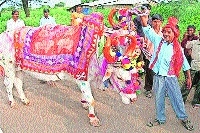
Every year, as Pola arrives, Mahal and Itwari comes alive with the sight and sound of decorated oxen. Oxen from across the region gather for the traditional celebration, keeping alive an image that has been closely associated
with Vidarbha’s agricultural culture for generations.
Yet, beyond the festive gathering lies a quieter change. The oxen that once stood at the centre of a farmer’s everyday life is gradually disappearing from the fields nowadays. Pola was traditionally a day of gratitude towards oxens for their contribution to agriculture.
They were bathed, decorated and worshiped for the labour they put into ploughing fields and supporting farming families. The festival represented a relationship in which the farmer’s livelihood and the animal’s work were closely intertwined. Today, that relationship has changed. Tractors, harvesters and other machines have replaced much of the work once done by oxens. A farming family may continue to own agricultural land and cultivate it year after year, but increasingly, its agricultural companion is a tractor rather than a pair of oxens. So, when the animals leave the fields, what happens to the meaning of the festival that was created to honour them?
“For us, Pola was always celebrated to honour our oxens. But if the oxens themselves are no longer there, what is the meaning of celebrating Pola?” says an elderly farmer, Narayan Ingle. For him, modernisation is necessary, but forgetting the roots behind a tradition is not.
The change is also visible across generations.
A woman in her 40s recalls celebrating Pola with real oxens during her childhood. “We celebrated Pola with real oxens when we were children. Nowadays, many people neither know why Pola is celebrated nor want to understand it. Slowly, old traditions are disappearing and whatever remains is often reduced to a trend,” she said. The disconnect becomes sharper when the festival reaches children. Tanha Pola, celebrated for the younger generation with decorated wooden bulls, has traditionally helped introduce children to the agricultural world and the significance of oxens. But for today’s urban children, the connection may be increasingly symbolic.
Asked why Pola is celebrated, one child answers simply: “Mummy gets it ready, takes a photo and sends me with Nandi.” Whereas, earlier the children used to roam across town with the small wooden nandi and collect blessings from each house. That has somewhere disappeared in modern world, especially in city.