Mothers struggle to nurture life in Nepal
| Date :07-Sep-2026 |
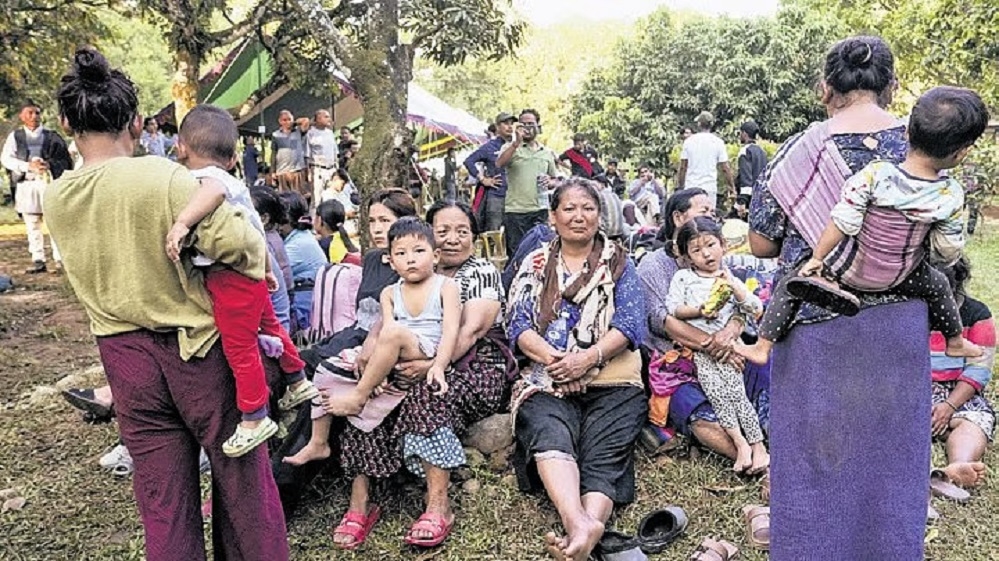
Nepali women with their children at Trishuli camp in Nuwakot. (PTI)
KATHMANDU :
THE Nepal floods took away Sharmila Shrestha’s home and separated her from her baby for days. Now, reunited at a crowded shelter, she can do little more than helplessly watch her toddler eating the same food as the adults because there is nothing else. Her 14-month-old daughter sleeps with her on the floor of a classroom in north-west Kathmandu, alongside her sister-in-law’s 18-month-old son. There is no baby food for either child.
“They aren’t giving any special food for babies. We are forced to feed that same heavy adult food to the small child,” Shrestha was quoted as saying by ‘The Kathmandu Post’ newspaper on Sunday.
The 33-year-old mother had walked for six hours through the hills to find her daughter after the floods separated them for two or three days.
“I only want a decent, proper place to stay. That would bring some peace of mind,” she said.
For mothers like Shrestha, the August 26 flash floods in Nepal have created a crisis within a crisis, one unfolding not in the rising waters but in crowded shelters, around feeding times, on classroom floors and along treacherous roads leading to hospitals. Babies are hungry. Mothers are struggling to breastfeed. Pregnant women worry about reaching a hospital if something goes wrong.
And in shelters filled with hundreds of displaced people, even the most basic requirement of motherhood, a quiet, private place to feed and comfort a child, can feel like a luxury.
At Trishuli, Pariyar, a mother three months into breastfeeding her newborn, fled her home on August 26 as floodwaters surged.
Now she nurses her baby in a shelter, along the Bhotekoshi-Trishuli corridor, shared with dozens of strangers, with men smoking nearby and the smell of alcohol lingering in the air.
“We are all in the same place, so it is difficult. There is cigarette smoke, the smell of alcohol, and the baby cannot sleep,” Pariyar, who likes to be identified by only her last name, said.
“If there was a safe place, and the baby could get her vaccinations here, that would be better. We are not getting food on time either. We are not getting enough to eat,” Pariyar said Across the flood-hit districts of Rasuwa, Nuwakot and Dhading, thousands of women are facing similar vulnerabilities.
The United Nations Population Fund (UNFPA) estimates that around 4,430 pregnant women are living across 15 municipalities in the three districts. The figure is a humanitarian planning estimate based on an affected population of about 310,000, rather than a headcount of individually identified women.