Of the “mother” role in mayoralty
| Date :15-Nov-2019 |
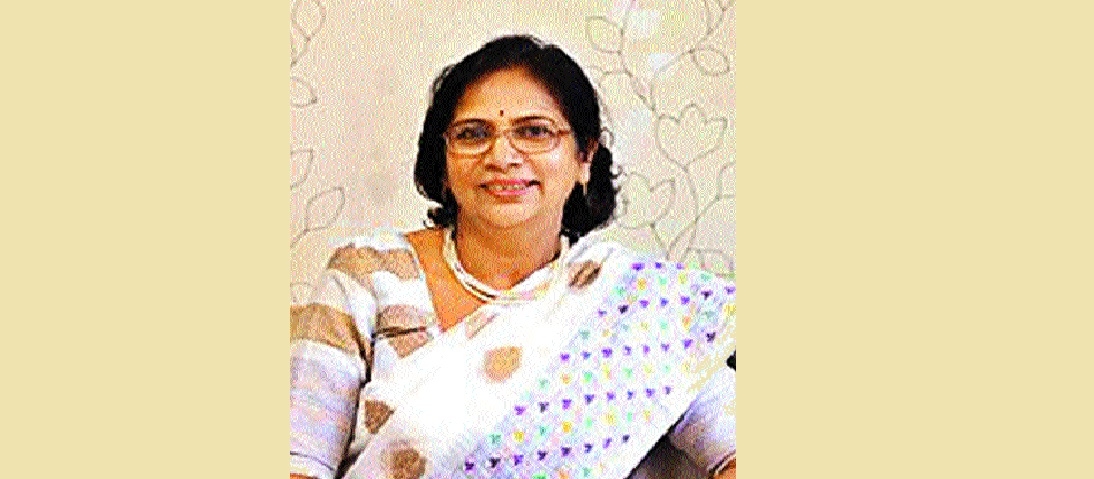
By Vijay Phanshikar :
“I look back on my tenure as Mayor with a sense of happiness, joy. There were many, many moments when I could do a lot of good for the people. There also were moments when I felt that I could have done more. The overall experience was one of satisfaction that I could make possible many good projects and achievements for the city of Nagpur, for the people of the great city.” These satisfied words highlight the two-and-a-half-year tenure of Mrs. Nanda Jichkar, the Mayor of Nagpur, who would demit office in a few days from now. Two major elections and an explosion of various infrastructure developmental programmes, the city did see one of the most hectic periods in recent times.
Hectic political activity, intense debates on developmental issues, and an overall impression of a messy approach to urban management, however, did not take away from Mrs. Jichkar a sense of fulfillment for having done her best to help the city in challenging and changing times. But politics is not Mrs. Jichkar’s forte, as if it is just a happenstance that she is in the thick of politics. Her interest was in doing whatever she could to make things better for Nagpurians. “As Mayor, I had the opportunity to visit every nook and corner of the sprawling city. Each part -- say the Assembly segment -- has its own persona, its own signature, its own ways and means of doing things.
As I went around the city countless times, I felt elated and elevated to see the fantastic breadth of the social spectrum. This was a reward by itself,” she says. But the system is too unwieldy, and moves slowly. There is no sense of urgency to do things, get things done. “That made me feel dissatisfied on many occasions. It was our earnest desire to follow the directions of Prime Minister Modiji and expand the digital footprint in administration. However, our dreams of total e-governance did not see fruition because the computers moved too slowly and caused inordinate delays in delivering e-documents, particularly in property and tax matters. Frustrated, we went back to manual working, but our dream of a digitally-equipped administration did not materialise. In fact, e-governance is a sure answer to corruption that obstructs good governance.
In Nagpur, however, we could achieve that only partially,” the Mayor says with a touch of sadness, of having missed what she calls the “technical touch” to administration. Despite that, she carries a sense of satisfaction that she and her colleagues in administration could handle the issue of tax hike quite well. For the previous fifteen years, the city had not seen any tax hike. The people naturally resented it. “But we adopted a patient approach. We spent much time talking to people. We also rationalised the hike -- by introducing the principle of hiking the tax only in case of renovation or addition of construction. We explained to people that their old tax was based on old calculations.
But the tax must go up since they had renovated their houses or buildings and added floor space etc to the existing structures, which called for a hike in tax. Once we explained this to the people, their objections melted,” Mrs. Jichkar says. “My association with Mayors’ conferences took me to various countries around the world. I could see many good things taking place in great cities that hosted the meets, and felt inspired to try things here. I learned a lot of good things, and my colleagues back home were willing to think positively about them,” she adds. Does she think that the mayoral position is just a decoration as per the Municipal Corporation Act? “Not at all. Once, at the Maharashtra Mayors’ Council meet, many of my counterparts complained about that. But I disagreed. Yes, the Mayor does not have the signing authority. But there is a lot that the Mayor can get done.
I followed that principle and could achieve a lot of things. Today, I can boast of a fairly long list of genuine achievements, thanks to the idea of continued engagement in creative work. But Mrs. Nanda Jichkar has an interesting tale to tell about her unexpected entry into electoral politics. That was seventeen-plus years ago from now. She was engaged in much social work. “But one day, I got an offer to contest municipal election. I asked my husband (himself a senior bureaucrat) if I could do that. He encouraged me. In a few weeks, I got elected as Corporator.
“That was a moment of great joy, which was of a greater intensity than the one I felt when I became Mayor. In that first ever public position, I enjoyed being of much help to the common people. then came a lull of ten years without any public office. And then I became Corporator again and Mayor as well. That is the office I would now demit in a few days from now -- with a sense of satisfaction that I could do at least some good things for the people”, Mrs. Jichkar adds. How did she cope with tensions and disappointment at work? Did she confide with her family? “Yes, that is one place where one unwinds. My husband was experienced in high-level public work, and counseled and consoled me in tight times. My sons, too, had grown up and did not need my presence at home.
On the whole, this family situation helped me devote much time to my challenges as the city’s Mayor. “You know, the relationship between a civic body and the public is that of a mother-and-child. In tune with that reality, I also became sort of a mother to the people, offering them understanding, patience and caution while solving their problems. This mother model made all the difference,” the Mayor says. Another benefit came from her being a teacher. “I taught at all levels -- from 5th-6th standard kids to youngsters studying for their Masters in statistics. That wide range of experience of dealing with people made me an accommodative person.
As a teacher, I loved teaching school kids better. But I must say that whatever I imbibed as a teacher helped me in my work at such a coveted public office,” Mrs. Jichkar says with a twinkle in the eye. That she headed the city’s civic affairs in crucial times, is evident in Mrs. Nanda Jichkar’s personality. That good work has now entered her veins. Even after she demits office, she would continue her engagement with people and their issues, no matter what role the Bharatiya Janata Party may give her subsequently. “In fact, I feel confident that I am now better-suited to helping people in more ways than I have done until now,” she concludes.