Agriculture graduates get unique platform through RAWE programme
| Date :22-Nov-2019 |
By Piyush Shrivatava :
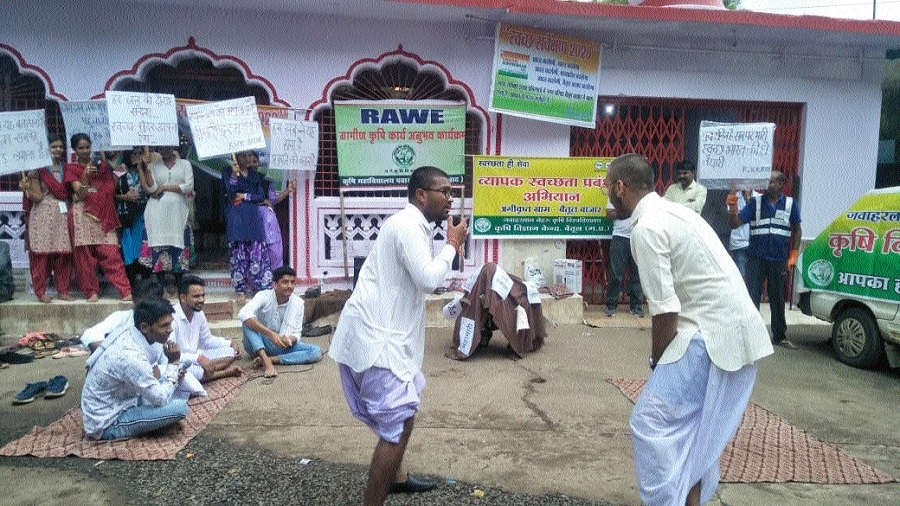
Rural Agriculture Work Experience (RAWE) program for agriculture graduates has became a multi-dimensional platform for students. The Jawaharlal Nehru Agriculture University (JNAU) also utilising RAWE program to give exposure to students about implementation, awareness development amongst rural masses about cleanliness, self-employment and literacy. For effective implementation of Swachhata Abiyan, the JNAU under RAWE program have adopted two villages.
A tribal village, Betul Bazar in Betul district and other Talli village of Umaria district have been adopted by the JNAU. In both the villages, students are pursuing RAWE program have also been involved in series of events creating aware amongst children, women, girls, men and senior citizen about cleanliness and hygiene habits. According to the mandate of the RAWE program incepted in JNAU as per guidelines issued by Indian Council of Agriculture Research the students are being taken for six weeks to rural areas where they share their knowledge an learn about traditional practices in farming and to share information they acquire in their degree program about modern farm science and technology with the farmers.
In past three years with the basic mandate the program has been enhanced with additional activities involving students in other social uplift works like education about cleanliness, hygiene by organising events like hand washing training and education of students and rural, nail cutting, personal hygiene as well as eradication program of deadly weed Parthenium from residential areas and farms in duo villages.
Dr Nalin Khare, Head of Department of Extension Education, said that with changing learning approach and technological exposure of rural masses the engagement of student also enhanced by involving social issues and important national programs like cleanliness and self employment. Under the RAWE programme students are not only involved in learning and teaching process of farming and agriculture sciences but are also helping rural to understand and avail benefits of different Government programmes. Such activities are helping students in developing leadership skills and traits to work efficiently with rural masses by involving them in learning their living habits and family traditions.