Archaeologist’s prime responsibility is to preserve heritage of India: Dr Deglurkar
| Date :25-Nov-2019 |
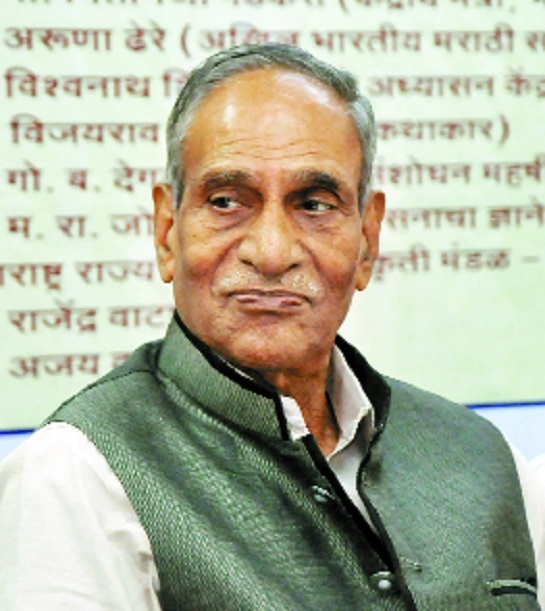
Dr G B Deglurkar
By Rajendra Diwe :
“The quality and standards of research projects in India are degrading over the years. Lack of curiosity and inquisitiveness in youths are the basic reasons for the downfall of research and innovation in India. Also University Grants Commission (UGC) had made PhD degrees mandatory for the people working in education fields. People do PhD just to get degrees, higher posts and increments in their jobs. These are some of the reasons of qualitative degradation of research in India,” expressed Dr G B Deglurkar, eminent archaeologist and President of Deccan College, Deemed University Pune.
Dr Deglurkar had started his career as a historian. But after recognising the limitations of history, he switched over to archaeology. He did his doctorate on ‘Cultural History of Marathwada, with special reference to old monuments.’ Dr Deglurkar contributed and participated in number of archaeological excavations in different sites in Vidarbha, Marathwada, other parts of Maharashtra and other States in India also. While talking to The Hitavada, Dr Deglurkar stated, “The attitude to search for something new is lacking. The youths are lacking this attitude. Research is not just presenting document on the basis of bibliography or on the work conducted by others for getting doctoral degree, but it should start from the mind of a research to invent something new.
For this one has to have self-confidence, interest and respect for work.” Dr Deglurkar described the rich cultural heritage of India on the basis of Adhibhoutik (physical form) and Adhyatmik (spiritual form). He explained, “India had given number of philosophies, technologies, scientific principles to the entire world and it had reached on the peak of development. There are number of monuments, sculptures, scriptures, items, ornaments, household materials of ancient Indian civilisation, the archaeologists over the years had excavated from different sites.
The temples, idols of Gods and Goddesses, the structure of these temples, etc., are the examples of rich spiritual heritage of India. Unfortunately, the country after Independence has lost its interest in heritage. Lack of interest, non-involvement, ignorance and negligence towards heritage have created number of serious issues in present India. This is one of the reasons the beautiful images, sculptures, idols and precious wealth of India has been stolen or smuggled to different countries.” Dr Deglurkar was instrumental in the excavations at different places like Pauni in Bhandara district; Takalghat near Nagpur; Mahurjhari, Mandhal, Bhokardhan, Aarni, Khairwada etc. He is the author of different books like Ancient Indian History And Culture; Temple Architecture and Sculpture of Maharashtra; Medieval Temples of Satgaon; A Study Of Temple Architecture Of Vidarbha In Relation To The Temples Of Marathwada; History Of Civilization Of Mankind; Bimba Brahma And Vastu Brahma i.e. The Ultimate In Iconography ; Verulchi Leni ; Vishnumurte Namastubhyam, etc.
Dr Deglurkar stated, “Through my constant research and studies of different sites, I found that all the dynasties which ruled Maharashtra from 2nd century BC to 12-13 century AD, right from the Satvahana dynasty to the Jadavas were related to the Maharashtra. All these kingdoms were rich in art and literature and were economically affluent.” Answering to a question, why the ancient monuments have become a part of museums in Western Countries, Dr Deglurkar explained, “The study of archaeology and documentation of ancient history was started during British period in India. Number of British scholars through gazetteers like Imperial Gazetteer documented these facts and researches.
Then the Indian researchers had followed their footprints. Before Independence, what they had found through their excavations and researches, they took away the monuments, sculptures, manuscripts, and many items were kept in their libraries or exhibitions or museums. For example, British Library has collection of around 35,000 photographs, produced between 1855 and 1922. This library forms a major resource both for the study of Indian architecture and archaeology, and for the early practice of archaeological photography in the subcontinent. These museums and libraries in developed world are maintaining these ancient valuable assets. At least it is a good sign that someone is preserving and maintaining the great heritage of India.”