NGT proposes ban on RO water filters, manufacturers raise opposition
| Date :29-Nov-2019 |
By Ajay Mardikar :
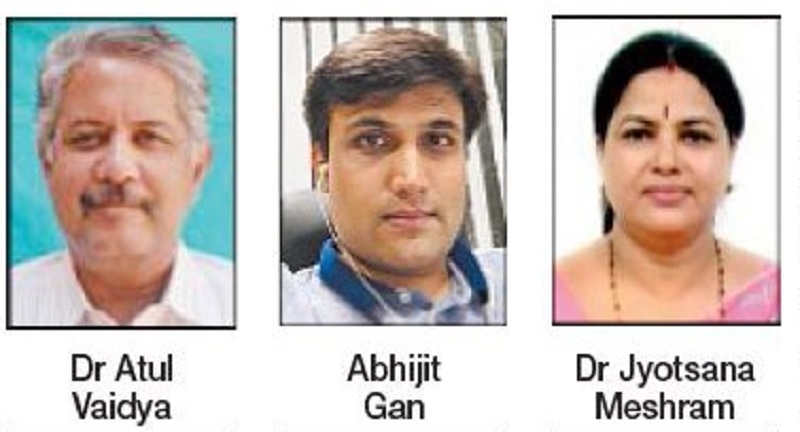
The attempt to ban use of Reverse Osmosis (RO) water filters is being contested by the manufacturers and other bodies promoting filtration of water supplied by the civic authorities or fetched from other sources. Although the recommendation to ban RO filters has been made by the National Green Tribunal (NGT), there is no such direction issued by the Government at the Centre or States, so far. With RO filters available in the market aplenty and used by people, mostly in urban areas or in states where water is contaminated by various heavy metals and other contaminants, ban on it has various dimensions. Dr Atul Vaidya, senior scientist at National Environmental Engineering Research Institute (NEERI), stated that it depends on the membrane used in the filter.
Different membranes are available in the market like micro-membrane filter; Ultra-Filter (UF), Nano-filter and RO. Different particles are filtered through these types of membranes, depending upon the contamination of water received from the source. Tests of how much water is harvested through the filter and the quantity of the wastage also determines the quality of filters or membranes. In some states like West Bengal, Rajasthan, some parts of Maharashtra, where contamination of water by heavy metals is very high, use of these filters are recommended.
Abhijit Gan, Director of Rite Water Solutions, which is manufacturing water filters stated that different technologies are used, depending upon the quality of water at the source. A large number of filters manufactured by Rite water Solutions have been installed in West Bengal, Haryana, Karnataka, Bihar and Maharashtra. Former Guardian Minister Chandrashekhar Bawankule and Former Finance Minister Sudhir Mungantiwar have sought these units and installed in Nagpur and Chandrapur. The units have all the facilities of filtration - RO, UF, Ozonization and Ultra-Violet radiation (UV). The NGT has demanded that water with less than 500 Total Dissolved Solids (TDS) should not be allowed to be used.
The Water Quality India Association has pleaded that the responsibility of supplying quality water is of the government. If the purity of water, matching the prescribed standards, these filters should not be required. Dr Jyotsana Meshram, Head of the Department of Chemistry, RTM Nagpur University stated that it is always recommended that tap water should be used for drinking. However, the filters are being used as the quality of water supplied through municipal authorities is not maintained. Even the Supreme Court, which was moved challenging the recommendation of NGT, has declined to interfere in the issue and directed the petitioners to approach the government. Ministry of Drinking Water and Sanitation (MDWS) and Ministry of Environment and Forest (MOEF) have not issued any direction, for or against use of RO or other filters. The ban is possible only when the government will be able to provide tap water connection to every household and ensure pure water supply, which appears to be a remote dream.