Dada of tribals
| Date :24-Mar-2019 |
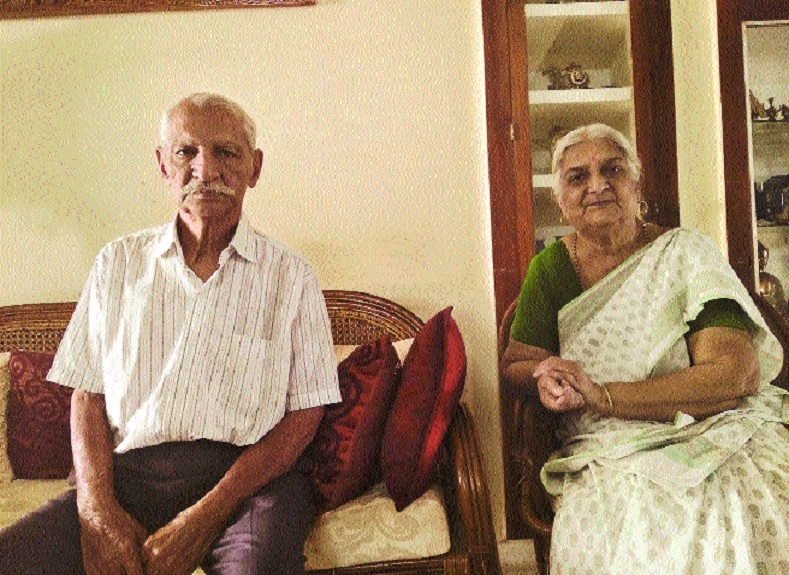
Jayant alias Dada and Jayashree alias Dadi Kothe
By Vikas Vaidya,
Dada Kothe imbibes awareness about health education in tribals
If you go to Halbaras, a remote village in Bastar, Chhattisgarh or Paulzola on the border of Gadchiroli and Gondia and ask about Jayant Moreshwar Kothe or Jayashree Jayant Kothe, the tribals there will first look at you in a nonplussed manner and then at each other before shrugging their shoulders. Your question will remain unanswered. They have not heard of the Kothes. Quiz then again if they know ‘Dada and Dadi’, the delight on the faces of the same tribals will be a joy to behold. They will lovingly hold your hand, take you to their homes and swamp you with cordial hospitality. This is when you realise the power and love that the name Dada and Dadi evoke in that tribal belt. When you delve into the work done by Dada and Dadi, you realise that they have not earned the sobriquet easily. What they did to earn a name that makes them a member of each family was done without any expectations. They simply worked with dedication for the welfare of those tribals with a zeal resulting in them becoming an integral part of each home. Jayant Kothe alias Dada while in Oil and Natural Gas Company (ONGC), observed tribal life from close quarters during his posting in Tripura in 1968. He was there till 1974. He noted several things from the lifestyle of the tribals and realised that tribals had tremendous potential but were ignorant about several common things.
Then and there he decided that he would do something for the welfare of the tribals. The opportunity to serve them arose after his retirement in 1994 as Senior General Manager of ONGC. Dada joined ‘Bhartiya Kushtharog Niwaran Sangh’ that works for leprosy patients. To identify leprosy patients he went to a small village Barsur in Bastar, where he didn’t come across any patient suffering from the dreaded disease. But Dada realised that the tribals needed to be made aware about health. “There was lack of awareness among the tribals about education, health.
Children, women were malnourished and nobody was there to guide them about the diet. I discussed it with the local doctors who agreed with what I said and urged me to do something. Government was coming up with so many projects but were not yielding any result. When we approached Government with our willingness to work for the tribals, it did not have any objection to our social cause,” explained Dada. Dada then searched the forest and other villages to know the situation, lifestyle of tribals, the condition in which they were living. Finally they reached Halbaras. He along with wife, Jayashree alias Dadi focussed on malnutrition. His sister, daughter all helped him in his endeavour. Dada’s prognosis came true. The children were found anaemic. “We realised children needed protein-rich diet so accordingly we asked them to bring rice, pulses, peanuts,oil. They did not have it in adequate quantity, so we supplemented them. After six months, they were examined again. To our joy, the blood tests showed a lot of improvement. Haemoglobin that was in the range of 5-6, had risen to 9. We succeeded in our first experiment. We steamlined their diet,” pointed out Dada. But this was just the first step. Dada realised that he was dealing with a mega problem because he found that all the good he had done was wasted when he left them to fend on their own. After spending a few days in Nagpur, when he returned to Halbaras, he found all the good undone. The picture was disappointing. Situation was back to square one. People had failed to follow the diet system chalked by Dada with the help of doctors.
“We realised the problem would not end unless we stayed there and monitored them closely or visited frequently. We extended our work area upto 30 km radius of Halbaras. We noticed lack of quality food was not the only problem. Cleanliness was another issue that was very serious. This was the reason behind the tribals falling sick on a regular basis, with Malaria being the main culprit. As the number of skin diseases also arose, we contacted dermatologists who helped us generously with check ups. We started giving the tribals vitamins and some improvement became visible,” informed Dada Kothe. During this phase of life, every day was a new day for Dada Kothe. He learned something new, he had to tackle something new that came up. The monster that raised its head then was sickle cell disease that was rampant in the children living in Halbaras and surrounding areas. It was time now to focus on sickle cell. Though Government was pouring money, no NGO was seriously working towards upliftment of the tribals. Dada and Dadi were deeply affected by this. There was nobody in the whole Dantewada district who could treat the tribals for sickle cell. It was after a lot of research Dada came across Dr Sudam Kate who was adept at treating patients affected with sickle cell.
With the help of Dr Kate, Dada worked round the clock to control sickle cell and it yielded good results. Dr Graham Roger Serjeant, British medical researcher who studied sickle-cell disease and wrote three books focusing on this dreaded disease, at the behest of Dada, visited Halbaras and appreciated the work being done there. Many people impressed by the work done by Dada and Dadi joined hands with them and worked with dedication. Annaji Jog is one such person whom Dada attributes the credit with regards to health improvement in tribals. Elated with the positive developments in Halbaras, Dada adopted another village - Paulzola in Maharashtra.
The question that dogged Dada, Dadi and his medico children was ‘what is the main reason behind the ill-health of these tribals? Is it their poor IQ?’ With this in mind, they stepped into a new realm - that of helping the tribals to become self-reliant. They conducted several sessions on de-addiction, Sanskars, cultural values to make the tribals aware about their souls and meaning of life. Through Adivasi Development Initiative, the NGO founded by Dada started courses of skill development that could be useful to the tribal children. Education brought awareness and soem of the tribal children joined Central Reserve Police Force (CRPF), some became Commanders, some chose to join teaching profession, some were willing to become good drivers, so they did. Everybody in their childhood must have heard ‘Dada-Dadi ki kahani’ (stories told by Grandparents). But it is the real story of these cute grandparents - 85 years young Dada and Dadi, aged 78 years - still going great, still wanting to do more for the tribals in Naxal-dominated areas - that is truly inspiring.