@@INCLUDE-HTTPS-REDIRECT-METATAG@@
Holy Week: Most important days of Christians
Holy Week: Most important days of Christians
By Fr. Joseph Quadros:
On Monday, Tuesday and Wednesday of Holy Week, during the Holy Mass, from the Gospels of John and Mathew are read highlighting the role of 3 people who played an important part during the last hours in the life of Jesus on earth before his death. (John 12/1-8, 36-38, Mt 26/14-25). Namely, Mary the sister of Martha by her anointing of His feet, Simon Peter who would deny his Master thrice, and Judas by his betrayal of Jesus for 30 pieces of silver. Then follow the most important days called the “Easter Triduum”. a) Holy Thursday: As a True Jew, Jesus first celebrated the Passover meal as prescribed, with the Paschal Lamb and Unleavened Bread. l When that was cone, Jesus gave his disciples the New Passover in the form of Bread and wine. His Body and Blood with the command to do the same in His Memory for all Time as he had promised in John 6/32-70.
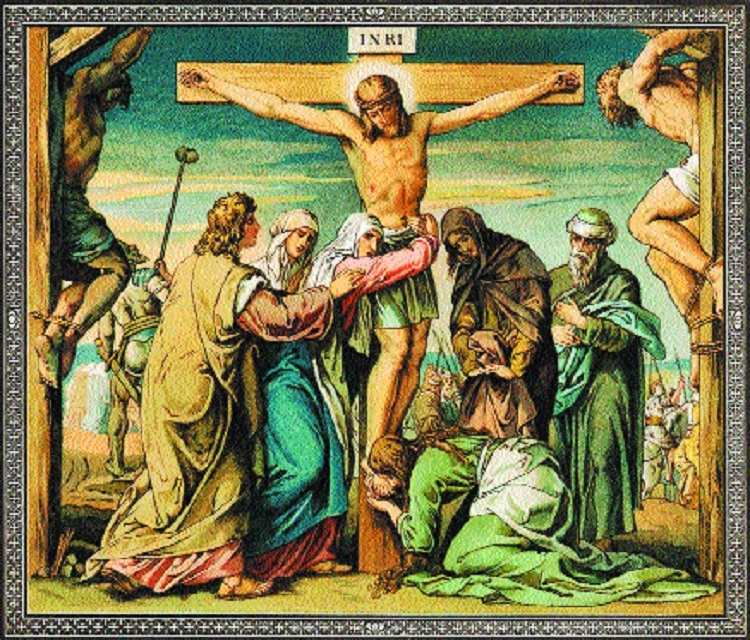
l Then He washed the feet of his disciples, though He was their Lord and Master, with the command that they also do as He has done, namely serve God’s People in humility and Love. l “Love one another as I have Loved You” were his words of farewell to his chosen ones. b) Good Friday: “On this day Jesus Died”, a day that is dear to the heart of every true Christian disciple of Christ. As St. Paul would write to his early Christians, “He Loved me and gave himself up for me”. So say all of us. Churches are crowded. A day of Fast and Prayer. From 7 to 9 am or 10 am to 12 noon men folk/women folk, youth carrying Large Wooden Crosses walk along streets in prayer, in honour of the FIRST Journey of Jesus with a Cross on his shoulders, from the house of Pilate in Jerusalem to the small hillock on Calvary where He was cruelly Nailed to the Cross. People pray, sing, mourn for their sins in sorrow and gratitude to Jesus for the price He paid for our sins.
l Later in the evening hours Priests and people gather in silence for prayer. The Gospel of St. John is read (Ch 18 to Ch 19/42) describing his trail, passion and death. Then the whole Christian world prays to God our Father in the name of Jesus His Son for various spiritual, human, social and civic needs. The Cross is solemnly venerated as our Symbol of Salvation. Lastly, the faithful present devoutly receive the body of Jesus in Holy Communion, sing sacred songs and retire in silence to their homes. c) Holy Saturday: A day of silence and hope. No religious services are held in any Church. Holy Silence prevails, Priests and people prepare for the great ceremony which unfold after sunset or after 9 pm in most Churches. l This is the Easter Vigil. A beautiful service full of symbolic meaning. All bright lights are shut off. A small coal fire is lit and with a greeting of the people, recalling events of last 3 days, this fire is blessed with a Prayer. This light from the fire recalls how “in the beginning God created light dispelling darkness from the face of the earth” Genesis Ch.
1. l A large White Candle represents Jesus who has risen from his tomb on Sunday morning. This candle is blessed and decorated with symbols, 5 incense balls, signifying His wounds on the Cross. l The light of the Easter Candle dispels the darkness of Sin through the Resurrection of Jesus. The Candle is then kept in a prominent corner in front of everyone followed by a beautiful song of praise. “O Felix Culpa” “O Happy Fault of Adam, which merited for us so great a Redeemer”. Seven passages from the Old Testament are read putting sin and redemption into context. Finally the Church Bells are rung. A glorious song of praise called “Mahima” is sung. It is Easter.
One more reading and the Cantor sings “Alleluia” for which all were waiting, and which had been buried during Lent (in the words of St. Augustine). Alleluia means Christ has risen from the dead, Rejoice and be glad. We are an Easter people, said Augustine again, and Alleluia is our song. A new song! The Gospel of Easter morning is proclaims. Water is blessed for use at baptism and the blessing of homes after Easter. People present publicly renew their Baptismal promises and are blessed with the Holy Water. Beautiful Easter songs accompany the reception of Holy Communion and thus a Truly Holy Week comes to a fitting climax. (Author is Senior Clergy, Archdiocese of Nagpur)