VNIT stands 31 in NIRF ranking in the country
| Date :09-Apr-2019 |
Staff Reporter:
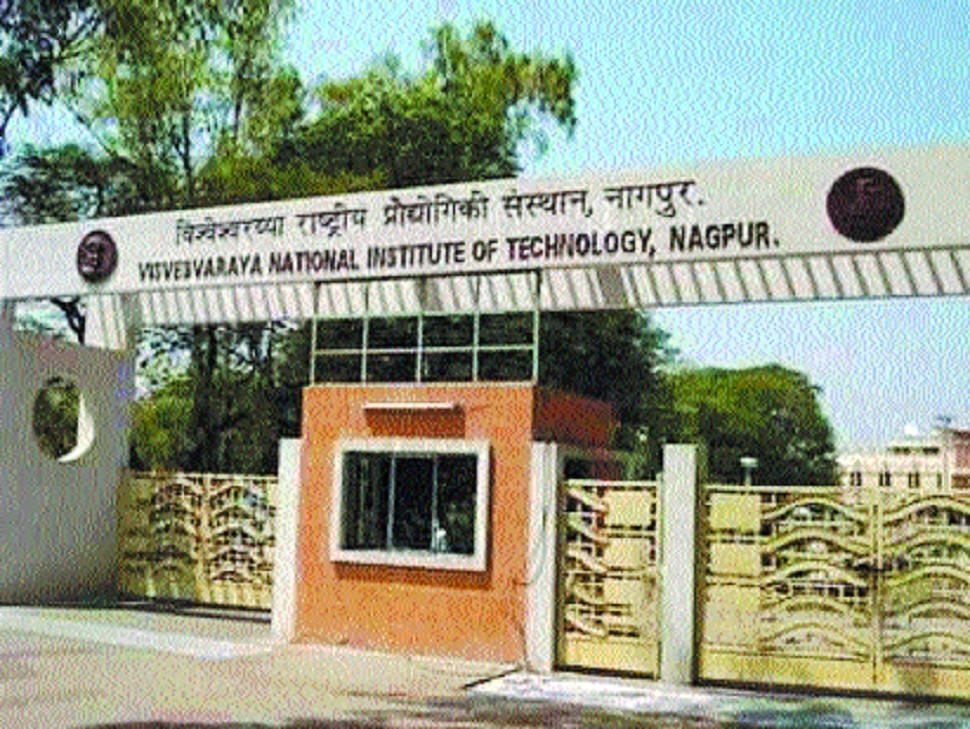
Visvesvaraya National Institute of Technology (VNIT) has maintained Rank 31 assessed by National Institutional Ranking Framework (NIRF), this year also. Last year, the institute had secured the same rank. This year, it scored more points than last year. Expressing happiness while talking to ‘The Hitavada’ Dr Pramod Padole attributed the success to various components including guidance by Chairman of Board of Governors of VNIT Vishram Jamdar, staff, society.
“We are trying to improve our ranking further next year,” he stated. “We are conducting several activities in institutes that would not only help students to grow academically but also generally. We are already heading towards becoming Centre of Excellence- Industry 4.0 with latest advancement,” informed Dr Padole. VNIT’s Incubation Centre provided opportunity to several youths to go for their start-ups. It has recently signed Memorandum of Understanding with Indian Space Research Organisation (ISRO) to expand its scope. The medical technology unit being run by VNIT has done several projects. Wardha’s Datta Meghe Institute of Medical Sciences, Deemed to be University is a part of this medical technology unit where artificial parts are prepared in association with medical and engineering faculty. Recently, it has signed agreement with All India Institute of Medical Sciences, Nagpur.
VNIT has done several changes on infrastructure front. It has created Classroom complex in G+6 storey building with 24 state of the art classes of 120-150 capacity. It has Research and Development projects worth Rs 60 crore and also transferred technology to 5-6 units. NIRF is a methodology adopted by the Ministry of Human Resource Development (MHRD), Government of India, to rank institutions of higher education in India. The Framework was approved by the MHRD and launched by Minister of Human Resource Development in 2015. There are separate rankings for different types of institutions depending on their areas of operation like universities and colleges, engineering institutions, management institutions, pharmacy institutions and architecture institutions.