Gosikhurd: Rs 11,482 cr spent in 36 yrs, completion is still 30 months away
| Date :20-Jun-2019 |
By Kartik Lokhande:
How estimated cost was revised
Original estimated cost (March 1983) -- Rs 372.22 crore
First revised administrative approval (July 1999) -- Rs 2,091.13 crore
Second revised administrative approval (November 2007) -- Rs 5,659.09 crore
CWC technical advisory committee approval (February 2008) -- Rs 7,777.78 crore
Third revised administrative approval (2011-12) -- Rs 13,739 crore
Updated revised administrative approval (September 2016) -- Rs 18,494.57 crore
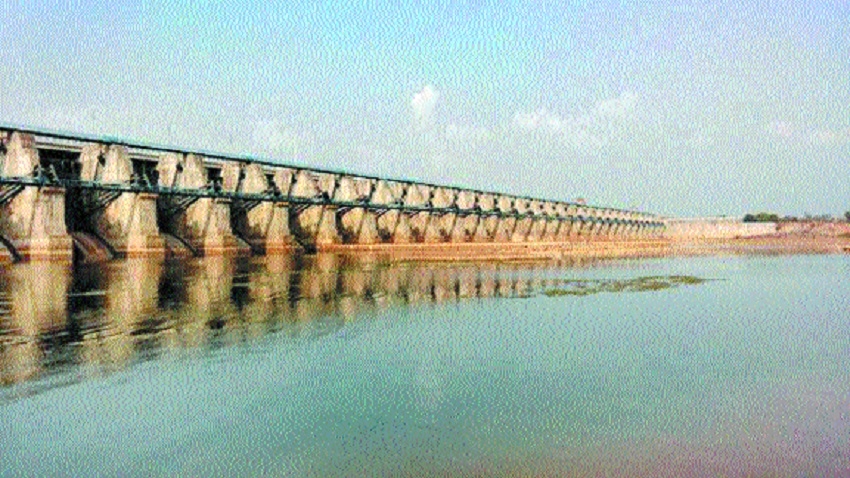
During the additional budget of the State Government presented in both the Houses of State Legislature on June 18 (Tuesday), it was announced that Gosikhurd national irrigation project would be completed by December 2021. Given the project’s history, it means that despite spending Rs 11,482 crore in 36 years, the farmers in the region will have to wait for 30 more months from now for project to get completed. Gosikhurd irrigation project got the first administrative approval on August 31, 1983. Then, its estimated cost was Rs 372.22 crore. The project attracted much attention nationally as the then Prime Minister Rajiv Gandhi performed its bhoomipujan on April 22, 1988. Then he had promised speedier completion of the project and said that Gosikhurd would be a milestone in Vidarbha’s development. However, since then, Gosikhurd has been a ‘tale of delay and disappointment’. For years, the project remained static. Nothing moved.
Many blamed it on to the lack of political will of the erstwhile Governments. A decade ago, when the things starred moving and financial allocation was made for the project, something shady took place. This part, which was attributed to the nexus of political leaders, contractors, and babus, later came to be known as ‘irrigation scam’. Among other projects, Gosikhurd also came under scanner. Even the quality of work done till then came under criticism. Comptroller and Auditor General (CAG), Vadnere and Mendhegiri committees appointed by the State Government, and Central Water Commission (CWC), made observations about sub-standard work, ‘overlooking’ of violation of norms, and benefits extended to contractors.
Water Resources Department (WRD) also admitted in its own ‘White Paper on Irrigation’ released during winter session of State Legislature in December 2012, that it took as many as 14 years for the dam work to actually begin since the date of bhoomipujan! By the year 2011-12, as per the official records, a huge amount of Rs 6,073.71 crore had been spent on the project. After change of guard in the State and Central Government in 2014, things started to improve for Gosikhurd project, which had been accorded the status of a ‘national’ project by then. The estimated cost of the project also had been revised by then to Rs 13,739 crore. But, officials in WRD said, work on the project made rapid progress in the past few years. At the end of March 2019, the amount spent on Gosikhurd project works was Rs 11,482.725 crore. While the issues pertaining to cost escalation, addition of components, rehabilitation of project-affected persons etc were being sorted out, the project cost was further revised to Rs 18,494.57 crore in September 2016. Now, for the current financial year 2019-20, an allocation of Rs 500 crore has been made.
“Things are moving pretty fast now. There was a lull in the execution of works for quite some time owing to fear psychosis prevailing among the officials, after enquiry was ordered into irrigation scam. However, with change in guidelines, and streamlining of processes to bring everything in order, now officials are doing their job,” said a senior officer of WRD, wishing to be unnamed. As against the planned irrigation potential of 2,50,800 hectares, till March 2018 the total irrigation potential created was 79,380 hectares. Of this potential, maximum actual irrigation was 57,138 hectares. It was 71.98 per cent of the created irrigation potential.
The actual irrigation through Right Bank Canal (RBC) and Left Bank Canal (LBC) was 14,061 hectares and 12,200 hectares respectively. Gosikhurd project components including Ambhora, Nerla, Mokhabardi, and Tekepar lift irrigation schemes also proved to be beneficial to farmers as water was available for actual irrigation. As far as land acquisition is concerned, of a total 21,818.56 hectares of private land required, total 21,698.39 hectares has been acquired. Besides, the required forest land of 1,707.96 hectares has been acquired. Of a total 85 affected villages, 43 have been relocated. As much as 98 per cent of the work of RBC has been completed, and entire work of LBC is over. Similarly, canal work of Ambhora lift irrigation scheme has been done and 90 per cent work of Mokhabardi scheme is over. Even the work of distributaries is in progress.
The remaining works will require some time and more funds. Hence, said an official, the fresh deadline is of December 2021. WRD has drawn up a plan for completion of these works. It has proposed to acquire private land required for distributaries by direct procurement. The work would have been completed, but for a few reasons including delay in getting search report and 7/12 extract, and family disputes at the time of acquisition of land, said the official in the know of things. Further, as per the new policy, piped distribution network will be created for irrigation from the project. For the purpose, tenders for 30,108 hectares of area under RBC and Asolamendha rejuvenation projects have been issued, he added.