@@INCLUDE-HTTPS-REDIRECT-METATAG@@
Introspect whether justice is delivered to underprivileged or not: CJI Gogoi
Introspect whether justice is delivered to underprivileged or not: CJI Gogoi
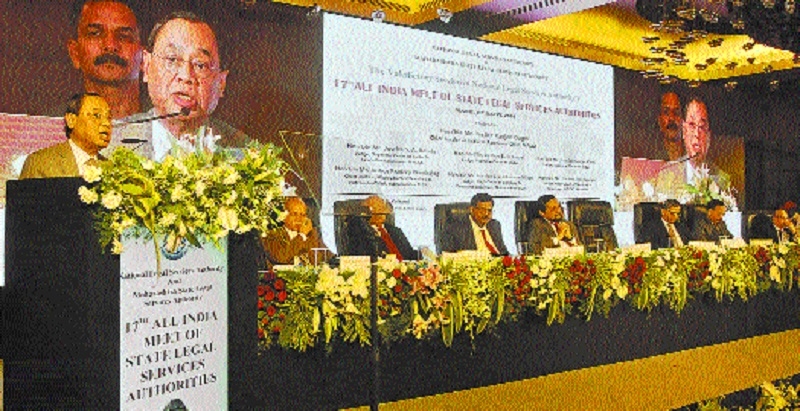
Chief Justice of India Ranjan Gogoi addressing the gathering of legal
luminaries during valedictory function of All India meet of State Legal Services Authorities on Sunday. Justice Akil Kureshi, Justice Pradeep Nandrajog, Justice Bhushan Gavai, Justice Sharad Bobde, Justice N V Ramana, Justice Surya Kant, Justice S C Dharmadhikari look on.
Principal Correspondent:
Justice Ranjan Gogoi enlightens gathering on the access to justice at valedictory function of All India Meet of State Legal Services Authorities
“Justice is delivered at doorsteps of those who seek it. It is a constitutional promise. In fact, it is a constitutional mandate. Whether we are substantially achieving it is a matter that needs introspection. An awareness of much more needed to be done and the complete realisation of the promise of access to justice assumes importance,” stated Justice Ranjan Gogoi, Chief Justice of India and Patron-in-Chief of National Legal Services Authorities (NALSA). Justice Gogoi was addressing the gathering of legal luminaries of the country at the valedictory function of the two-day All India Meet of State Legal Services Authorities on Saturday, organised at Hotel Radisson Blu, for the first time by National Legal Services Authority (NALSA). He explained the importance of access to justice, and said, “The underlined theme of the access to justice is to promote an all inclusive legal system and empowering the vulnerable and disadvantaged people who often exist on the margins of the society by securing to deal life’s fundamentals through dignified living.”
Senior Supreme Court judge and Executive Chairman of NALSA Justice Sharad Bobde was in the chair while Supreme Court Justices N V Ramana, and Chairman of Supreme Court Legal Services Committee; Judge of Supreme Court Justice Bhushan R Gavai, Bombay High Court Chief and Patron-in-Chief, Maharashtra State Legal Services Authority Pradeep Nandrajog; Supreme Court Judge Justice Surya Kant; Judge, High Court of Bombay and Executive Chairman of Maharashtra State Legal Services Authority Justice S C Dharmadhikari; Judge, Bombay High Court and Chairman of High Court Legal Services Committee Justice Akil Kureshi were seated on the dais. Justice Gogoi reminded audience what Justice P N Bhagwati as a chairperson of legal aid committee had said, ‘The legal aid means providing an arrangement in the society so that the machinery of the administration of justice becomes easily accessible. And is not out of reach to those who have to resort to it for enforcement of the rights given to them by law.
The poor and the illiterate should be able to approach the courts and their ignorance and poverty should not become barrier in getting them justice from the courts. Legal aid should be available to the poor and illiterate who don’t have access to courts.’ “Access to justice as basic principle of rule of law necessitates provision of fare, effective, non-discriminatory and accountable legal services that promotes justice without consideration of religion, caste, creed, race, sex, or any other similar exterior’s condition. Post-independence, various committees including Justice N H Bhagwati committee in 1945, Justice Traverse Harris Committee 1950, the first Law Commission 1958 have constituted to look into the matter of provisioning of legal aid.
A common recommendation was there that say legal representation should be made available at state expenses at a discretion of court after ascertaining various factors including means of the petitioners, criticality of the matter etc.,” said Justice Gogoi “Some unidentified topics have been listed for the discussion during the meet are indeed pertinent for expanding reach of legal services. It is heartening to know NALSA and State Legal Services Authorities have fast built up the path to reach the people away from justice. But we must take into account that legal literacy, awareness of one’s rights and means of securing rights are the powerful instrument for bringing social and economic progress. Absence of legal awareness is the route cause of deception, exploitation and deprivation of rights and benefits of the masses,” commented Justice Gogoi. Talking about legal literacy, legal education, the Chief Justice of India (CJI) stated, “Legal literacy and legal awareness go hand in hand. Legal aid movement can not achieve its goal as long as people are not aware of their basic rights. Greater awareness translates into greater and broadens access. Legal education is limited to universities, training, future lawyers. Education of legal issues should be included in school and college curriculum. It should go beyond rudimentary awareness. Movement of enriching legal knowledge should be driven by youngsters.
NALSA and state legal services authorities must focus their energy in imparting legal literacy into young minds. Students and young people have potential of becoming ambassadors of legal justice.” “Good number is not important but quality is. Right to legal aid means right to quality legal aid. Quality training should be provided to the members, lawyers and for that SLSAs should join hands with state judicial academies, national law universities and other universities. Respective high courts must take a lead and ensure the quality enhancement in legal education,” appealed Justice Ranjan Gogoi. Justice Akil Kureshi also spoke on the occasion. Adv Radhika Bajaj and Adv Ila Sudame compered while Alok Agarwal, Member Secretary of NALSA proposed a vote of thanks.
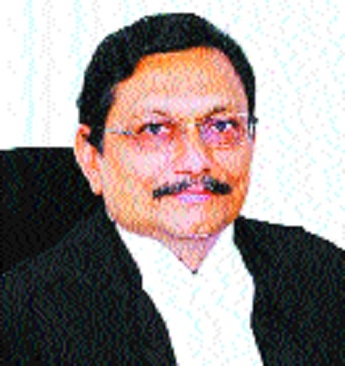
Justice Sharad Bobde
‘Focus on enhancing quality of justice delivered through LSA’ “Not having collective understanding that lack of awareness and proper communication channels regarding legal aid services has been the hindrance in the total process of legal aid services. But there is a vigour among those who are in the process of providing services which is reflected in the meeting, as everybody came up with so many initiatives, ideas for best practices. This is the factor I would appreciate.
The meeting ended on a successful note,” said Justice Sharad Bobde, Supreme Court Judge. “Public Defender system is likely to have transformative impact. It would not only help in improving accessibility, monitoring of cases, it would ensure professional management of the cases. This would be instrumental in improving the quality of legal aid services,” pointed out Justice Bobde. “Most of the states are proactive is a good thing. Secondly, legal aid to prisoners is an important facet. The decision to constitute a committee to evolve a scheme that would ensure the legal aid reaching to the people unaware of their legal rights is one of the good outcomes of the meeting. We have decided to focus on enhancing the quality of justice delivered by rationalising administrative structure. We have also resolved to effectively implement the guidelines to ensure the efficacy. We have rightly identified the essence of legal aid delivery,” stated Justice Sharad Bobde.
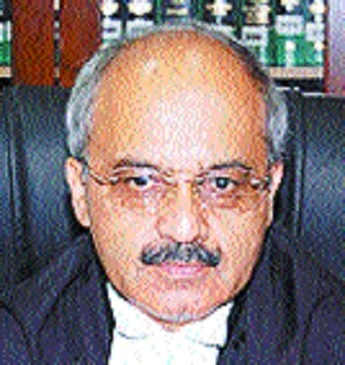
Justice Pradeep Nandrajog
‘Political sovereignty should be converted into legal sovereignty’ “The 17th NALSA conference ably triggered by the speeches of Justice Sharad Bobde and Law Minister that set the tone for rethinking and revaluation of what has been achieved in the field of dispensation of justice in the last seven decades. I remember the words of Dr Babasaheb Ambedkar who said, ‘We are going to plant a seed in the soil of the country which for ages has been feudal. He said that the future generation would have to nurture this seed with its blood and sweat. And before you think sometime the seed germinates and blossoms into a tree that would provide fruit, shade.
The theme set by Justice Bobde regarding the areas of legal aid services we need to carry forward. The values discussed in the session are evolved in granting legal aid to marginalised section of the society. We probably require the public defender system to achieve the goal. We should be able to convert political sovereignty into legal sovereignty,” said Justice Pradeep Nandrajog, Chief Justice of Bombay High Court.