@@INCLUDE-HTTPS-REDIRECT-METATAG@@
Doctors prefer exercise, change in lifestyle over medicines for patients
Doctors prefer exercise, change in lifestyle over medicines for patients
By Vikas Vaidya : Whenever we go to doctor with any minor complaint, he or she advises us to have lot of medicines. Sometimes the fever maybe of minor nature, but doctor does prescribe drugs. Doctors want patients to do the follow-up that too does not guarantee that patients would be able to stop consuming medicines afterwards. It is the common picture when patient starts visiting doctor and later on becomes permanent visitor. Of course this is not the same for all. Some doctors do insist on not prescribing medicines. They authoritatively ask their patients to go for exercise, lifestyle modifications and many patients respond to it positively.
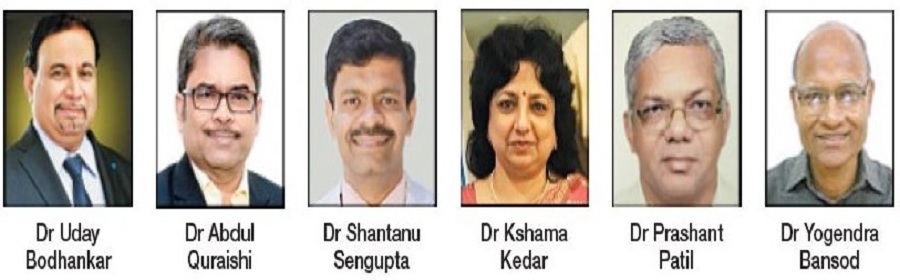
When ‘The Hitavada’ talked to some of the doctors, half of them seemed insisting on medicines while some preferred natural remedy over the drugs. Dr Yogendra Bansod, HoD, Medicine, Government Medical College and Hospital (GMCH) explained the issue in an elaborative manner. He said, “Many a times, patients come to us assuming that they had some disease. Most of the times they don’t need medicines. But, they insist on conducting investigations. Unfortunately, we have to do that. There are many occasions when investigations yield no result that we show to them and advice not to take medicines, do exercise, modify diet, etc.” “Of course there are some patients who do abide by our advice. I think, the rational thinking on the part of doctors and faith on them by patients is the important factor. I always want my patients not to take drugs,” Dr Bansod made it clear.
There is a fear on rise among people about they being suffering from several ailments and Dr Bansod attributes that fear to media hype. Lot of reports get viral like diabetes on rise, or number of people suffering from hypertension are increasing, sleep apnea has become rampant, etc. Such hypes too are compelling people to think negatively about their health. Dr Shantanu Sengupta, President of Diabetes Association of India, Nagpur chapter, said, “If the patients are young, stressed out ones, with increased weight, working more then we ask them to consume low salt, do exercise regularly. But those who have strong family history then we ask them to have regular follow-up. Medicines are also important. Isolated life modifications is very difficult in Indian conditions.
Borderline patients have to consume certain medicines. If they follow our guidelines then they experience improvement. But there are some who do have irregular lifestyle and don’t comply then they have to rely upon medicines.” Dr Sengupta is himself a marathon runner who have been running Mumbai marathon of 42 kms every year. He also has inspired many Nagpurians to do regular running. According to Dr Sengupta, medicines are important.
“Nowadays the average life span has been increased which is attributed to lifestyle along with medicines. People involving risk of diabetes, hypertension cannot rely only on lifestyle modifications. If a young girl comes to us with all her parameters normal or say she is at borderline then we don’t prescribe medicines to her. Two out of 10 patients don’t require drugs,” explained Dr Sengupta. Dr Sengupta talked about The Framingham Risk Score which is a gender-specific algorithm used to estimate 10-year cardiovascular risk of an individual.
The Framingham Risk Score was first developed based on data obtained from the Framingham Heart Study, to estimate the 10-year risk of developing coronary heart disease. Dr Sengupta said, “This score is important, based on it we decide whether to give medicine or not.” Dr Kshama Kedar, Secretary of Nagpur Obstetrics and Gynaecological Society (NOGS) never prescribe medicines at first instance. She said, “We do counseling for diet modifications, regular exercise. No doctor gives medicines to patients at first instance, not only me, but every doctor will agree with me.” Dr Uday Bodhankar, patron of Indian Academy of Paediatricians, Nagpur Chapter, doesn’t give medicines to 10 out of 100 patients. “There are some patients whom I prescribe some vitamins if investigations indicate deficiencies of the same. In my clinic, we keep Murmura, Poha, Khadisakhar for children.
We advice mothers to feed nutritious food to their wards that will keep them healthy. There are some patients whom we have to give medicines or administer injection,” said Dr Bodhankar. Dr Prashant Patil, Head, Department of Medicine, GMC, Gondia always emphasises on patients’ counseling. “On several occasions patients don’t need any medicines. If problem persists then only medicines, that too, in small quantity are required. Some patients do need to follow-up with doctors so that they can avoid life-long medicines.” Dr Abdul Quirashi, Professor, Department of Surgery, GMCH is a renowned surgeon. “On some occasions, we notice that the patient is at risk. Then, we have no choice than to go for surgery. For example, if a patient is traumatic, critical or has come with gastroenterological ailment, such cases involve risk. But there are some patients whom we advice rest, certain exercises. I never prescribe medicines if not needed.”