@@INCLUDE-HTTPS-REDIRECT-METATAG@@
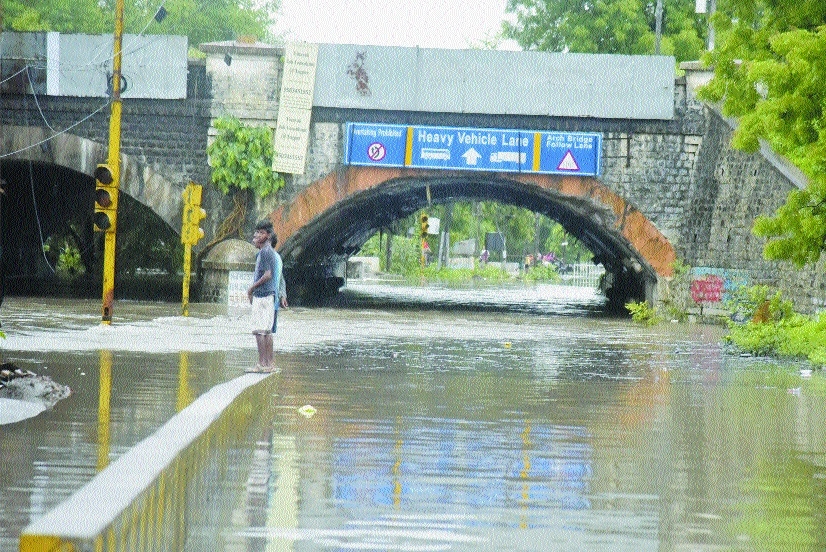
Roof-top water harvesting can resolve Narendra Nagar RUB water-logging issue: Study
Roof-top water harvesting can resolve Narendra Nagar RUB water-logging issue: Study
By Kaushik Bhattacharya :
Major institutions like NEERI, RPTS, Central Jail and FCI should come forward and implement the water harvesting process in their premises
IMPLEMENTATION of roof-top rainwater harvesting by each and every building and big institutions that comes under the catchment area of Narendra Nagar bridge will reduce the water logging at Narendra Nagar Railway Under Bridge (RUB) by 70 per cent, revealed a study conducted by imaGIS Engineering Solutions Pvt Ltd. “Along with 7852 buildings there are four big institutions like National Environmental Engineering Research Institute (NEERI), Nagpur Central Jail, Food Corporation of India (FCI) godown and Reserve Police Training School (RPTS) who are the major water contributors at the bridge location,” Sandeep Shirkhedkar, Director, imaGIS told ‘The Hitavada’.
“If each building in this catchment area implements roof top rainwater harvesting, the load on Narendra Nagar bridge will reduce to around 8 crore liters in an hour,” he said. The team of imgGIS conducted a test in the catchment area by draining the roof-top rainwater in open well or bore-well where they found that the bore-wells in the region have very high capacity to absorb water. This technique will not only recharge the ground water but also will substantially reduce the water logging at the RUB. During monsoon, rain water from Chhattrapati Nagar, Sneh Nagar, Hindustan Colony, NEERI, Surendra Nagar, Kotwal Nagar, Pratap Nagar, Deonagar, Tatya Tope Nagar, Atrey Layout, Central Jail, RPTS, Laxmi Nagar, Vasant Nagar and Gajanan Nagar directly comes in the Narendra Nagar nullah.
The nullah’s catchment covers 366 hectares area in which NEERI covers 48 ha, RPTS 20 ha, Central Jail 30 ha, FCI 15 ha, play grounds 9.5 ha, buildings 141 ha and roads and open space cover 102.5 ha area. Opening size for waterway is small at the bridge location. Developments and construction activities in the catchment area are some of the reasons behind water logging. Earlier, soil used to absorb rain water but now the soil portion is reducing and thus less water is absorbed into the soil. It causes more rainwater travelling to nullah and logging at the Narendra Nagar bridge. The study also revealed that the bridge can accommodate rain with intensity of 30 mm per hour.
“If the rainfall intensity in the catchment is more than 30 mm per hour, then water finds its way to the adjacent road. However, with the rainfall intensity of 60 mm per hour, water level rises to the level where even a school bus can submerge. Rainfall event with intensity of more than 30 mm per hour is very common these days. So, flooding of adjacent road is inevitable during intense rains,” Shirkhedkar stated.