Will the merger of banks give wings to Indian economy?
| Date :08-Apr-2020 |
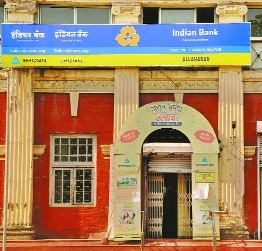
As per the announcement of Union Government in August 2019, on April 1, 2020, 10 banks were consolidated into four banks, namely United Bank of India and Oriental Bank of Commerce got merged with Punjab National Bank, Syndicate Bank merged with Canara Bank, Allahabad Bank is amalgamated with Indian Bank and Andhra Bank and Corporation Bank are consolidated with Union Bank of India. Earlier in 2019, Mumbai-based Dena Bank and Bengaluru- based Vijaya Bank were merged with Bank of Baroda. Prior to this, the Central Government had merged five associate banks of State Bank of India and Bharatiya Mahila Bank with the State Bank of India effective from April 1, 2017.
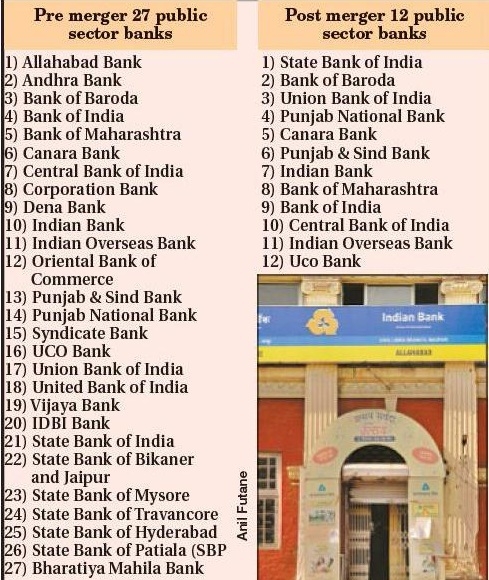
On April 1, 2020 with the consolidation of public sector banks (PSBs) the number of PSBs in India has come down to 12 from 27. The genesis of the merger of banks is the M Narasimham Committee report 1991. The committee was appointed to review the working of the commercial banks and other financial institutions of the country and to suggest measures to remodel these institutions for raising their efficiency. The key recommendations of the committee was establishment of a four-tier hierarchy for the banking structure consisting of three or four large banks including the SBI at the top, 8 to 10 national banks with a network of countrywide branches, local banks for regional operations and rural banks at the bottom mainly engaged in financing agriculture and related activities.
Does this merger accrue well for the bank customers? If we look at the bank customers the way bank looks at them then the customers can be divided into assets and liabilities. The borrowers of the bank are assets to the bank as they provide income to the bank and the depositors are liability for the bank as the bank has to pay them the interest. From the liability perspective the branches and ATMs will get reduced as the basic principle of merger is to rationalize costs for the merged entity and hence branch consolidation is a given thing. However, due to penetration of digital technology and availability of mobile apps the need for physical interaction with the banks has reduced considerably. Hence branch consolidation will not cause much of headache.
As regards the asset side or borrowers are concerned, theoretically bank mergers will aid the entrepreneurs. Armed with consolidated balance sheets the merged entity will have more power to advance credit and can also invest in modern technology to service their clients. The strong balance sheet will also help the bank access global markets on favourable terms which can be passed on to Indian businesses. But does this merger address the elephant in the room- the NPAs, and therein lies the key for success or failure of these consolidations. The concept that has been followed in these mergers is that weak banks have been merged with so called strong bank however in most cases the aggregate NPA ratio has gone up. If we analyse the NPAs in the banking sector, then the top ten are from the infrastructure sector including power, steel and infra projects.
These sectors require funds on a long-term basis due to high gestation period. In pre 2000 era, India had class of financial institutions that were labelled as Development Financial Institutions (DFI), infact current ICICI was earlier a DFI named Industrial Credit and Investment Corporation of India, they helped finance these long gestation projects. DFI’s in India were established on the recommendations of A D Shroff committee (1953). The committee recommended specifically the establishment of an Industrial development bank by the government to provide long term Industrial finance.
The state sponsored institution which the Committee called the Industrial Development Corporation later went on to become IDBI. The absence of a DFI in the current financial ecosystem is matter of concern. So, how does the current banking scenario in India look like? RBI Governor speaking on March 11, 2020 at Mint Annual Banking Conclave said that distinct segments of banking institutions may emerge in the coming years. The first segment may consist of large Indian banks with domestic and international presence, the 1st April augmentation process by the merger of Public Sector Banks (PSBs) is a step in that direction.
The second segment is likely to comprise several mid-sized banking institutions including niche banks with economy-wide presence. The third segment may encompass smaller private sector banks, small finance banks, regional rural banks and co-operative banks, which may specifically cater to the credit requirements of small borrowers in the unorganised sector in rural/ local areas. The fourth segment may consist of digital players who may act as service providers directly to customers or through banks by acting as their agents or associates. Post-merger SBI has entered the hallowed world of top 50 banks in the world. Hopefully, the four merged entity will also rise to the task and provide much needed competitive edge to Indian businesses. (Inputs by Arun Khobragade, former Vice-President of ABN Amro Bank (Global Operations) and Chairman of Babasaheb Ambedkar Social Innovation Council)