U’khand releases report on conservation of endemic, threatened floras
| Date :25-May-2020 |
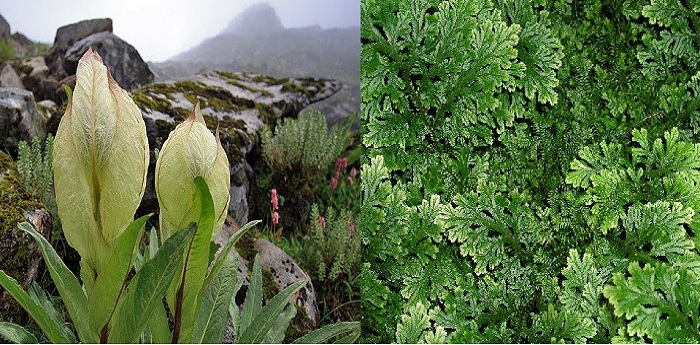
Brahmkamal and Sanjeevani.
NEW DELHI :
As many as 1,145 plant species have been conserved out of which 46 species are endemic to Uttarakhand and 68 species are rare, endangered or threatened
UTTARAKHAND has become the first State to release a unique report highlighting its conservation efforts to save over 1,100 rare plants from extinction. Herbs like ‘Ashwagandha’, ‘Giloy’, ‘Kalmegh’ and ‘Chitrak’, which are presently part of scientists’ research to find a possible cure to coronavirus, are included in this conservation programme executed by whistleblower forest service officer Sanjiv Chaturvedi. As many as 1,145 plant species have been conserved out of which 46 species are endemic to Uttarakhand and 68 species are rare, endangered or threatened, under red list of the International Union for Conservation of Nature (IUCN) or under State biodiversity board, under this project by the research wing of the state forest department.
The report, one of the largest repositories of conserved plants, was released on Sunday. Chaturvedi said this project is aimed at germplasm conservation so that species remain conserved with the forest department even if they disappear from their natural habitat in the wild. Conservation of endemic species is considered to be particularly important as they exist in one geographical region only. ‘Brahmkamal’, an endangered plant named after Hindu god Brahma, and mythological ‘Sanjeevani’ herb are also among the conserved floras under this programme. Brahmkamal (scientific name:Saussurea obvallata), found at over 12,000 feet altitude in the Himalayan region bordering China, is the State flower of Uttarakhand and considered a very sacred flower. It also has tremendous medicinal properties, is used as antiseptic and for treatment of other ailments. Sanjeevani (Selaginella bryopteris) is another rare herb which has found a mention in Ramayan.
Similarly, Thuner (Taxusbaccata), a tree found at very high altitude in Himalayan region and at the verge of extinction because of extraction of ‘taxol’, used in treating breast cancer, and Bhojpatra -- a holy tree on the bark of which ancient scriptures were written -- being the last species in tree line, are also conserved by the Uttarakhand forest department.
Bhojpatra (Betulautilis) is found in the Himalayan region at around 10,000 ft altitude, before the start of glaciers. The conservation programme covers all classes of plants - tree, shrub, herb, bamboo, wild climbers, fern, orchid, grass, cane, alpine flowers, palm, cycad, cactus, succulent, aquatic species, insectivorous plants and even lower plants like moss, lichen and algae, which have been documented, classified and conserved for the first time.
The report, running into 196 pages, prepared on these conserved species of floras contains detailed information of each plant on nine parameters – family name, scientific name, local name, endemism, conservation status, number and location at research establishment, uses and thumbnail size photograph. Around 386 species, conserved, have medicinal properties. “At present extinction rate of plant species has reached up to 5-7 species per year, as per various estimates, owing to climate change, global warming, smuggling/illegal extractions and unplanned construction among others which will have very adverse consequences for future,” Chaturvedi said.