Locust attack witnessed in Nagpur, Wardha
| Date :27-May-2020 |
Staff Reporter :
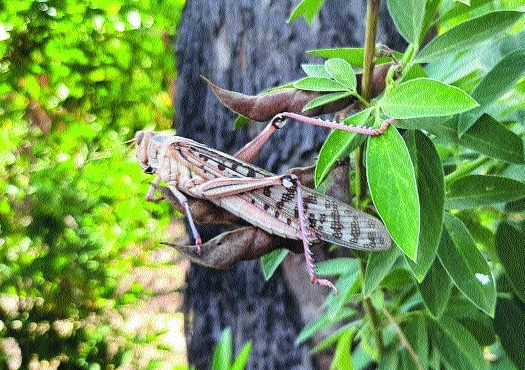
Vidarbha is facing a really worst time than any other period in the past. The entire Vidrabha region in general and Nagpur district in particular is facing challenging times due to the coronavirus pandemic. As if it is not sufficient, the farmers in Nagpur and Wardha district in Vidarbha are facing severe locust attacks amidst the challenging time. A swarm of desert locusts has entered in Nagpur and Wardha district and Agriculture Department personnel have initiated chemical spraying on crops and vegetation to save them from the migratory pests.
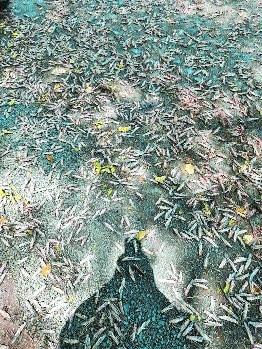
The swarm of locusts seen in one of the farms on Monday. The attack of locusts was witnessed in villages in Nagpur and Wardha district on Monday and Tuesday. The insects eat all the vegetation it confronts.
A press release issued by Agriculture Department has informed the farmers that they should start taking corrective measures to tackle the situation. Farmers should burn some dry leaves, tree branches etc. and create smoke or they should beat the drums and create heavy noise and spray insecticides. “Locusts are large insects that live mainly in hot countries. They fly in large groups and eat crops. Primary reports indicated that in the last couple of days, Ashti tehsil in Wardha District and Katol tehsil in Nagpur district and some villages like Fetri, Khangaon Shivar, Amner Gandi have come under attack from the locusts, known for feasting on all sorts of plants and standing crops.
The swarm of desert locusts entered the state from Amravati district. It then went to Wardha and now it is in Nagpurs Katol tehsil,” a release mentioned. “A team from the regional centre of the Central Integrated Pest Management Centre has started spraying chemicals on crops and plants near the Jalalkheda bypass where the insects have been located. Central agencies in this field had alerted us about the locust attack and necessary information had been passed on to villagers as well,” agriculture department stated. “A swarm does not travel in the night. The migratory pests travel during the day time and fly as per the wind direction. Locusts are very dangerous to all types of vegetation.
They feed on green leaves and known for devouring crops spread across on acres of land,” the release said. The department of agriculture have sprayed 80 liters of insecticide Chlorpyrifos through tractor operated sprayer and fire tenders. The Agriculture Department also has adviced farmers to use Neem based organic insecticide with Azadirectin 1500 ppm in 30 or 5% extract of Neem mixed in 10 liters of water. Also farmers should use Fipronil spray in combination 5 SC in 3 ml in 20 kg wheat or rice weeds. The farmers could also create a smoke of Methyl Paratheon win 2% in 25 to 30 kg per hectare. The department also adviced farmers to contact officials to tackle the locust attack.
Farmers demand spraying insecticide by helicopter
Staff Reporter
Farmers in the district have demanded usage of helicopter for spraying insecticide or breaking the loop of locusts before they ravage more area. Dinesh Thakre, progressive farmer from Katol, said the swarm of locusts attack occurred on Monday evening. Towards evening the skies suddenly turned dark and the locusts devoured the leaves on the green plants in the viccinity of Adesh Dhaba. As the locusts move around in round the circle moved towards Fetri Jawal and Lakholi villages. Before that the locusts wrecked havoc in Warud area. Thakre said in his lifetime this is the first time the locusts have come so far as Vidarbha, normally they were seen in border areas in Northern part of the country.
Sometimes during 1971-72 around time of famine the locusts had attacked the region, Thakre said citing tales from old timers in the town. Thakre said the senior officials of Agriculture department visited the area and interacted with farmers. Salil Deshmukh, Member, Zilla Parishad, and leader of Nationalist Youth Congress, also alerted District Collector Ravindra Thakre about the attack by locusts. The administration had advised use of insecticide but using the same is dangerous as most of farmers have switched over to organic farming.
An interesting point that Thakre shared with The Hitavada is that normally we were thinking that the insects won't attack neem and subabul trees but its leaves too were shredded by the locusts. Hence anything green and leafy is under threat and best way is to make use of traditional method of making use of neem seeds and leaves and making its smoke to drove away the locusts. The smoke basically blinds the locusts and they then move away swiftly to other area. However Thakre said such measures would bring relief at local level but at wider level the administration should quickly deployed helicopter and use the smoke to drive away the locusts far away.