Annular Solar Eclipse on June 21
| Date :01-Jun-2020 |
By Rajendra Diwe ;
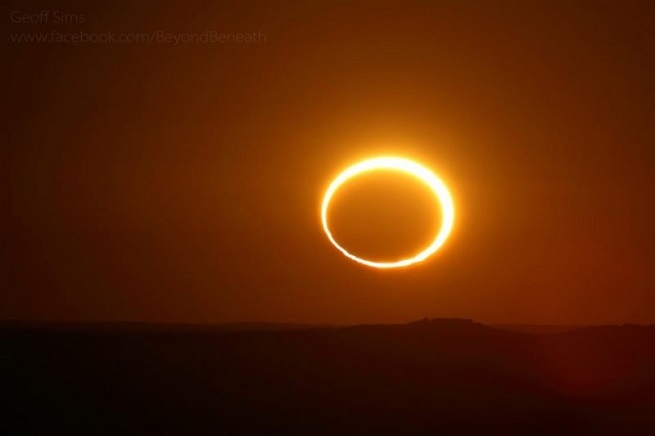
‘Kankanakruti Surya Grahan’ also known as Kankan or Chudamani Surya Grahan or Annular Solar Eclipse happens when the Moon covers the Sun’s center, leaving the Sun’s visible outer edges to form a ‘ring of fire’ or annulus around the Moon. The Solar eclipse will happen on June 21, 2020 on Ashadh Amavasya. “This Solar eclipse will be seen annular in some states in south India while in other states in North India it is seen as partial solar eclipse. This eclipse will be seen in entire Asia, Africa, South Europe, Indonesia and Pacific Ocean”, says Maharashtriya Panchang of Rajandekar.
Shri Martand Panchangam mentions, “The annular and partial parts of Solar Eclipses will be visible in entire country.” Panchang Diwakar states, “The Solar eclipse will be seen from early morning to noon in the form of partial solar eclipse in entire India while the annular form will be seen in North Rajasthan, North Haryana, and North part of Uttarakhand.
The State where annular form will be seen will cover 99.4 per cent of Sun while the partial solar eclipse states will cover 70 to 90 per cent of Sun. In central India, 70 to 90 per cent Sun surface will be covered while in South India it will cover 30 to 70 percent of the Sun’s surface. The sky watchers say, “The name “annular” comes from the Latin word for ring, “annulus.” These eclipses are named for their darkest, or maximum, point even if it only lasts less than a second. If the characteristic ring of fire is visible from even just one location, the whole eclipse is called an annular solar eclipse. Rajandekar Panchang states, “The annular solar eclipse will begin in Akola at 10.12 am while it will reach to maximum point at 11.53 am and will end at 13. 44 pm. The total duration will be 3.32 hours.”