Agrarian Distress
14 Jun 2020 11:47:16
By ANSHUMAN BHARGAVA :
“The more we neglect agriculture, the greater will be our food scarcity in the future and more difficult it would be to cater to the growing needs of a developing country.”
“Agriculture is also important to keep the food basket of the country replenished because we need to remain self-sufficient in food production to feed the teeming millions.”

THE Vice President of India, Venkaiah Naidu has said that India has emerged as an attractive destination for global investors and asked education institutes to maintain high standards and foster academic excellence. He was addressing the Convocation of Great Lakes Institute of Management, in Chennai recently. Observing that India was poised to become a US $5 trillion economy in the next few years, Naidu said there was a need to remove economic imbalances, urban-rural divide, end gender, and social discrimination.
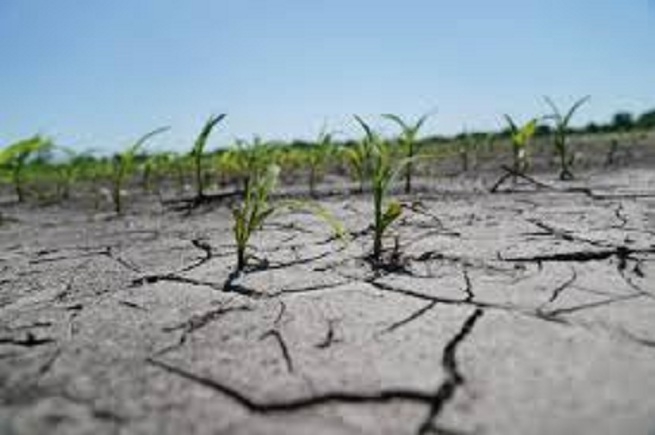
However, he stated that agriculture was in distress and that there was a need to introduce structural changes and come out with new strategies and programmes to make agriculture profitable and sustainable. India is still predominantly an agriculture-based economy and industrial development at the cost of development of the farm sector will be detrimental to the interests of a large section of the population. Agriculture is also important to keep the food basket of the country replenished because we need to remain self-sufficient in food production to feed the teeming millions.
The more we neglect agriculture, the greater will be our food scarcity in the future, and more difficult it would be to cater to the growing needs of a developing country. Hence, agriculture has to be sustained and made a lucrative and profitable venture so that the best of technology and talent reach the agriculture sector. It is unfortunate that due to excessive stress on industrialisation and comparative lack of impetus in the Agri sector, the educated rural youth are not going back to their farms and instead of seeking white-collar jobs in cities for money and status.
The expansion of cities and urban activities is eating into agricultural land and hence in the coming decades, the land will be scarce, putting additional pressure on agricultural resources. We will need better technology, innovation, research, and funding to extract more from less and enhance the efficiency in crop production in line with advanced global practices. Industries need to be linked better with the agriculture sector and both should complement each other. The supply chains have to be strengthened and seamless and fast transportation of agricultural commodities in global and indigenous markets has to be ensured. Today, the industrial eco-system is far removed in its reach and capability from the agriculture sector, as the latter is still highly dependent on traditional practices. The percolation and penetration of technology had been slow, sporadic, and unevenly distributed. This widens the gap between the rich and the poor, the rural, and the urban. Farmers still sit low in the professional hierarchy though they do the most important job of producing food for the country.
Many farmers are still oblivious of the global market realities and export policies, which leave them out of the business of profit. The Governments have traditionally doled out generous subsidies and compensations as an easy way to assuage farmers’ woes but money has not been adequately spent on long-term objectives to strengthen the fundamentals like training and infrastructure and organise the sector for better collaboration with the industry. Nor the industry has ever directed its attention towards bettering the farm sector in any major way except in areas that promised immediate profit. This disjoint has distanced the sectors and the people associated with them and this has a major role to play in the stark social contrasts we have in the country.
Had farming been projected and assimilated in a way that it looked an upmarket and technology-driven field, the approach and appreciation would have been different. The talent pool would have been richer and more resourced than it is today. Given the rapidity of urban expansion and the pressure that it creates on the farm sector, we need to double our efforts at promoting the interests of the farm sector. Agriculture is the mainstay of India’s economy and it has a major role to play in the revival of the economy if it gets the right assistance from the Government and the industry. Industrial development is slow at this time of downturn and despite some global investments in recent times, the overall scenario is not very encouraging. But agriculture is one sector that is India’s USP and it can be turned into a major fulcrum to revive the economy. If agriculture flourishes there will be liquidity in the economy and greater spending power will reach a large section of the population, which, in turn, is likely to generate positivity in the markets.
The youth must be encouraged and incentivised to use their talent and education in providing the right guidance to the farm sector, even as our young workforce in India is mainly driven to serve the industry. Farming is largely considered as a menial job not fit to be taken up by the educated. No parent encourages his child to consider contributing his innovation to agriculture, even if it means slogging 12 hours a day serving the interests of some multinational company. The swank and glitter of an urban lifestyle is a deluding trap that grips our psyche and eventually weakens the country’s underpinnings. Our farmers perish, while millionaire CEOs in New York or London get richer by our contribution. This trend must change and we must be more inward-looking so that we can strengthen our own resources and capacities and attract the world towards us by launching our own unique initiatives that are globally relevant and economically promising.
We have the right backings of a large population of the young and we have all the best education in the world suited to the interests of the farm sector. The only need is to change our outlook and perspective and give a different direction to our efforts. This is not saying that the industry has to be shunned or neglected but the right balance has to be struck so that no sector suffers or gets a raw deal. The present Government is trying to get that balance right and lots of unique and progressive initiatives through fund and technology transfer have been undertaken in the last six years to benefit farmers and make agriculture a lucrative and rewarding profession.
This shift in vision, if sustained through pro-active measures, will go a long way in not only changing India’s development roadmap but also securing its future in a more cohesive, inclusive and holistic manner, so that the benefits of development reach all sections of the populace across the rich-poor, urban-rural and other social divides. By the way, development is the most potent tool to unite all people and this is important because a country’s growth story is scripted not in the welfare or opulence of certain sections of its people, but only when and if the last and poorest person in the line also becomes a partaker of the benefits in equal measure.