‘Vidarbha has decreasing rainfall and increasing heatwave trends’
| Date :27-Jul-2020 |
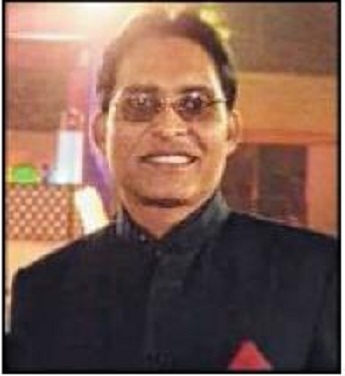
City chief of Regional Meteorological Centre M L Sahu
By Kaushik Bhattacharya :
Increasing accuracy of weather forecasting in recent years is a big achievement for Indian Meteorological Department (IMD). Changing weather patterns in the country due to global warming is a big concern for the department and it is making changes to understand the weather more precisely. City chief of Regional Meteorological Centre (RMC), M L Sahu, who is the Deputy Director General of Meteorology and Scientist ‘F’ of RMC, Nagpur, discussed the department’s plans over weather prediction and changing weather trends with ‘The Hitavada’. Starting with Vidarbha’s weather, Sahu said, “Vidarbha has decreasing trend in rainfall and there is some 2 to 3 year cycle in excess and deficient rainfall.
This is an alarming situation where every stakeholder must have to think about. Similarly, heatwave frequency is also increasing in Vidarbha due to global warming.” When asked about erratic behaviour of monsoon in recent years, the senior meteorologist said, “The rainfall season has not become erratic. You can see that monsoon starts in June and continues upto October in Central India, which is the same for many years. Yes, there is now little delay in arrival of monsoon. But, in my study, I have seen that there is a delay of 3 to 7 days in arrival of monsoon. But, withdrawal of monsoon is also delayed and it is shifting beyond October 10.”
Frequency of extreme events like heavy rainfall is increasing nowadays, which may be due to climate change, he further added. Sahu is an alumnus of IIT-Delhi, where he did his MTech in Water Resources Engineering. Sahu also spoke about the importance of Indian’s Monsoon Mission adopted by IMD. “Under National Monsoon Mission, we will try to give long-range forecast at the state level. Actually, the Monsoon Mission is to use water properly because India has sufficient rainfall. Only we have to implement water conservation policy systematically,” he added. “There is lot of improvement in communication system. Press and electronic media are very active nowadays in giving weather information and helping IMD to disseminate the data to village-level farmers,” DDG added.
Sahu said that, social media like Whatsapp, Twitter and Facebook are very useful tools for IMD to inform common people about weather information. “We are working hard to improve the communication system to provide quick and accurate weather forecast to more and more citizens through our websites and mobile applications,” he added. Sahu is a life member of India Meteorological Society and has bagged many prestigious awards, including Meteorological Centre Award.
He was a member of Chhattisgarh’s Technical Advisory Committee of Water Resources Department and is currently the member of State-Level Committee of Vidarbha for Disaster Management. While asking him about technological advancement that IMD is working on currently, Sahu said, “Right now, IMD is planning to improve forecast from district level to taluka level and use all media and social media to disseminate data to public and farmer.” At the end, he said, “Our objective is that over the next five years, we move from information-based forecast to impact-based forecast.”