Netaji Subhash Chandra Bose - A global leader for freedom movement
| Date :22-Jan-2021 |
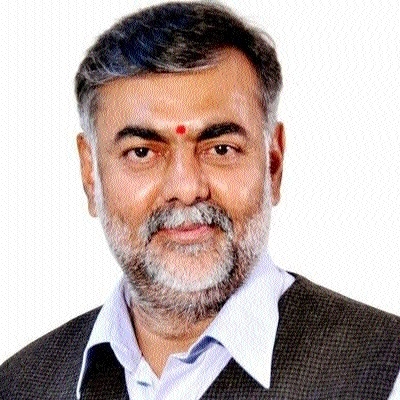
By Prahlad Singh Patel :
Life of Netaji Subhash Chandra Bose is a story of struggle. It is the story of a young dream which narrates saga of struggle and success in every eye. He never accepted charity but wanted freedom of his soil by shedding his blood. Thousands of people sacrificed their lives on a single call of Netaji who created his own army against the British and gave the slogan - Jai Hind. Netaji was born in Cuttack in Odisha and completed his graduation at Kolkata in Bengal and proved his mettle against the enemy by becoming an ICS Officer. But he was never satisfied working under British and he started struggle for freedom of the nation. Being a warrior in war of freedom, Netaji gave a slogan to the country ‘Tum Mujhe Khoon Do - Main Tumhe Azadi Doonga’ (Give Me Your Blood - I will give you freedom). This slogan had infused a new energy amongst freedom fighters especially youngsters and gave a new leader to the country.
Netaji’s attachment with ‘Bharat Mata’ never made him relax and inspired him for the service of the nation. His popularity crossed national borders and influenced several other nations. His mutual interaction with Presidents of other nations built an outside strength for freedom of India. His initiative of constituting Azad Hind Fauj gave sleepless nights to British. Marching of Azad Hind Fauj towards Delhi with slogan of ‘Dilli Chalo’ challenged the strong British Army. Around 26,000 of 60,000 soldiers of Azad Hind Fauj sacrificed their lives but shook the throne of British Empire and compelled them to leave the country. ‘Success always stands on pillar of failure’ - Subhash Chandra Bose lived with this belief and also inspired others.
He faced several failures but he transformed his failures into success with his struggle. Right from politics of Municipal Corporation, Netaji always lived upto the expectations in journey of becoming Congress President, formation of Forward Block and struggle of Azad Hind Fauj. Netaji had accepted the leadership of Mahatma Gandhi but unfortunately, Gandhiji was the reason behind leaving him from Congress Party. But both these leaders always had mutual respect for each other. Netaji never used insulting words for Gandhiji. He was twice elected as Congress President but left the party after resigning the post of Party President. After this phase of life, he wrote a different chapter of War of Freedom.
In 1939 and thereafter, when the country was in decisive phase of freedom struggle, Netaji interacted with Hitler, Mussolini, Tojo and Stalin with the vision of freedom. At that time, Congress and Communist Party were in dilemma of their stand for freedom. At the time of Indian freedom, Clement Attlee was Prime Minister of Britain who visited Kolkata in year 1956. His host Governor Justice B P Chakraborty had tried to learn from him what was the reason behind Britishers that had forced them to leave India. In reply, Attlee had said that strengthening Azad Hind Fauj of Netaji Subhash Chandra Bose leads to reducing loyalty of Indian Army and Navy towards British and forced them to leave the country. It proved that Netaji Subhash Chandra Bose has a big contribution in freedom of the nation. Jabalpur district of Madhya Pradesh has a big contribution in the life of Netaji. Banks of Narmada brought a big change in the life of Netaji. Jabalpur host Tripuri Congress Convention from March 4 to 11, 1939. Even after facing health issues, Netaji reached Jabalpur on stretcher to attend the convention.
After the formation of Forward Block, Netaji again reached Jabalpur on July 4, 1939. The State has several wards and buildings after the name of Netaji and residents have a strong bond with him. Sahyog Krida Mandal organises National Kabaddi Competition every year since last 37-years in Mandla district while Central Jail Jabalpur and Seoni are after the name of Netaji Subhash Chandra Bose. Netaji had a strong hold in English, Hindi, Bengali, Tamil, Telugu, Gujarati and Pashto languages. He left behind a message for his subordinates as ‘Safalta Ka Din Door Ho Sakta Hai - Lekin Uska Aana Anivarya Hai’ (Day of success might be far - but it will definitely come). Netaji has said ‘Jis Vyakti Ke Andar Sanak Nahi Hoti Vok Kabhi Mahan Nahi Ban Sakta’ (Passion leads to greatness). Netaji was imprisoned for 11 times in India but his skill of dodging the British army and association with strong leaders of other nations were his passion to get success. Global identity to Indian leadership is accredited to Subhash Chandra Bose.
Earlier, Swami Vivekanand had introduced the Indian spiritualism and culture to the world and inspired Netaji also. Netaji never stopped recitation of Bhagwad Gita. Struggle of Subhash Chandra Bose for freedom was not limited to India only but it also influenced several other countries. Indian War of Independence led by Subhash Chandra Bose had deep impact in freedom of several other nations. After the World Ward - II, around three dozen Asian countries got freedom. The towering personality of Netaji Subhash Chandra Bose established him as a global leader for freedom movement. (The author is Union Minister of State for Culture and Tourism (Independent Charge), Government of India)