Among the first to air-attack East Pakistani targets
| Date :16-Dec-2021 |
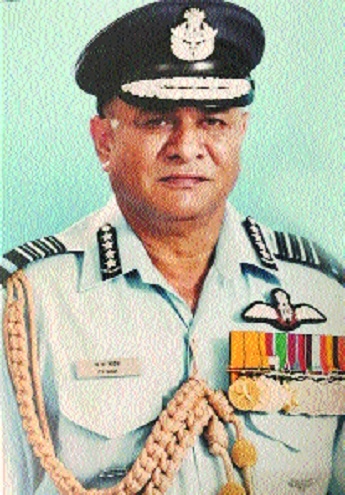
Air Chief Marshal Pradeep Vasant Naik (Retd) PVSM VSM
By Vijay Phanshikar :
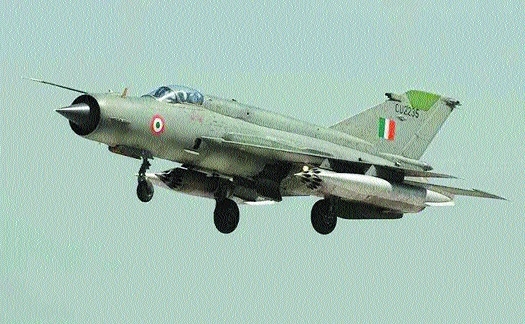
“Pradeep, tomorrow we are on”! These words of the Flight Commander to 22-year-old Pilot Officer Pradeep Vasant Naik on the late evening of December 3, 1971, conveyed all seriousness. The next morning, that is on December 4, by 5 am, two MiG 21s took off in eastern direction from the Kalaikonda Airbase near Kharagpur, on chosen targets in East Pakistan. The war was on. What followed in the next few hours was precision attacks on East Pakistani target of Ishurdi airfield. Intelligence had marked one building where the Pakistanis were reported to have stored bombs. With adrenaline pumping, the two air warriors fired 57 mm rockets at the target, and immediately saw smoke billowing from the building. The hit was precise. Both of them had 32 rockets each, and still had some left with them. The Flight Commander asked his younger colleague if he had any rockets left. There were, -- which were used to attack a railway station where there were a couple of trains, with Pakistani soldiers on them. After emptying out their charge, the two planes returned to the base.
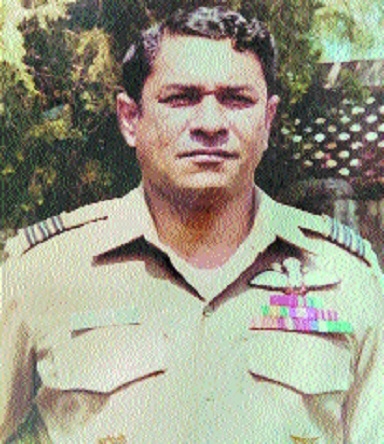
The young P V Naik, when he was Wing Commander
That was the first sortie of the day -- for Pilot Officer Naik. They returned quickly, very excited. But when the ground staff asked, Pradeep Naik just said, “Nothing exciting. We did our job.” When the Flight Commander told Pilot Officer Naik that they were on the next day, he took that as a joke. For, in the past some time, he had heard that so many times. The 30 Squadron to which he belonged had been on alert for quite some time. “This is no joke. We are on tomorrow”, the Flight Commander had insisted. Then followed the early morning sorties when the aircraft flew into rising sun that offered such a beautiful sight. Pilot Officer Pradeep Naik still remembers that glorious sight -- no matter the excitement of action. That very day, he flew again for another sortie, this time with a strike force of four aircraft, and he being one of the two escorts. The target was Tezgaon military airfield. The same night, 30 Squadron was moved to Kanpur on way to the western sector where battle raged far more fiercely. Fifty years later, Air Chief Marshal Pradeep Vasant Naik (Retired) PVSM VSM who served as 22nd chief of the iconic Indian Air Force recalls that moment when he was one of the early air warriors to fly into East Pakistan when the war broke out -- ultimately leading to the liberation of Bangladesh. Even though his voice is calm now, Air Chief Marshal Naik still feels the sensation and excitement of action then. In a finely flowing mix of English and Marathi, he recounts those days and the ones following those.
“The country has not seen any such moment since then”, he says. As the Kargil conflict drew near, Air Commodore Pradeep Naik was commanding the Srinagar airfield. But precisely at that time, he was sent to attend a specialised training course, and missed the subsequent action. “Of course, war is bad. It has a crippling effect on the economy. It must be avoided”, he says matter-of-factly. These words sound very appropriate for him now -- after he has seen things at the highest and the deepest levels. His rise to be the Air Chief came in a flow. He enjoyed the position when he reported only to Defence Minister A.K. Antony -- who never interfered in professional matters. And when he retired from his high position, Air Chief Marshal Naik had every reason to feel satisfied that he did his best in each of his assignments.
The place of the Air Force is special in the scheme of things. In any conflict, the singular advantage of Air Force is that it can strike at the heart of the enemy within hours, whereas the Army and the Navy take days since they move step by step, Air Chief Marshal Naik stresses. He then offers a quote of sorts from an unknown source: “Air power alone cannot win a war, but no war can be won without air power.” In the 1971 War, the Indian air power was used most perfectly, to earn a telling effect”, he adds. As the country celebrates fifty years of 1971 War, Air Chief Marshal Naik recalls the celebrations immediately after the surrender took place. It is natural for the Indian people to feel happy, proud, he adds. But that is not enough.
The people must not become patriotic only August 15 and January 26. That should be a lifelong calling, he says. To the young people, Air Chief Marshal Naik has a special message: Never forget those who give their very best throughout life for the defence of the country. Services offer great career options -- with comfortable pay, permanency of job. “As an Air Force man, I insist, the IAF is the best option.” Then the former IAF chief with an amiable voice turns philosophical: “All agree that the Services are the last bastion of high values where petty issues such as caste, creed do not matter at all. The uniform adds to the glory, making the wearers proud, the nation proud. The Services are the only system in which the country is 24x7 central to thinking”, he says. Air Chief Marshal Naik has an appeal for common people: “Everybody cannot be a General. But people should think of the country at least once every day. They should become good citizens and make themselves good enough to deserve the dedicated work the Services render all the time.
On July 22, 1949, Pradeep Vasant Naik was born in Nagpur’s suburb Bijli Nagar. A little later, his civil engineer father changed the residence to Shraddhanand Peth, before the family moved to Mumbai. There, in a Vile Parle school, Pradeep Naik studied in Marathi medium up to 8th standard, when he was first introduced to English alphabet. Then came a visit to the NDA in Pune where a rippling, shimmering swimming pool attracted the young fellow. That was why he wanted to join the NDA. His time in the Satara Saink School also helped in a big way. “It was my father who motivated me in the real sense,” he recalls today.