Kin suffer as ambulances working as hearse vans, minting money
28 Apr 2021 08:45:11
By Shirish Borkar :
THE Oxford dictionary defines ambulance as a vehicle with special equipment used for taking sick or injured patients to a hospital. However, at the peak of COVID-19 second wave in the city, most of 1,180 ambulances registered with Regional Transport Office are working as hearse vans to carry bodies of positive patients from hospitals to crematoriums and cemeteries for last rites. Unauthorised ambulances, too, are mushrooming and carrying bodies from COVID hospitals to crematoriums by charging exorbitant rates from the relatives of the deceased. Speaking to ‘The Hitavada’ on the condition of anonymity, a relative of a patient who passed away at COVID ward in a Hingna-based hospital informed that he had to shell out Rs 7,000 for the private ambulance to take the body to Ambazari ghat. The ambulance driver told him that he also had a ‘setting’ with the staff at the crematorium so that they would not have to stand waiting to perform the last rites.
After reaching the crematorium, again two young boys took Rs 1,000 to cremate the body. Persons whose near and dear ones succumb to coronavirus, have to wait for hours for the hearse van of Nagpur Municipal Corporation (NMC) to take away the bodies. Due to shortage of ambulances, NMC authorities have engaged ‘Aapli’ buses to take the bodies of COVID-19 patients from hospital. But these vehicles take five to six hours to arrive at the hospital and carry all the bodies simultaneously to the crematorium. In such situation, the private ambulance owners or to whom ambulances are donated by political parties, individual politicians, social workers approach the relatives of the deceased bargaining for taking the body to the crematorium.
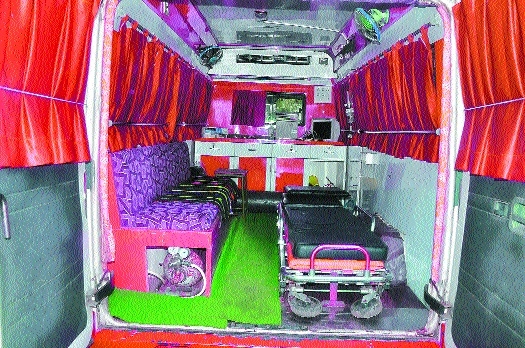
As the pandemic situation becomes grimmer and gloomy, it has also affected other stroke-related patients and accident victims to a large extent. In some cases, the same ambulances carry the dead bodies of COVD-19 victims as well as other patients without proper sanitation and other safety measures. As per rules, emergency medical service providers at all levels must have appropriate equipment and supplies to optimise pre-hospital delivery of patients with care. The pre-hospital care is to minimise further systemic injury and manage life threatening conditions to ensure safety of patients. An ambulance should have emergency life support equipment.
It should have emergency medical technicians or well-trained nurses, a physician, portable oxygen cylinder and ventilators, EGC monitor with a defibrillator, a stretcher, bandages, essential drugs, sanitisers and PPE kits for nurses, doctors and emergency technicians. However, no sufficient focus is being given to all these necessary facilities. Some ambulances attached to prominent private hospitals do have all facilities but most of these vehicles lack such equipment and are now working as hearse vans to ferry dead bodies from COVID hospitals to crematoriums and burial grounds. Will the NMC authorities streamline the system and monitor whether the ambulances are well-equipped remains a billion dollar question.