Nag: An open drainage carrying city’s waste water
| Date :26-May-2021 |
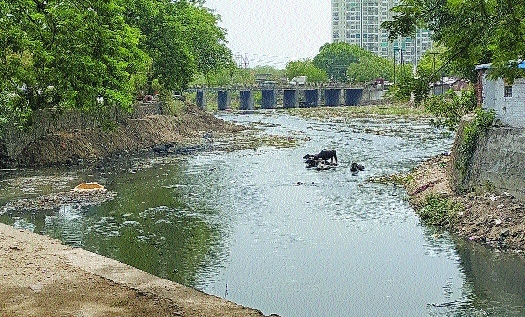
The silt removed from Nag river near Siraspeth is yet to be lifted and any further delay could result in the dumped soil sliding down and blocking the channel even before onset of monsoon.
By Kaushik Bhattacharya :
DO YOU ever think what happens to the waste water generated in the city everyday? The normal answer is, ‘it goes into the sewer line’. But after that the waste water which is rich in lather, mixed with oil, black–brown water goes down in a nullah and then it goes into the Nag river -- the identity of this city. Unknowingly every citizen of Nagpur is a contributor of waste water into Nag river. Today, Nag river has become an open drainage system criss-crossing through the city. Nagpur Municipal Corporation (NMC) conducts desilting and cleaning mission of Nag river every year before monsoon and this year also it is under way. But, it is not going to change the water colour. Government of India and the Maharashtra Government came forward to rejuvenate the river with the help of Japanese International Co-operation Agency (JICA) recently. However, there are many topics which need focus while rejuvenation of the river. ‘The Hitavada’, on Tuesday, followed the Nag river and found the major sources which are directly responsible for contamination of the river. After Sangam in Sitabuldi, the river crosses through Ghat Road, Baidyanath Square, Untkhana Square, Nandanvan, Gangabai Ghat and Wardhaman Nagar.
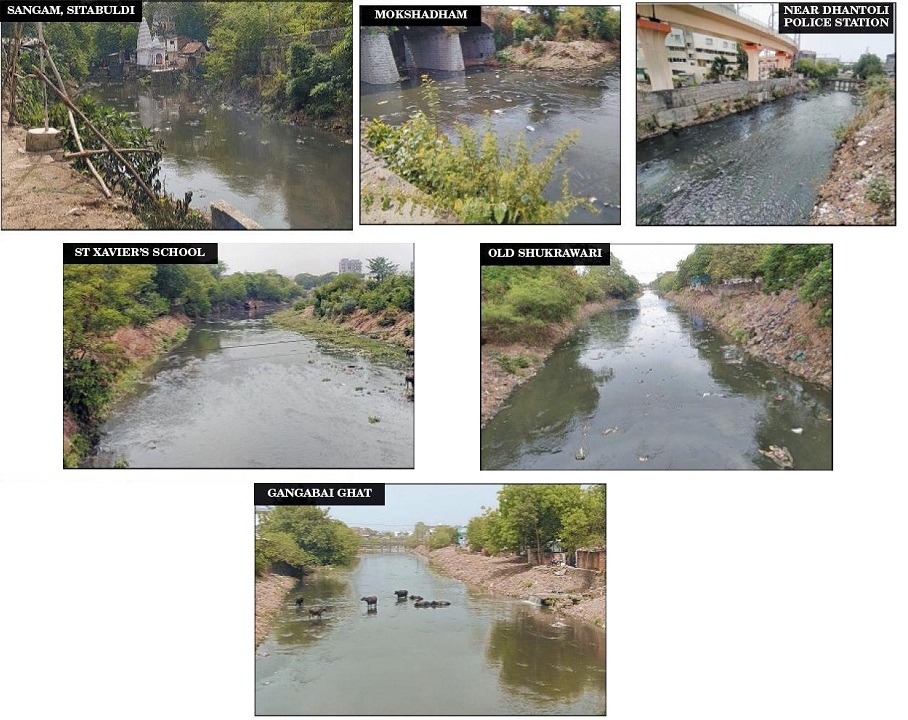
In this stretch, two major crematoriums, Mokshadham and Gangabai ghat are situated over the Nag river. Both crematoriums generate solid waste and amid this pandemic situation the biomedical waste is also getting dumped in the river. Along with this, slaughter houses in the city discharge waste water into the river through nullahs. There slaughter houses do not have arrangement for the treatment of their waste water. All the waste flowing through the nullah adds to further contamination of the river. Various major individual industrial units located in the catchment area of Nag river within the city and outside the city limits discharge waste water into the river.
These industries should have provided their own ETP for treatment of industrial effluent. Few industries are practising about 80 per cent recycle of the treated effluent, however the remaining effluent is discharged directly in the water body. Similarly, growing nursing homes and establishment of a number of multi-bedded hospitals in and around municipal limits is responsible for discharge of liquid waste. This constitutes a major concern as discharge of untreated liquid waste is also responsible for river pollution.Along with domestic waste water, these units are also equally responsible for discharging untreated liquid waste in Nag river. Dumping of solid waste is also common which mainly block the flow of the river. “Cleaning of all three major rivers in the city is under way and the work will be completed before monsoon,” Pradeep Dasarwar, Health Officer (Solid Waste Management), NMC told ‘The Hitavada’. “Dumping of solid waste in the river is a major problem. Along with desilting, removal of solid waste like plastic below the bridges is also under way, ” said Dasarwar.
MPCB has no info from Centre about Nag rejuvenation project UNION Minister Nitin Gadkari has been battling for abating the pollution in Nag river. Even High Court had stepped in and rapped civic administration for its failure to control pollution of Nag River whose water in turn is polluting the storage of Gosikhurd Irrigation Project in neighbouring Bhandara district. A Nag Rejuvenation plan had been prepared and re-prepared with more funds and additional hands to make the river flow sans pollution. However, the Maharashtra Pollution Control Board (MPCB) has no instruction from the Centre about Nag rejuvenation. “There is no instruction or information about the rejuvenation project of Nag river so far from the Central Government. For implementation of the project many permissions are required from the Environment Ministry,” said a senior official of Maharashtra Pollution Control Board (MPCB) to ‘The Hitavada’ on a condition of anonymity. “Treating of sewage water before releasing it in Nag river is must. Along with it, the administration must also restrict dumping of solid waste in the river,” said the MPCB official.
76% cleaning work done, claims NMC Nagpur Municipal Corporation (NMC) on Tuesday claimed that the 76 per cent cleaning work of Nag river has completed and the remaining work will get over before monsoon starts. The Hitavada on Monday, published photographs of plastic bags and thermocol restricting the flow of the river under the culvert crossings of Mor Bhavan, Tilak Nagar and Buti Hall. NMC claimed that the cleaning process near the culvert crossings is difficult for big excavators. Hence, the civic body deputed its own small excavators to clean the spots. NMC also claimed that the cleaning of Sangam area in Sitabuldi has already done by the authority. People are still dumping garbage in the Sangam area which is causing blockage in the river.