No sand mining in 53 polluted river stretches of State
30 Jun 2021 08:19:34
Staff Reporter :
Out of 53 polluted river stretches in State, eight are from Vidarbha region
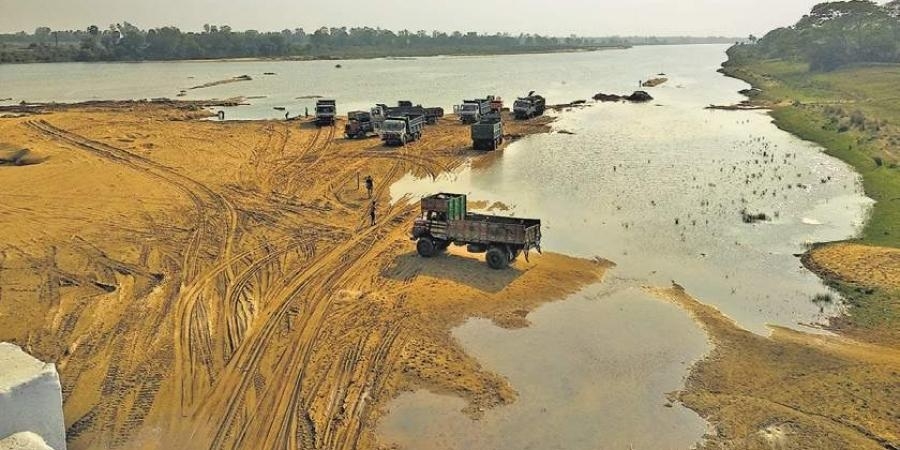
Maharashtra Government has taken some positive steps to rejuvenate the 53 highly polluted river stretches in the State identified by Central Pollution Control Board (CPCB) by forming a ‘River Rejuvenation Committee’ in accordance with the directions issued by National Green Tribunal (NGT) in 2018. The State Government, recently, issued a Government Resolution (GR) in which it stated that the sand mining must be restricted in the highly polluted stretches of the river and instructed the committee to monitor and keep vigil to restrict such activities on those stretches. The GR also stated that the members of the committee have to conduct timely meetings about the developments and status of the polluted stretch with proper co-ordination and most importantly, prepare and implement the action plan to reduce pollution in the river stretches in the State.
It also stated that the Regional Officer of Maharashtra Pollution Control Board (MPCB) will be the nodal officer. A joint control group of all concerned departments has also been formed by the State Government, which will keep vigil on illegal sand mining in the polluted stretch of the river. As per CPCB, Maharashtra has the highest 53 polluted river stretches in the country in which eight river stretches are in Vidarbha, including Wainganga, Wardha, Kanhan, Kolar, Pedhi, Penganga, Wena and Chandrabhaga rivers. Kolar, Wena and Kanhan rivers are in Nagpur district in which Wena and Kanhan are the main source of water for Nagpur city.
City’s Nag, Pili and Pohra rivers are the tributaries of Kanhan river and all these three rivers are now open drainage of the city that carry the sewage water into the Kanhan river. Maharashtra Government has categorised all these 53 river stretches in five stages. In the Stage-I, there are 9 polluted stretches, 6 stretches in Stage-II, 14 in Stage-III, 10 in Stage-IV and 14 polluted stretches in Stage-V. Cleaning and rejuvenation of rivers is a continuous process and Central Government is supplementing the efforts of the State Government and Union Territories in addressing the challenges of pollution of rivers by providing financial and technical assistance through schemes like National River Conservation Plan (NRCP) and Namami Gange.