HC maintains ban on sale of PoP idols
| Date :26-Aug-2021 |
Staff Reporter :
Ban in existence since 2012, no question of any relaxation, says High Court
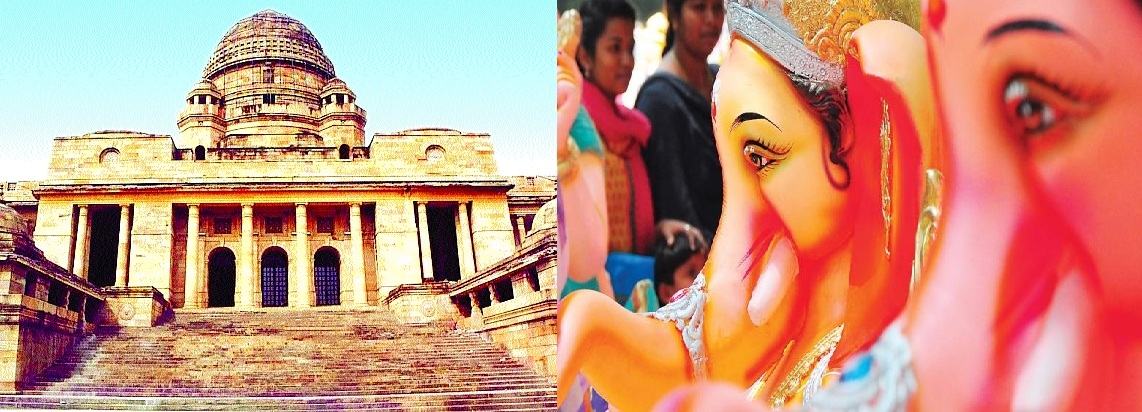
Nagpur bench of Bombay High Court on Wednesday refused to give any respite to Plaster of Paris (PoP) idol-makers, reminding them that the ban on sale and immersion of PoP idols is in force since 2012. A division bench consisting of Justice Sunil Shukre and Justice Anil Kilor, while dismissing the petition filed by Vinod Gupta and others, made it amply clear that ban on PoP idols was necessary to protect water bodies and ecology. Turning down the contention that 4.50 lakh idols have already been manufactured and idol makers would suffer massive financial loss, the High Court pointed out that since 2012 the ban was imposed and there was no question to relax it. According to petitioners, they are unable to sale PoP idols of Lord Ganesh and other Hindu Gods and Goddesses since civic bodies have implemented the revised guidelines for idol immersion issued on May 12, 2020, by Central Pollution Control Board. The petitioners claimed that apart from financial loss, the ban has resulted in violation of their right to carry on their trade in a reasonable manner.
However, the arguments failed to cut the ice with the High Court which firmly dismissed the petitions and upheld the order of urban local bodies. It may be recalled that the High Court had directed NMC way back in 2012 not to allow immersion of Plaster of Paris (PoP) idols in the water bodies, especially in the lakes. NMC was directed to take effective steps for banning immersion of PoP made Ganesh idols and prevent the lakes from getting polluted due to toxic material used for making of PoP idols. The civic body later took a major decision to ban immersion of idols in the city lakes to comply with the High Court's order and to avoid pollution of water bodies.
The High Court at that time however permitted the PoP idol manufacturers to sell these idols only as PoP objects and not as Ganesh idols on the express condition that while selling these objects they would inform the buyers that they are not intended for any kind of worship nor are they intended to be immersed in any water body, natural or artificial. The High Court also directed manufacturers to furnish an undertaking that they shall not sell these objects during present Ganesh festival or any other festival for this year or in future as well and would stop making of PoP idols of any deity for the purpose of their worship. Adv Shrirang Bhandarkar appeared for the petitioners. Additional Solicitor General of India (ASGI) Ulhas Aurangabadkar (Union), Adv Ravi Sanyal (MPCB), AGP N R Patil (State) represented the respondents.
HC registers PIL to curb use of PoP and other harmful material
Staff Reporter :
NAGPUR bench of Bombay High Court, on Wednesday, suo-motu registered a public interest litigation (PIL) to deal with the issue of indiscriminate use of ecologically non-degradable material like Plaster of Paris (PoP) or use of oil and synthetic paints even for decorating clay idols which ultimately pollutes natural or man made waterbodies. A division bench consisting of Justice Sunil Shukre and Justice Anil Kilor while registering this PIL appointed Adv Shrirang Bhandarkar as amicus curiae to prepare and present a proper petition. A comprehensive legislation to prohibit and regulate manufacture and use of immersible idols of various deities in religious festivals is the need of the hour, cry of our pristine water bodies and clarion call of nature, the High Court stated.
The CPCB guidelines have banned use of PoP for making idols, but material like PoP is used for different purposes like statues, artifacts and other objects and there is no regulation. In India, the PoP idols are procured from market generally for their limited use during festivals and later the idols are immersed in water bodies, which is a major cause for pollution of water bodies, increase in toxicity of major food source like fish and other aquatic beings and damage to environment, the High Court noted while supporting CPCB guidelines and expecting its implementation with greater vigour. The High Court also highlighted pollution and harm caused by immersion of idols made up of biodegradable material like clay and its immersion in natural or man-made water bodies due to use of toxic oil paints for decorating these idols.