Villagers near Muniya reserve show the way to eco-friendly living
Date :31-Jan-2022
Principal Correspondent
Villagers living close to Muniya conservation reserve have set an example of eco-friendly living. The reserve is situated on Bhiwapur-Umred Road. The residents of 23 villages around the reserve have not only learnt to live without disturbing the ecology, but have arranged the things in such a way that the wildlife doesn’t get disturbed too. The villagers are earning their livelihood through the by-products they manufacture.
Nisarg Vidnyan Mandal, an organisation formed by Vijay Ghuge, a retired teacher of Physics, has been taking efforts for long for development of the area without disturbing the nature. Ghuge, along with some other non-government organisations (NGOs), followed up with the Government for notifying the Muniya forest as reserve. Wildlife Board has issued the notification to that effect on December 4, 2020.
After forming Nisarg Mandal, Ghuge, initially, did conduct some environmental awareness activities like collecting Nirmalya, conservation of trees, etc. He then switched to the villages near Muniya.
“Muniya reserve forest was notified during British era. We did not pay attention to it. I pushed the demand of notifying it in 2007 and the efforts bore fruits as the corridor got notified. Meanwhile, I tried to settle some issues of villagers. I will not blow my own trumpet. Had the villagers not responded to my appeal, Muniya would have remained as it was for last over 60 years,” said Ghuge while interacting with ‘The Hitavada’.
Muniya reserve is spread across 96 km square area where all wildlife including tiger, leopard and others inhabit.
During the pursuance with the Government on getting Muniya notified as a reserve, Ghuge noticed that people had lot of reservations about conservation of wildlife.Villagers had complaints about wild animals as those used to kill the livestock of farmers. Ghuge explained to them that retaliation cannot not be the solution to the conflict.
“Villagers used to lay traps for wild animals, which, according to me, was not the right way to end the conflict. I suggested them to keep natural barriers. We tried to change people’s mentality regarding their opposition to wildlife. We told them our livestock also goes to forest and damages the eco-system. We should protect wildlife and ourselves too. We created natural barriers where we dug pit of two metre wide and 1.5 metre deep on the other side. On our side, we planted trees like Shikakai, Karwand, Sagargoti which have medicinal values. I asked the villagers to make the plants their earning source. Most of these trees have thorns so the wild animals stay away and do not enter inside the village and livestock also don’t cross the barrier,” narrated Ghuge.
There are several schemes like Syamaprasad Mukherjee Van Yojana, Eco-Sensitive Zone Yojana and some others those have lot of scope for the people doing farming close to forest. Like most others, the villagers in Muniya also were unaware of those.
Ghuge and his team came up with NETRAVAN -- Nature Science Education Training and Research for Vigilance in Agro Forestry Adventures -- through which they not only tried to make villagers aware of the schemes, but also helped them in
getting those schemes implemented. The villagers learnt to use everything they have. Even the dry cow dung also is utilised properly.
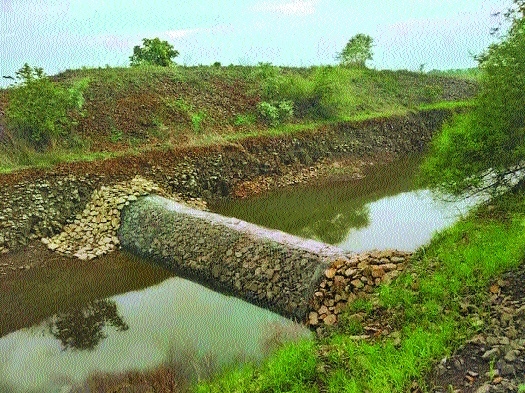
“We guided the villagers on how the cow dung can fetch money for them. Nothing is free in these villages now. The villages wear a clean look. There was a time when water was to be brought through tankers, while the water coming down from hills was going waste. Now, it is stored due to which soil remains wet. This has resulted in rise in water level of wells,” explained Ghuge.
Gomai, Gramayan Govidyan cluster has brought awareness among villagers about cow products. The villagers manufactured several byproducts, marketed them and earned money out of those. The change is showing up and youngsters are being introduced to the transformation process. They are being taught eco-friendly living.
“I am not against any development but feel that it should not come at the cost of damage to nature. Water, forest, animal, land, should be managed. Then only human life will survive. We are taking efforts. One by one, villages are becoming aware of various schemes. We are also urging NGOs to adopt one village each. In a nutshell, despite all physical changes, the mentality of the villagers is to be changed and we are trying to do the same,” said Ghuge.