‘RRR’ hero Komaram Bheem and his Chanda connection
| Date :18-Apr-2022 |
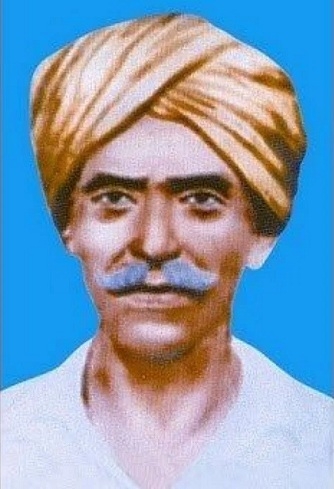
Komaram Bheem
■ By Kartik Lokhande :
FOR the people of presentday Vidarbha, the name Komaram Bheem or Komuram Bheem may be just one of the two heroes portrayed by Jr NTR in the latest commercially successful film ‘RRR’. However, there is more for them to know. Komaram Bheem was a fearless man who challenged the might of the Nizam of Hyderabad, and had spent some years of his life in Ballarshah and Chandrapur forests when that district was known as Chanda. Though there is not much material available in the form of historic records or gazetteers prepared by the British rulers or English/Hindi books, there are books and even a movie on Komaram Bheem in Telugu, celebrating the hero.When ‘The Hitavada’ tried to know more about Komaram Bheem, one of the greatest tribal leaders of India, what came out was the fact that he had close association with Chanda. Born to Chinnu and Sombai in 1901 in Sankepally in Adilabad district of presentday Telangana, Komaram Bheem belonged to Gond (Koitur) community. The area was adjacent to Chanda district of present-day Maharashtra. The region had Gond population and was once under Gond kingdom.
The Gonds used to take up ‘podu’ farming or shifting cultivation. Often, the writers of Gond history and Komaram Bheem’s period cite references from the book ‘Adivasi Jeevana Vidhvamsam’ by Mypathi Arun Kumar. As per that book, Komaram Bheem grew up listening to stories of Janglaat Police (Forest Police of Nizam), landlords, and businessmen exploiting Gond tribals. As has been shown in a Telugu movie on Komaram Bheem, Nizam’s officials used to beat tribals, ransack their homes, and even ransack traditional wedding pandals. Besides, they used to recover taxes forcibly or confiscate the foodgrains after harvest. In one incident, Bheem’s father was killed, following which his family moved from Sankepally to Surdhapur. Komaram Bheem had two wives -- Sombai and Bheembai. Bheem had a daughter Rattubai and son Madhavrao. Madhavrao had three sons -- the eldest Sonerao, Bheemrao, and Hanumanthrao (who is dead now) -- and two daughters Gangabai and Bheembai (dead). According to Komaram Sonerao, grandson of Komaram Bheem, the great tribal leader rose in revolt.
He gradually started stitching together groups of Gonds to resist the brutalities heaped by Nizam’s officials. In one of the incidents, one‘Patttadar’ (official) Siddique Saheb died at the hands of Komaram Bheem.“He then left Adilabad with his friend, and stayed at Ballarshah in Chanda. He stayed in Chanda for three years and learned magic spells. Bheem knew magic well,” Komaram Sonerao told ‘The Hitavada’ over telephone from Bogdaguda in Sirpur (U) Mandal of newly formed Komaram Bheem district of Telangana. As per an article by Akash Poyam, Founder and Editor of Adivasi Resurgence, one printing press owner named Vithoba took Komaram Bheem and his friend along with him from railway station. “Vithoba was running a magazine against the British and Nizam at that time. Bheem learned English, Hindi, Urdu during his stay with Vithoba. After a while, Vithoba was arrested by Police and the press was shut down. From there, Bheem went to Assam to work in tea plantation with a person he met at Mancherial railway station,” reads the article.
At Assam, Komaram Bheem worked for over four years and organised tea plantation workers to raise voice for their rights. According to some references, he was arrested there. But, he managed to escape. After catching a train, he escaped from Assam and reached back to Ballarshah in Chanda. Inspired by the heroic struggle waged by Alluri Seetharama Raju, another legendary figure, Komaram Bheem decided to return to Adilabad district and organise a revolt against the Nizam rule. He gave the famous slogan‘Jal, Jangal, Zameen’.Thus, started an epic struggle in which Komaram Bheem led the Gonds and waged guerrilla warfare against the officials of Hyderabad State, which was ruled by Nawabs of Asafzahi dynasty. Bheem sought independence from Nizam for 12 villages including Babhejari, Jodeghat, Patnapur etc. With his activities and influence over the tribals rising, Nizam government ordered Komaram Bheem to be caught, and even sought the assistance of the British in this. Abdul Sattar, an official with the Nizam government, led a team to accomplish this task.
One man from Gond community, identified as Kurdu Patel in some accounts, turned informant and revealed the whereabouts of Komaram Bheem. In September/October 1940, an intense fight ensued between the Nizam’s armed policemen and Bheem’s army at Jodeghat, which resulted in Bheem dying a hero’s death. Despite his death, Nizam’s force believed that Bheem knew some magic spell and that he could rise again. Hence, they reportedly opened fired to the extent that Komaram Bheem’s body probably had no area without a bullet hole. Even after that, they reportedly burned his body to be assured that he won’t return to life with the help of magic spell. Komaram Sonerao was not very happy at the portrayal of Komaram Bheem in the disguise of a Muslim in the movie ‘RRR’. He had issued a video raising objection to the depiction. However, recently, Sonerao watched the movie along with the director S S Rajamouli.
“They have shown other things right, and it is a movie after all,” Sonerao said. Though the film has mixed fact with fiction and has merged the timelines of Alluri Seetharama Raju and Komaram Bheem, the real Komaram Bheem continues to be a legend in Telangana. Sadly, despite spending some years in Ballarshah in present-day Chandrapur district, Komaram Bheem remains a forgotten figure in Vidarbha region.