‘Free food distribution scheme reduced income inequality’
| Date :10-Jan-2023 |
NEW DELHI,
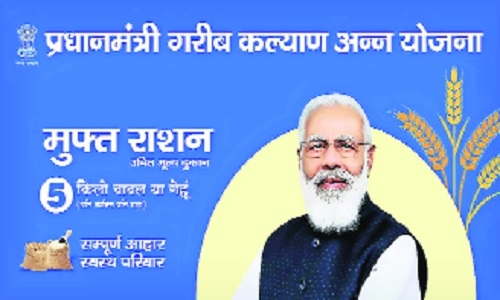
FREE food distribution of cereals during the pandemic has starkly reduced income inequality across laggard States and those at the bottom of the pyramid, according to a report. SBI Ecowrap started the research with a hypothesis of how the free food grain distribution is impacting the distribution of wealth on population quintiles for the poorest of the poor. It has taken a cue from the International Monetary Fund (IMF) Working Paper which indicated that Pradhan Mantri Garib Kalyan Yojana (PMGKAY), which provides free foodgrains to poor people, played a key role in keeping extreme poverty in India at the lowest level of 0.8 per cent during the pandemic-hit 2020.
The SBI study analysed the impact of share of Rice procurement (since Rice is still the staple food for most of the people in India), on Gini Coefficient for 20 States and the impact of share of Wheat procurement on Gini Coefficient for nine States. “Our results show that relatively laggard States in terms of inequal distribution of wealth across different population quintiles, Rice procurement and Wheat procurement in such States had a significant impact on reducing inequality through reduction in Gini coefficient,” it said.
These States were Assam, Bihar, Chhattisgarh, Jharkhand, Madhya Pradesh, Odisha, Uttar Pradesh, Uttarakhand and West Bengal, he said, adding, the impact of Rice and Wheat Procurement on percentage of population for lowest and second quantiles of wealth, revealed a sharp decline in the percentage population in such quantiles of the population.