Addiction is not a problem in isolation: Dr Nikhil Pande
| Date :15-Oct-2023 |
By Kartik Lokhande
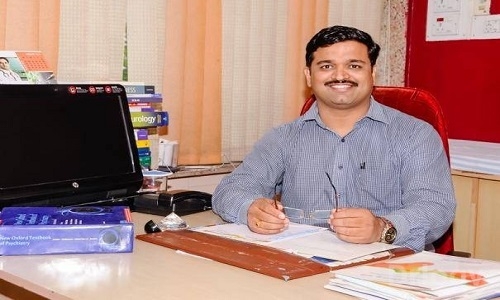
Novelty-seeking behaviour, peer pressure, psychological turmoil, company all have a bearing on a person becoming addicted to substance abuse. This is not any off-hand statement, but a studied observation of a dynamic psychiatrist and counsellor Dr Nikhil Pande. Having dealt with, and counselled, several individuals who were in the vice grip of substance abuse, Dr Pande is in a unique position to comment on the ugly phenomenon spreading like a cancer in the society. Not many thought that drugs menace was so rampant and in such hydra-headed forms in Nagpur, before ‘The Hitavada’ ran a series of reports on the issue. After that, as part of an attempt to properly analyse the situation, ‘The Hitavada’ spoke to Dr Nikhil Pande, who runs Manovikas Behavioural Sciences Clinic for Happiness. According to Dr Pande, drugs addiction starts with what Dr Pande called ‘Gateway Drugs’. For example, smoking starts with vape. Then, that person tries light cigarette, only to graduate to strong cigarette. In case of liquor, it starts with mild beer, then strong beer, then rum, then vodka, then whisky, and then countrymade liquor. In case of drugs, addiction may start with weed, deteriorating further into brown sugar, cannabis, synthetic drugs. School-children also may get addicted to smell of bootpolish solution, whitener, thinner, cough syrups. The point is, he added, mature people around need to keep watch whether the young ones are getting addicted to any of the ‘gateway substances’, and act in time.
“Addiction covers a wide range -- from alcohol, smoking, Ganja, to brown sugar, synthetic drugs, MD, injections, pornography etc. Some of these problems may be inter-related. I must say that addiction is not a problem in isolation. There are several factors that can affect a person’s behaviour in such a way that he or she finds solace in consumption of a substance,” said Dr Pande. Elaborating on the point with an example, Dr Pande said that if a student studying in Class IV or V is sent by his father or mother to bring gutkha or scented tobacco from a nearby shop, someday that boy will definitely taste it. This may lead him on to the path of addiction. Later on, depending upon other factors, he may develop a liking for ‘stronger substances’. This highlights the need for parents or elders in the family to be more responsible in behaviour, he stressed. Among other factors that could make a person an addict, the most significant one today is ‘novelty-seeking behaviour’, Dr Pande pointed out. Explaining this point, he said, “Usually, any growing up child or teenager develops a liking for exploring something new. This novelty-seeking may be for new games, new gadgets, movies, experiences, or even substances. In many cases, this is aided by peer pressure. If a boy or a girl in a group is enjoying having a shot of liquor or a smoke or vape or another substance secretly, chances of some of the others in the group getting influenced cannot be denied.” When a group becomes addict, they collaborate on collecting money and buying the substance for shared use.
Then, there are other factors like company one has at home, among relatives, in neighbourhood, at school, at tuition classes, or in hostels. The company has a profound impact on development of sensibilities of a person. If one’s company is bad, likelihood of one becoming an addict increases. Usually, the teenagers are badly in need of company as they seek to share certain things with persons of same age, with a couple of years less or more. In such phases, Dr Pande stressed, parents needed to be more vigilant. “If parents note any change in behaviour of children, teenagers or youngsters, they must become alert. There are certain telltale signs viz. young ones hiding their friends from parents or relatives, sudden spurt in spending, staying away from home for longer time, reporting loss of precious things frequently,” Dr Pande explained.
However, cautioned the counsellor, the parents should not start with reprimanding their wards for such behaviour. Instead, parents should arouse confidence among their wards so that the latter feel free to discuss their problems. For, many children and teenagers undergo a psychological turmoil over several issues ranging from body-shaming by friends, to teasing over perceived ‘lack of boldness’, to drop in academic or sports performance, failures, confusions, and a whole range of growing up issues. In such a phase, the teens are looking for dialogue with someone close. This someone close has to be parents or elders in the family including brother or sister. Else, that space will be occupied by someone outsider, said Dr Pande. The elders at home must create a support system for younger ones, he added. Summing up, Dr Nikhil Pande felt that saving younger generation from drugs menace depended on a lot of factors, but the most important was family bonding and support. “In families where parents or elders place future of young ones above everything else including own interest, and focus on love and care, chances of drugs menace tearing the fabric get reduced,” he concluded.