Industrial zones shrinking due to urban development
| Date :26-Mar-2023 |
By Ravi Chandpurkar
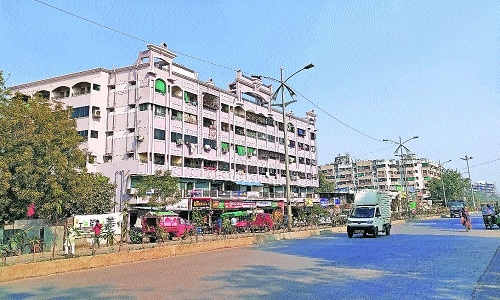
Urban development has transformed Nagpur city. The Small Factory Area, Bagadganj is a classic example of how industrial areas have transformed from their original concepts to what they are today -- residential and commercial areas -- due to urban development in a big way. Rohit Agrawal, Director of Rohit Iron and Steel (I) Pvt Ltd, Small Factory Area, Bagadganj said that in the early 1960s SAIL’s stockyard located behind Harihar Mandir, Old Bhandara Road was connected by the Itwari Railway Station sideline to load and unload steel products in bulk. This Railway sideline ran parallel to the Main Howrah (Kolkata) broadgauge line.
Then, Nagpur was recognised as an important centre to transport iron and steel products to western, northern and southern parts of the country. The Small Factory Area came into existence for the convenience of the local industries for transporting materials in bulk quantities. Since the main markets were located at Itwari and Gandhibagh, the Small Factory Area appeared to be an ideal location due to its proximity to the city. The Small Factory Area served its purpose at that time. Now, it has changed beyond recognition like many other localities in the city. It was formed to benefit the numerous industries and the timber market which mushroomed near the Railway sideline thus forming the Small Factory Area. A large number of iron and steel manufacturers, rolling mills, flour mills, oil mills, forging units, soap manufacturers, pottery unit, chemical units, Haldiram’s sweet manufacturing unit and even a glass factory which made marbles (Chancha) had started operations from here. Over the years, most of these units had either closed operations or shifted to other places or converted into godowns, and lawns due to various reasons.
With rapid urban development on all four sides of the Small Factory Area, resulted in land prices skyrocketing. When the industrial plots were sold the prices were at a fraction of what they cost today. At present the land prices in this area are at an astronomical Rs 7,000 per square feet to Rs 8,000 per square feet.
“The urban infrastructure developments like Kalamna Marketyard, Metro Rail project, cement roads, flyovers and large residential cum commercial schemes with various amenities and entertainment facilities has transformed the area. Once this area was at the fringe of the city, but today it is well within the city limits with a good number of residential cum commercial complexes mushrooming here and there,” said Rohit Agrawal.
With a boom in housing sector and improved infrastructure facilities are attracting people to settle in this locality.
“This area should be converted into residential area and include various amenities like garden, playground, proper street lights, sewage lines etc. This move would improve the standard of living for the residents and also lower the pollution level and keep the environment clean,” Agrawal added.
The Small Factory Area layout includes approximately 275 plots sanctioned under the Central Road Scheme - Section III in 1945 by Nagpur Improvement Trust (NIT). It is important to note that NIT was formed in 1936. Sources on the condition of anonymity said that all the manufacturing units had closed down about 20-30 years ago and the only the name ‘Small Factory Area’ remains. Mahendra Karia, businessman operating in the Small Factory Area, said that the authorities in future should plan new manufacturing zones in such a manner that only manufacturing activity takes place and nothing else. As the city expands, Hingna MIDC and MIHAN may come within the city limits after a few years. With large scale development, the city is expanding officially and unofficially, therefore, future development projects should be planned and use of land defined in such a manner that the manufacturing units will not have to be shifted in the future, he added.