Theatre in Vidarbha: In light and shade of art and survival
| Date :27-Mar-2023 |
By Dinesh Chandankar
The success of a cultural activity is measured in terms of the response and involvement of the people in it. Fortunately, Nagpur has had over a century-long association with multi-lingual theatre activity. It has provided financial succour to plays staged by commercial and professional drama companies, which had the likes of the legendary Balgandharva, and brought them huge money. Yet, the region’s own theatre groups could never cross the rubicon of professional and commercial category.
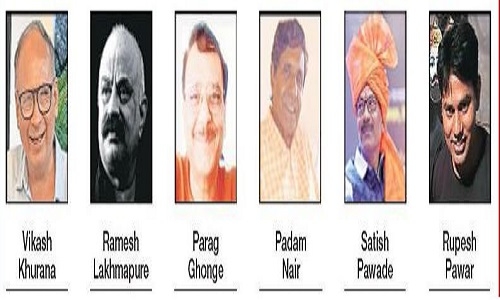
Vidarbha’s theatre is at that struggling stage where it has been proving its mere existence with the support from government aid. In fact, it is marred by lack of opportunities, unavailability of proper infrastructure, dominance of communication technology and choice between art and survival. Taking this topic to the city’s eminent theatre personalities, ‘The Hitavada’ explored some fascinating facts which may help the region’s theatre movement to satisfactory level. Parag Ghonghe whose Marathi language production ‘Andhar Ujalanyasathi’ bagged various prizes at Maharashtra Rajya Natya Spardha, expressed his views on the issue.
The writer felt that there is no commercial theater in Nagpur. He said, “Commercial success of theatre can not be measured just on the basis of response to five or six shows. Also, the region does not have competitive market”.This absolutely means that the handful of theater groups, been actively working consistently since long are not enough.
Rather, A market need competitors, which creates variety of quality productions for the audience and also provides affordability of shows to attend. He further says, “If the people have to choose between art and survival, they go for the latter as it is more important”. This is indeed a truth that one would not prioritise entertainment over the basic necessities. But one needs to understand that though it is not compulsory but necessary to live with. Any art form relaxes human mind from the hustle of day to day life.
In a similar view, for director Ramesh Lakhmapure, Nagpur mostly has working middle-class strata of Madhya Pradesh and Vidarbha region. They are engaged in earning bread and butter. Their first priority is earning, and not indulging into any kind of entertainment activity. Anyhow, if they find time for it, they start their television set or opt for OTT platform to get entertained. “Necessity of art never wins over importance of survival,” he observed. He urged local authorities to have theaters in all six Legislative Assembly segments in Nagpur. Truly, the city needs the network of auditorium exclusively for theatrical activities. Also their affordability matters most as producer thinks of making reasonable profit besides paying artists, technicians and production cost. With the similar opinion, Vikash Khurana, well-known for bringing quality English plays through Stagecraft Productions, regrets lack of proper infrastructure since demolition of Dhanwate Rang Mandir to boost the theater culture in Nagpur.
“Nothing has changed in last 20 years since I started English theater in Nagpur. Every theater has its own drawbacks in present day situation. Vasantrao Deshpande is too expensive, Scientific Hall is ill managed, Sai Sabhagruh lacks parking space and the grand Sureshbhat Sabhagruh is unsuitable for plays and dramas. The politicians and local administration have ill-will to demoralise the present theater movement, which will ultimately bring it to death of theater in the region if the situation persists. We need a proper auditorium like Prithvi Theater in Mumbai with minimum of 200 capacity only for theatrical activities” he added.
Theaters must be affordable to theater groups so that they can manage monetary profit, which will motivate them to perform more all through the year. A continuous flow of a variety of productions from potential talent of the region will educate the audience culturally, which assures to revolutionize the commercial theater base in Nagpur.
Regarding commercial success of the theater plays and dramas, Dr Satish Pawade, Assistant Professor at Mahatma Gandhi Antarrashtriya Hindi Vishvavidyalay at Wardha and also the first PhD holder from Rashtrasant Tukadoji Maharaj Nagpur University in fine arts, shared his experience on Vidarbha’s rich professional theater along with the remedies to overcome the challenges. “I look at theater as a movement. It helps in connecting the people and ensures their participation in the process, which ultimately brings theater to commercial level. But, now is the time to apply corporate business strategies to theater, from production of the play to its promotion and money-making,” he stressed. From all this chaos, The Hitavada came across with one of the senior theater activist who shared his mantra of minimum investment and maximum output.
Padam Nair, Chief Patron of ‘Kalasagar’, revealed his exciting and successful journey of Hindi theater in Nagpur. “It’s 44 years that Kalasagar has kept the Hindi theater alive in the region. We never suffered any monetary loss for any of our productions so far as we avail low cost parking space of Hind Morbhavan to stage our shows. We have been greatly appreciated by the Nagpur audience. Drawing inspiration from Kalasagar activities, Vidarbha Sahitya Sangh extended the support for ‘Multi-lingual Theater Festival’, which will enter in its 18th year in November this year. But, we need more attention and encouragement from government to further strengthen the initiative as it helps create harmony amongst multi-lingual communities residing in Nagpur,” he said.
Indeed, someone has to take initiative at grass root level and start working in the same direction. A young theatre artist like Rupesh Pawar, who has been known for his unique way of play direction, believes that culturally educated audience would bring the celebrated era of theaters back. This has been started by the initiative ‘Shaleya Rangamanch’ where school children of municiple corporation schools are tarined by his wife Mangala Sanap-Pawar, a National School of Drama alumni and encouraged to stage the shows. These children are the future audience and will contribute in uplifting the present situation. Although few section of the theater movement has their own shortcomings, existence of theater in the region could never be neglected nor be ignored! Still, overall, the artists feel that theater needs encouragement of society as a whole. For, city needs art for making it a happy and matured place to live in.