Fraudsters minting money with offers to buy old coins, notes
| Date :29-Mar-2023 |
By Kartik Lokhande
and Anil Futane
“Give your full address, post a selfie photo, and deposit Rs 1,550/-. We shall register your old coins and then send you the registration form.”
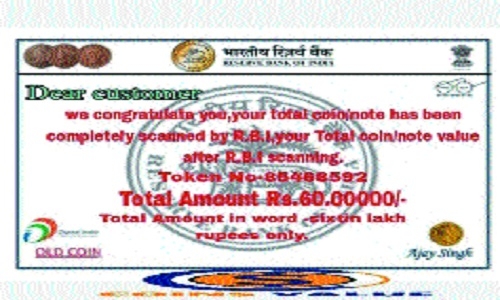
“Dear customer, we congratulate you, your total coin/note has been completely scanned by RBI scanning. Token No xxxxxxxx. Total Amount Rs 60,00,000/-. Total Amount in word sixteen lakh rupees only.” These are just two samples of several such messages in circulation on social media platforms including Facebook, Instagram and WhatsApp. As is apparent from the tone, flawed grammer and spellings, these are messages floated by fraudsters. However, thanks to vastness of social media and no check on unverified and unauthentic posts there, they are continuing to reach out to gullible ordinary people who have some old coins and currency notes as part of their household inheritance.
As has been done in one of the above-mentioned messages, these fraudsters do not mind misusing the logo and name of even the Reserve Bank of India (RBI). Some also misuse the National Emblem in an attempt to add authenticity to their posts. Some of the Nagpurians also have received such messages on their WhatsApp numbers. After suspecting that these messages might be floated to dupe the people, they brought it to the notice of ‘The Hitavada’. Requesting to remain unnamed, they shared the screenshots of the WhatsApp chats with fraudsters who approached them with ‘offers’. One person has old coin in household collection. These coins have certain images on them, and some of the coins are from the British era. After sharing photographs of these coins, when he asked the ‘old coin buyer’ about valuation of the coins, the latter quoted a lucrative amount of Rs 98 lakh! However, the ‘buyer’ asked this person to give his full address, one selfie photograph, and also deposit Rs 1,550/- as registration charges.
In another case, another ‘buyer club’ offered a whopping Rs 18,80,999/- for an ‘antique coin’. But, again, this ‘coin club’ sought Rs 1,150/- from the potential coin-seller to generate a ‘registration code, to be created by Government of India’. “The registration code will be valid for five years. Once you pay the registration charges, 50% of the offer amount would be paid to you within one hour. Our team will reach out to you within 36 hours to collect the coin and pay the remainder of the offer amount,” read the message from the club. In one more case, the sender of message explained ‘the procedure for sale’ of old coin. The sender of the message sought images of Aadhaar and PAN cards, and sought Rs 550/- as registration charges.
This thing has been happening in many cities. In Bengaluru, a businessman lost lakhs of rupees. Now, the menace has reached Nagpur too. Since the fraudsters are doling out lucrative offers through popular social media platforms like Facebook, Instagram, and WhatsApp, and people are afraid to come out to lodge complaints, there has been no action against the so-called ‘coin buyers’. Ashok Singh Thakur, National Executive Member, Numismatic Society of India (NSI), and Secretary of Indian Coin Society, told ‘The Hitavada’ that NSI has been alerting its members from time to time regarding such fraudsters.
“Many of these fraudsters are from Bihar, Delhi, Punjab, and other parts of the country. They make a note promising lakhs of rupees for a particular currency note. They appeal for online registration, ask to deposit certain amount. Once the gullible potential seller transfers the said amount to the fraudster, the latter dumps the SIM card from which he had called, or blocks the number of potential seller. Even if they get 10 registrations in a day, they earn thousands of rupees per day,” he explained. According to Thakur, there are authorised dealers and auctioners in India. These authorised persons have GST registrations etc. “Archaeological Survey of India gives license for auctioning of coins and currency notes. If people wish to sell old coins or currency notes, they should approach authorised dealers and auctioners. Nagpur also has a couple of authorised shops,” he added.
In most of the cases across the country when complaints were made, the addresses given by the fraudsters were not found. The fraudsters target especially those holding old coins and currency notes at their households. However, common people lack awareness about distinction between the authorised buyers and unauthorised ones. So, they fall prey to lucrative offers.