State Govt paid Rs 377.56 crore in damages for man-animal conflict
| Date :12-Apr-2023 |
By Kaushik Bhattacharya
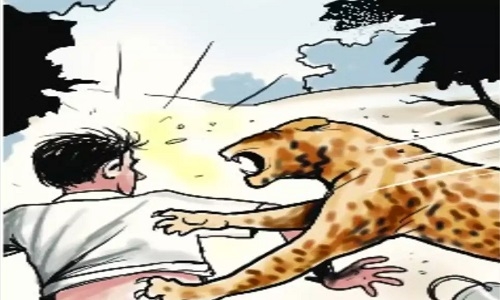
The increase in number of tigers in India is a good news, but the rise in tiger population has also shrunk their habitat. As a result, Human Wildlife Conflict (HWC) has increased drastically in every Tiger Reserve of the country. The Tiger Status Report 2022 released by the Central Government recently mentioned that shrinking wildlife habitats faced a range of threats, including conflicts between humans and wildlife, which should be mitigated. According to a recent RTI reply given by the Maharashtra Forest Department to RTI activist Abhay Kolarkar, the rise in HWC in the past six years is alarming and the forest department spent a whopping Rs 377.56 crore towards compensation to families affected by HWC between January 1, 2018 and January 26, 2023. According to the exclusive data, 350 people have been killed and over 2,200 were injured in Maharashtra between January 2018 and January 2023 due to HWC. The reply also stated that Rs 65.58 crore compensation paid by the State Government to affected families due to HWC (for human deaths, injuries, cattle loss and crop damage) in 2018-19. The government paid Rs 70 crore in 2019-20, Rs 80 crore paid in 2020-21 and Rs 80 crore paid in 2021-22. State government paid the highest Rs 81.37 crore compensation in 2022-23.
Similarly, in 2022-23, Maharashtra recorded the highest 105 human deaths in the past six years in HWC. In 2018-19 the number of human deaths was 33, in 2019-20 it was 39, in 2020-21 it was 89, and in 2021-22 the death toll was 84. Majority of the deaths in HWC are due to the big cats -- tigers and leopards. Experts say that the rising conflicts are due to the decreasing forest cover and continued dependence of humans on forests. With decreasing forest cover and increasing human-wildlife interactions, experts say Human-Wildlife Conflicts will be a major challenge in the near future.
According to the Tiger Status Report 2022, the Central Indian Highlands and Eastern Ghats Landscape has the highest 1,161 number of tigers in the country. Vidarbha region which has five Tiger Reserves (Trs) -- Tadoba-Andhari Tiger Reserve (TATR), Pench Tiger Reserve (PTR), Melghat Tiger Reserve (MTR), Navegaon-Nagzira Tiger Reserve (NNTR) and Bor Tiger Reserve (BTR) reported the presence of highest number of tigers in the country. Meanwhile, Vidarbha has the highest number of HWC cases in last one decade. In an average, 350 people injured every year in last five years as per the data by the Maharashtra Forest Department. Maharashtra, the third largest state with a geographical area of 3,07,713 square kilometres, has a total recorded forest area of 61,952 square kilometres. This includes 50,865 sq km of Reserved Forest, 6,433 sq km of Protected Forest (PA) and 4,654 sq km of Unclassed Forests area. Unclassed Forest includes all forest other than Reserve Forest and Protected Forest as reported by State/UTs Forest Departments.