In Int’l Year of Millets, this novel solution still awaits attention
18 Apr 2023 07:33:54
By Kartik Lokhande
“Millets can grow on arid lands with minimal inputs and are resilient to changes in climate. They are, therefore, an ideal solution for countries to increase self-sufficiency and reduce reliance on imported cereal grains. #IYM2023 will be an opportunity to raise awareness of, and direct policy attention to the nutritional and health benefits of millets and their suitability for cultivation under adverse and changing climatic conditions.” This statement is what one comes across on the landing page of the website of Food and Agriculture Organisation of the United Nations as far as International Year of Millets-2023 (IYM2023) is concerned. In India also, the mood is quite upbeat in the Central and State Governments both about the IYM2023. Sadly, much is being done create awareness about the millets in Maharashtra, an indigenous and novel solution using local millets for fortification of traditional tribal food has remained ignored for past at least 10 years.
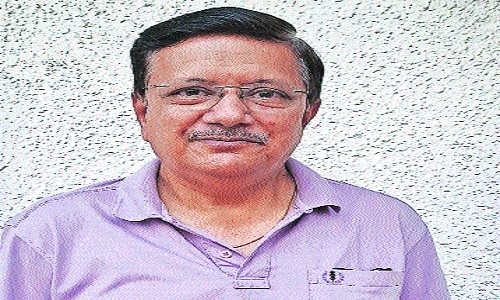
The solution is the outcome of a project taken up by a researcher and microbiologist Dr Sanjeev Patankar, who retired as Principal of a college some years ago. Between 2001 and 2005, he took up a project ‘Fortification of Tribal Food’ that was sanctioned by Union Ministry of Science and Technology. He conducted painstaking research, visited various parts of Chandrapur and Gadchiroli districts, kept a careful log of visits, collected samples of traditional tribal food ‘Ambil’ and for the first time carried out its microbiological analysis in laboratory, isolated a micro-organism, and created unique ‘pellets’. These pellets, when added to ‘Ambil’, enhanced the nutritional value of the traditional tribal food. The report of the entire project, with findings and recommendations, was prepared. “We faced several challenges while completing the project.
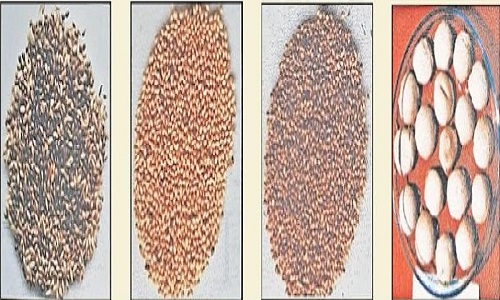
For, microbiological analysis of ‘Ambil’ was never done previously. In some ‘Ambil’ samples, we found higher levels of B12 and Folic Acid. On study, and checking haemoglobin level and body mass index of those who consumed this ‘Ambil’, we found that certain millets were used in making this food. Various millets are found in Gadchiroli district. We collected samples of Kutki, Rara, Kosari, Harak, Mandye and studied those,” Dr Patankar told ‘The Hitavada’. Interestingly, Dr Patankar isolated micro-organism ‘Bacillus pumilis’ from the Ambil made from Mandye millet with the help of National Environmental Engineering Research Institute (NEERI). The researcher found that it produced B12 and antibiotics-inhibiting pathogens. He also isolated another micro-organism Leuconostoc (Mesenteroides) that produced gum-like substance. Both these micro-organisms isolated from ‘Ambil’ prepared using millets have been deposited in National Collection of Industrial Microorganisms, which is a rare honour for researchers. The pellets that Dr Patankar prepared were added to ‘Ambil’ and it enhanced nutritional value of the traditional tribal food. “However, we could not conduct animal model trials due to prevailing rules and requirement of a huge expenditure. There was no animal house at that time,” recalled Dr Patankar. But, he preserved all records of the project. The records are still with him. Some years later, Vidarbha Development Board (VDB) sponsored a project titled ‘Nutritional Status of Madia Tribes of Gadchiroli (15-40 years): A Socio-Economic Perspective’. It yielded a report in 2013-14. Dr Mrunalini Fadnavis was the Principal Investigator of the project and Dr Sanjeev Patankar, Dr R P Rokade were sub-committee members, and Sampada Naseri and Manali Kane were the project associates. The report was submitted to Governor of Maharashtra.
“The tribals were given wheat atta and protein biscuits, which the tribals were not accustomed to using. So, we had recommended distribution of pellets that I had prepared in the previous project, to tribals to improve their nutritional status,” Dr Patankar said. Sadly, the research project findings and VDB report and recommendations therein are gathering dust in official records. The indigenous and novel ‘pellets’, which could have proven to be effective solution in tackling malnutrition, stand relegated to history. No Government agency appears to have taken a cue from the report to prepare district-wise inventory of the millets grown locally, leave alone roping in microbiologists and researchers to conduct proper study of their nutritional value.
According to Dr Patankar, in adjoining States of Madhya Pradesh and Chhattisgarh, there is organised farming of millets. “There is need to form farmer producer organisations dedicated to millets, if the objectives of celebrating International Year of Millets are to be achieved in real sense and with long-term impact value. For the purpose, organised farming of millets needs to be encouraged with proper schemes, and funding needs to be provided to research projects pertaining to millets,” he added.