INDIA PIPS CHINA IN POPULATION
| Date :22-Apr-2023 |
BY ANJAN ROY :
The developed world is seeing slower or shrinking population. Japan is the prime example of this trend where the overall population is shrinking at a extremely rapid pace. Several western European countries are also seen to demonstrate the same trends. But for the rest, population is rising, such that there is net addition to global population size
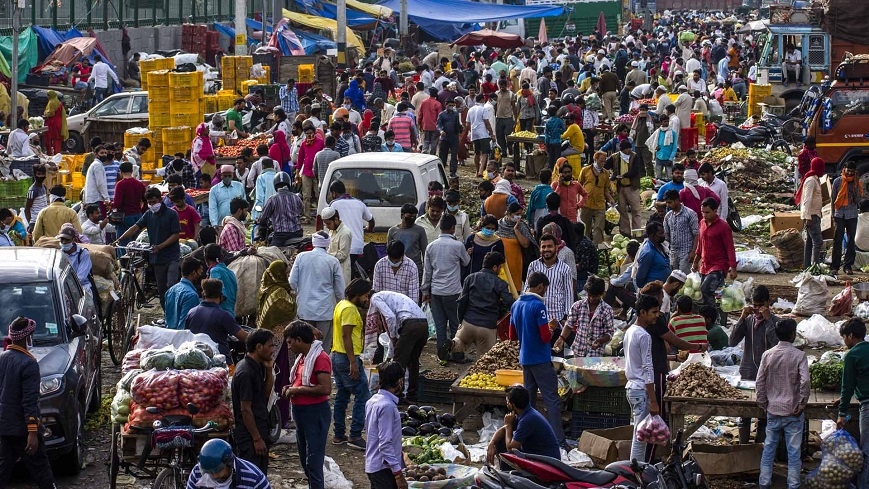
F EW will now remember there was a time when family planning and population control were highly visible policy platforms. Of all people, highly respected industrialist, JRD Tata, then heading the Tata group, was one of the leading figures to talk about the need for population control. India had established a body to spearhead family planning and population control right after independence in 1951. The Family Planning Foundation was later renamed Population Foundation of India, pushed on mainly by JRD. Even as recently as 1992- 93, during the time of Narasimha Rao’s coalition Government, a high power group was set up under the chairmanship of Dr M.S. Swaminathan, to draft a national population policy. The report was submitted to Prime Minister Narasimha Rao in 1994 and duly has not been taken up for implementation since. Earlier, Indira Gandhi’s son, Sanjay Gandhi had made some ill-conceived attempts at containing population, mainly by sending teams to forcibly undertake vasectomy and tubectomy which had hurt the efforts at population beyond repair. But there were clear signs among the informed that the way India’s population was rising was a clear path to disaster. It is miracle of sorts that attitudes and perceptions could change drastically to issues. Today, the earlier concern about population growth has turned into unbounded enthusiasm about it. Population is feted and we are now drum-beating about India becoming the most populous country in the world.
The proudly proclaimed theme for discussion is “India’s Demographic Dividend”. What a change in perspective on one of the most vital issues affecting our national life. Is it for real that a bulging population is such a national dividend. And yet, it is the booming global population that is the biggest contributor to global warming, environmental disasters and limited change. The plant earth is obviously not able to support a population of over 8 billion. The world is longer split between the developed north and under-developed or undeveloped rest. Every country is aspiring to reach the western benchmarks of consumption. That is, every country is seeking growth and elevating the standards of living of their people. Hence, consumption of resources is rising, particularly fossil fuel usage, which directly feeds into the warming cycles. Admittedly, the developed world is seeing slower or shrinking population. Japan is the prime example of this trend where the overall population is shrinking at a extremely rapid pace. Several western European countries are also seen to demonstrate the same trends. But for the rest, population is rising, such that there is net addition to global population size. This will have several serious consequences. India’s population is soaring, but its land size and resources are fixed.
The huge population size, in itself is leaving its adverse environment footprint. India’s water resources are shrinking and groundwater levels are dropping scarily over vast stretches of the country. Every child born today will demand and consume at least certain minimum quantity of water for the next 75 years. The increasing size of population will raise water consumption levels to unsustainable levels. Noted demographer and one of the most respected population scientist in the country, late Professor Ashis Bose, has written way back in 2000: “Water can catch fire.” Supplying safe drinking water to every Indian is a huge task. Efforts have been made and some success recently have been achieved. But the task is yet to be completed, if ever. With climate change already upon us, we are hearing of drinking water shortages in our cities. The frequent quarrels between our States over sharing of common rivers waters is only to be remembered. On top, we have looming water disputes. We have serious differences with Pakistan on spring of Indus waters, and simmering disagreements with Bangladesh on sharing waters of common rivers. Not to mention, another severe point of friction between India an China in future would be the diversion of water resources from a number of upstream source rivers in the Tibetan plateau. China is building dams for diversion of waters which flow into the Brahmaputra river systems.
Any such moves will create serious environmental and existential threats to our north eastern States. China is taking such disastrous steps for the sake of meeting its insatiable demands for water for its already large population as well as humongous economic activities for sustaining employment for its masses. The second impact would be on social cohesion. Every economist worth his salt is saying that unless properly harnessed, the so-called “demographic dividend” could turn into demographic disaster. This is mainly because our population is rising and adding more to the working age cohort. These additional hands have to be given employment. (IPA)
ify; ">