Winter 2022 was most polluted for city in last four years: CSE
23 Jun 2023 08:05:22
By Kaushik Bhattacharya
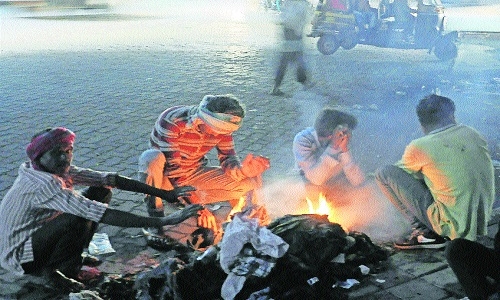
The last winter (2022-23) turned out to be the most polluted one for Nagpur city in the last four years, revealed an analysis done by the Delhi-based Centre for Science and Environment (CSE), recently. The air quality (PM2.5) analysis for October 1, 2022 to February 28, 2023 has been carried out by the CSE’s Urban Lab for Maharashtra and Gujarat which was released in the month of April. In these States, winter pollution typically sets in during late November and early December, when the cooler and calmer conditions trap local pollution. The analysis covered 58 continuous ambient air quality monitoring stations (CAAQMS) spread across 17 cities in two States. In Maharashtra, it was conducted at 21 stations in Mumbai, four stations in Navi Mumbai, eight stations in Pune, two stations in Chandrapur, and one each in Aurangabad, Kalyan, Nagpur, Nashik, Solapur, and Thane. While mentioning about Nagpur city, the analysis stated, “Nagpur in Maharashtra was the worst performer (polluted) and registered an increase of 105 per cent compared to the previous winter.”
There is a significant rise in Nitrogen Dioxide (NO2) concentration during November and December compared to October 2023. NO2 comes entirely from combustion sources and significantly from vehicles. Kalyan in Maharashtra registered highest rise with 3 times maximum build-up of NO2 between October and December. Whereas, Nagpur and Nadesari each registered 2.3 times increase in NO2. In the contrast, Nagpur had the least polluted Diwali night in the region with 75 micrograms per cubic meter (µg/m3) in 2022-23 followed by Nashik 85 µg/m3. Mumbai at the bottom with 70 µg/m3. Whereas, Vidarbha’s Chandrapur recorded the pollution level on Diwali night 4.6 times higher than previous three years. According to the analysis, “Winter pollution level in Nagpur this season has been 94 per cent higher than the mean of previous three winters. Similarly, there has been 83 per cent increase in winter peak compared to the mean of peaks of previous of three winters.”
Air Quality Index (AQI) categorisations of day’s shows that the city’s air quality has deteriorated considerably this winter with 47 days of very poor and poor air quality, a considerable increase compared to previous two winters.
According to CSE analysis, “Open burning of waste and landfill fires, use of solid fuels in households, vehicles and transport, industries, construction, and dust are the major sources for aggravating winter pollution in Nagpur city.”
It also advised that there was an urgent need of aggressive scaling up of multi action plan to control pollution through these sources.
While interacting with The Hitavada, Dr Jayshankar Pandey, former Chief Scientist, Science Secretary and Head of Climate Change and Skilling Division of CSIR-NEERI said, “Winter pollution is a threat to all developing cities in the country. Mixing height of pollutants depends on the temperature and when the temperature is low the mixing height is also low. Due to this factor pollutants can disperse in air at low height during winter season.” Trees and urban forests are carbon sinks that absorb the pollutants in any weather. Meanwhile, trees has the capability to absorb pollution during winter. However, due to urbanisation these absorbers are reducing and we are witnessing more polluting winters, said the former Chief Scientist of CSIR-NEERI.