‘Foresight, future projections key to better planned devpt’
| Date :30-Jul-2023 |
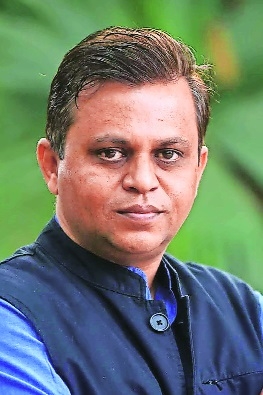
Sujit Rodge
By Kaushik Bhattacharya :
As monsoon hits cities, residents are reminded of the mayhem that usually surrounds urban India around this time, where roads become canals. People of Nagpur are quiet familiar with this scenario.
Sujit Rodge, renowned Town Planner, Architect, and Chairman of Institute of Town Planners, India, Maharashtra Regional Chapter, Nagpur talked to The Hitavada and revealed all loopholes of modern town planning that is the cause of urban flooding these days.
According to Rodge, “Improper waste management, poor maintenance of infrastructure, lack of proper planning and failure of administrators in flood governance are the major anthropogenic causes for urban flooding.”
“We cannot overcome natural cause of urban flooding but with proper town planning, we can curb anthropogenic reasons for such flooding,” said Rodge.
“Nature based solutions along with a pragmatic approach in developing grey-infrastructure can play a major role in mitigating these adverse conditions that arise due to city flooding,” claimed Rodge.
“Nagpur has witnessed rapid urbanisation in the last decade. Rampant unplanned development can be seen all over the city. We have got world class infrastructure in the form of Metro Rail, concrete roads, recreational facility at Futala lake. But, it seems development or rather upgradation of other infrastructure did not happen with the pace of the urbanisation that happened,” he claimed.
“Today, the natural drainage pattern of the city has changed. Now, people are more dependent on the ‘solutions’ provided by the authorities to drain out this excess water. But, are these ‘solutions’ working?” he raised a question.
“Basically, there are no city-level drainage plans available or rather were never prepared. Locality wise, piecemeal drainage systems are designed and implemented, but a holistic approach at city level is missing,” Rodge explained.
“The overload of one locality is transferred to the adjacent localities and thus we see larger area submerged in water. Concrete road levels are more than the plinths and ground levels of the adjacent properties. So, where will this excess rain water drain out,” he further explained.
“Let us not forget the encroachments happening in the catchment areas of our lakes and rivers, a major contributor for urban flooding. Nagpur is experiencing a pattern of scattered and heavy rains, the city is definitely under the effect of urban heat island. Natural land cover is vanishing with more concretisation, pavements, buildings and other surfaces absorb and retain heat. The need is to increase green cover and retain city level open space by restricting construction, which will help in reducing heat as well as water will percolate in ground,” claimed Rodge.
“Nagpur is geographically centrally located and the East-West and North-South railway routes physically divide the city in four quadrants. For better connectivity, there are under bridges and over bridges. Do the authorities make a logical decision whether to go for an underpass or over a bridge? If yes, why do our underpasses remain submerged? Why is the administration not able to find solutions for so many existing as well as new underpasses,”opined Rodge.n