FLN to enhance literacy, numeracy skills of students up to Class 3
10 Aug 2023 07:43:50
Staff Reporter
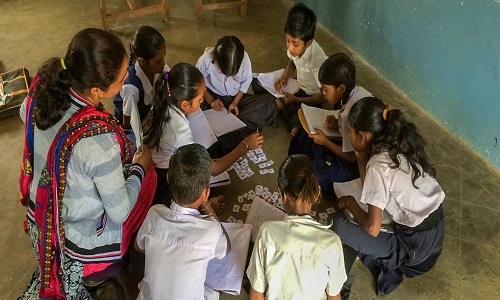
Following the observations regarding the learning outcomes of students in Nagpur district, Foundational Literacy and Numeracy (FLN) Mission was launched in the district from the academic year 2021-22 on a pilot basis. Buoyed by the positive results of the mission’s implementation, now the District Institute for Education and Training (DIET) has decided to expand the coverage of the mission to all the schools in the district for students up to Class 3 till the year 2026-27. In the Annual Status of Education Report (ASER) 2021 and National Achievement Survey (NAS) 2021, the learning outcome among students had decreased moving from Class 3 to 10. The Performance Grading Index (PGI) 2021 also ranked Nagpur District at 34th position in Maharashtra as far as quality of educational excellence was concerned. Considering all these reports, students at various levels in Nagpur District were lagging in foundational capabilities. Hence, Disha initiative has been launched to ensure that children attain Literacy and Numeracy skills by Class 3, said Dr Harshalata Burade, Principal, District Institute of Education and Training (DIET), while addressing a press conference at Tilak Patrakar Bhavan on Wednesday.
The Annual Status of Education Report 2021 revealed declining learning levels in Nagpur District as 55.8 per cent students of Class 5 could not read Class 2 level Marathi, while 60.9 per cent could not solve simple subtraction questions. Similarly, about 24.8 per cent students of Class 8 could not read Class 2 level Marathi and 64.85 per cent were unable to solve simple divisions. While the National Achievement Survey 2021, assessments showed that only 11 per cent Class 3 students excelled at Marathi and Maths, six per cent Class 6 students excel in Marathi and only 3 per cent were at ease in Math, 16 per cent Class 8 students could only comprehend in Marathi and 5 per cent of them excelled in Math, and Class 10 students shows no excellence in Marathi while only 3 per cent students were able to excel in Maths.
Expressing concern over lack of attainment of basic skills at foundation level, Dr Burade said, “Some children can read but they cannot comprehend the data. This was identified as a cause of decrease in learning percentage moving from Class 3 to 10. Hence, development of learners oriented initiatives are needed.” The initiative was run as a pilot project in 591 schools for Class 2 to 5 earlier. It gave promising results as 44.4 per cent students made progress in Language, 26.6 per cent in Math and 70.6 per cent in English language, Dr Burade explained. According to FLN standards, Class 1 students should be able to read 40 words under a minute, while the number of words keep progressing by 10 from Class 2 and 3. The intervention aims to focus on a child’s developmental stage, because the objectives of the initiative are to help students think critically and perform academically well as they move towards higher education. It is sure to yield better results as it develops a habit understanding conceptually.
About the building blocks of FLN, Dr Burade recommended a change in approach of how children and parents view education. “We see children performing exceptionally well in Class 10 and 12, but there is no understanding of the concept or even the desire to do so. Very little care is given to the process as long as the results are as desired. It is important to understand that textbooks are a tool and its understanding is gathering a knowledge base. The techniques to do so are more group learning and student oriented rather than teacher and textbook lecturing,” she added.