Chandrayaan-3 Lander clicks Moon’s beauty
| Date :19-Aug-2023 |
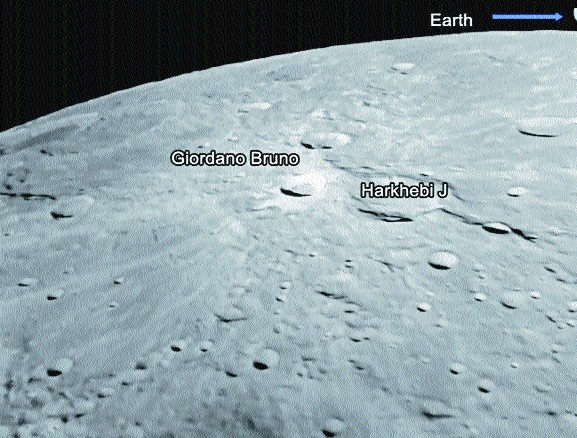
Moon as seen by the Chandrayaan-3 Lander Imager (LI) Camera-1 just after the separation of the Lander Module (LM) from the Propulsion Module (PM) on Thursday. (PTI)
BENGALURU,
Lander Module’s health normal,
gets closer to Moon, says ISRO
Indian Space Research Organisation (ISRO) on Friday released a set of visuals of the Moon captured by cameras positioned on the Lander Module of Chandrayaan-3 spacecraft.
The images, captured after the separation of the Lander Module from the Propulsion Module of the spacecraft on Thursday, showed the craters on the Moon’s surface that were marked on the photographs released by ISRO as ‘Fabry’, ‘Giordano Bruno’ and ‘Harkhebi J’.
The country’s space agency shared on X (formerly Twitter) the images captured by the Lander Position Detection Camera (LPDC) on August 15, and visuals from the Lander Imager (LI) Camera-1 on August 17 -- just after the separation of the Lander Module from the Propulsion Module.
Announcing that the health of Lander Module is normal, ISRO said that the module has successfully undergone a deboosting (slowing down) operation taking it closer to the Moon.
The Lander Module comprising the lander (Vikram) and the rover (Pragyan), will undergo its second deboosting operation on August 20. This will lower the module to an orbit that takes it much closer to the Moon’s surface.
The soft landing of the Lander on the Lunar south pole is scheduled on August 23.
“The Lander Module (LM) health is normal. LM successfully underwent a deboosting operation that reduced its orbit to 113 km x 157 km. The second deboosting operation is scheduled for Aug 20, around 02:00 Hrs. IST,” ISRO said in a post on X.
The Lander Module of Chandrayaan-3 had successfully separated from the Propulsion Module on Thursday. ISRO sources had earlier said, that after separation, the lander is expected to undergo “deboost” (the process of slowing down) operations to place it in an orbit, where the Perilune (the orbit’s closest point to the Moon) is 30 kilometres and Apolune (farthest point from the Moon) is 100 km, from where the soft landing on the south polar region of the Moon will be attempted.