‘Chandrayaan missions providing unmatched data for global community’
| Date :13-Sep-2023 |
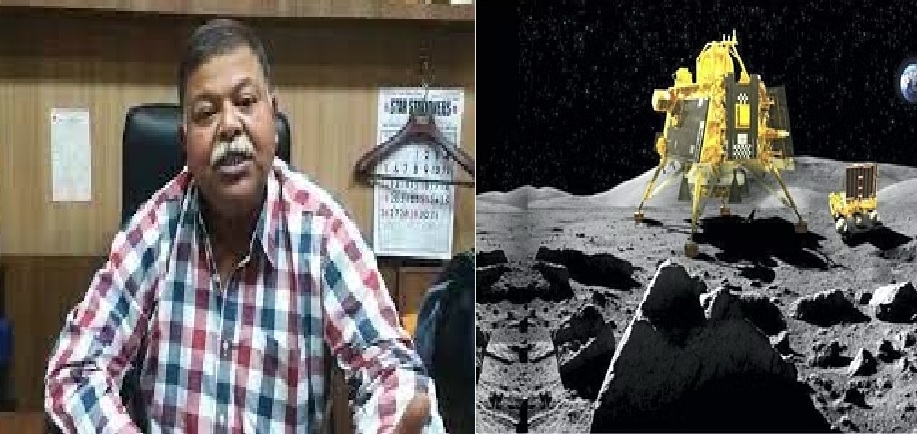
Scientist Debiprosad Duari
■ By Romit Bhattacharyya,
Sudipto Chowdhury and
Saptarshi Banerjee
KOLKATA,
INDIA’S Chandrayaan missions have so far provided
“unmatched data” for the
international scientific community, paving the way for
Moon exploration from different dimensions, including
the possibility of setting up a
human habitation in future,
eminent scientist Debiprosad
Duari said.
Duari said, ISRO’s three
Chandrayaan missions have
thrown more light on the presence of water ice, previously
undiscovered minerals and
elements, and temperature
changes on the Moon.
“All the Chandrayaan missions have produced
unmatched quality of data for
not only India, but the entire
world. Chandrayaan-1 in 2019
used the Moon mineralogy mapper (collaborative instrument between NASA and
ISRO), and for the first time
observed and indicated the
presence of 60,000 crore litres
of water ice near the polar
region. “Based on this information, its application in
rocket fuel and other areas,
including creating a synthetic
biosphere where human
beings can stay, were identified,” he said.
Duari said, though in the
Chandrayaan-2 mission, the
Lander failed to make a soft
landing, it orbited the Moon
for four years, providing a
“wealth of knowledge, information, data and images”.
The renowned scientist,
who has been a faculty member at the University of
Manchester, said the
Chandrayaan-3 mission,
within days of its soft landing, has already relayed data
about the presence of sulphur near the South Pole of
the Moon.
“This indicates a number
of possibilities about other
minerals and elements that
have been hitherto undiscovered on the Moon... It has
also supplied interesting data
on the temperature on
Moon, that is just near the
surface, the temperature is
around 10 degrees Celsius,
but merely 8 cm below the
ground, it dropped to minus
60 degrees C. The drastic
change tells us that the surface can act as a fantastic
insulator from outside elements.
“Again, this data shows that
a human habitation can be
considered below the Moon’s
surface. All such information
is a testament to the worth
of the Chandrayaan-3 instruments,” Duari said.