‘3 Rs (reduce, reuse, recycle) helped in waste reduction’
| Date :14-Jan-2024 |
By Bhavana ‘Aparajita’
Shukla
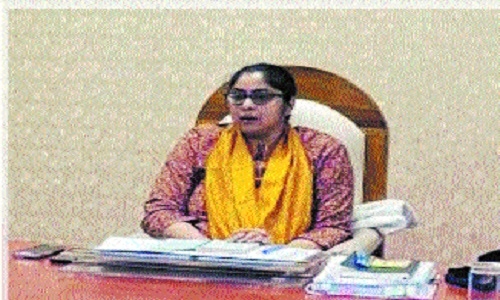
Exclusive interview with Indore Municipal Corporation, Commissioner, Harshika Singh, who not only believes in strengthening the eco-sphere of a city but also initiated measures to develop the city in an eco-friendly and most importantly economically efficient way to deal with waste and is resilient to future challenges. Only in a short span of eight-nine months, Harshika Singh led the city’s cleanness drive to the next level with her eco and more importantly economic-friendly initiatives as she took charge in the month of April 2023, and the city bagged top position in this year’s Swachh Survekshan. For this achievement, she credits people’s spirit and co-operation, senior officers and public representatives, sanitary workers and her teammates. Harshika Singh speaks about the Indore’s swachhta story to our Senior Special Correspondent. Here are excerpts:-
Q. 1 Congratulations as Indore retained the ‘Cleanest City’ award for seventh time. When you joined as a Commissioner of Indore Municipal Corporation, the annual cleanness survey was about to start. How could you managed to prepare in such a short time and what were the new measures taken during your tenure to get this title?
Ms Singh: Thanks. I have been here for eight-nine months, it was the time when survey actually happened. In this time period, we reached a level in terms of process and set up, well-planned waste segregation, conversion, and disposal mechanism were in place. We can say we were self sufficient by that time on these parameters. What we did was putting emphasis on sustainable development and tried to enhance our performance under ecosphere criteria. For that, we took measures to make city liveable and reduce waste production, implement EPR, focusing on promoting a circular economy.
Q. 2 The city secured 4,709.40 marks out of 4,830 under ‘service level progress’ for segregated collection, processing and disposal of different types of waste. Throw some light on Extended Producer Responsibility (EPR) credit as the IMC under your leadership become the first urban body to earn EPR Credit. How could you make it?
Ms Singh: It was a team effort. Our EPR has been taken as a model for other cities of the country. We also tried to reduce the habit of creating waste. around 85-90 centers are being set up in the city, where we are able to collect old throw from houses e.g. old clothes, shoes like articles which are piled up at home.
Apart from this we also initiated e-cycling. There was provision for e-collection earlier also but we came up with an end to end solution of collection and disposal mechanism of e-collection. The ‘3 Rs’ (reduce, reuse and recycle) centres, cloth bags and utensil banks, parks developed using reusable things out of waste materials and home composting units have also helped in the reduction of waste in the city. Indore Municipal Corporation (IMC) became the country’s first urban body to earn Extended Producer Responsibility (EPR) credit for recycling banned single-use plastic. Single-use plastic is completely banned in the city. We have seized about hundreds of tons of such plastic in the recent past and prevented its circulation. We recycled this plastic stock at a plant run under the public-private partnership (PPP) model.
Q. 3 Indore is the most populous city of the State with around 3.4 million population. IMC requires a workforce in the same proportion to maintain cleanness? How about sanitary workers condition and their demands for salary hike etc?
Ms Singh: There are around 8,000 sanitary workers. We are trying to focus on Swachhta Karmi Sahayat Kendra also. These are centers where their grievances and issues can be sort out at zonal level. We are also preparing their database so that a holistic approach can be adopted for their welfare.
Q.4 Most of the urban bodies are facing tough financial constraints. Indore is one among them as it had to launch bonds. How could you cope-up with this?
Ms Singh: You rightly mentioned it was a big challenge. We are in a very bad financial state presently. This time we went through Swachhata Survekshan in absence of financial back up. For this, we tried with our available resources and tried to optimise their usage in addition to cutting unnecessary expenditure like painting or other beautification campaigns. Active public participation and motivation also helped us to make it. Residential societies, traders associations and social groups came forward to make the city clean. I acknowledge the spirit of the citizens of Indore who are always ready to take up the challenges to achieve the development goals for their city.